Review · ROME TOURS
Rome: Domus Aurea Guided Tour and Virtual Reality Experience
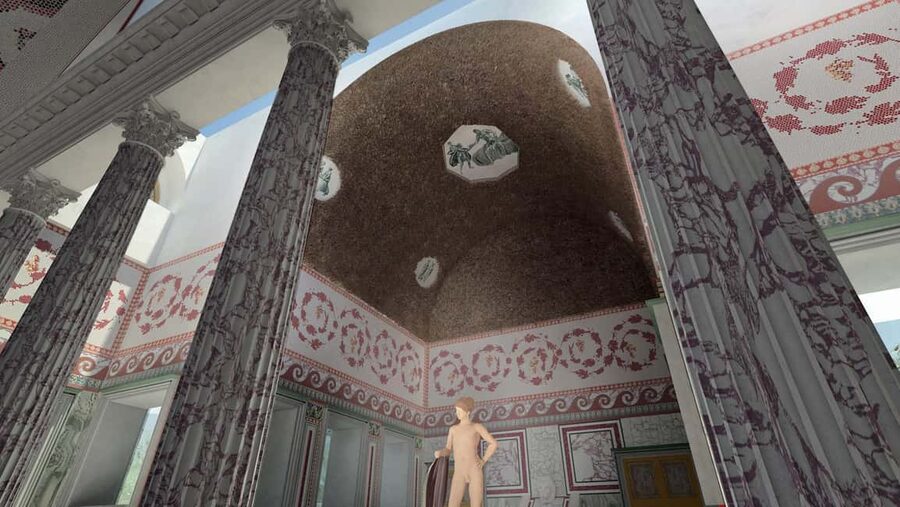
Nero’s Domus Aurea is a palace you mostly have to imagine. Its surviving rooms are impressive, but the Oculus presentation helps you picture the Golden Vault as it may have looked when the emperor’s enormous residence was new.
I like two things here: the virtual reality reconstruction gives the ruins a helpful visual context, and a guide connects the rooms to Nero’s grand plan for a dynastic residence. The Octagonal Hall and painted decoration also make this a more distinctive stop than another walk past Roman columns.
One consideration: the tour is short, the rooms are cool, and sound can be hard to catch in the large spaces. Arrive early, bring a jacket, and stay close enough to hear the guide.
- A palace made visible: VR offers a reconstruction of the Golden Vault, helping you imagine what the surviving rooms once looked like.
- Roman rooms with character: The route includes the Octagonal Hall, Cryptoporticus, and Hall of Birds.
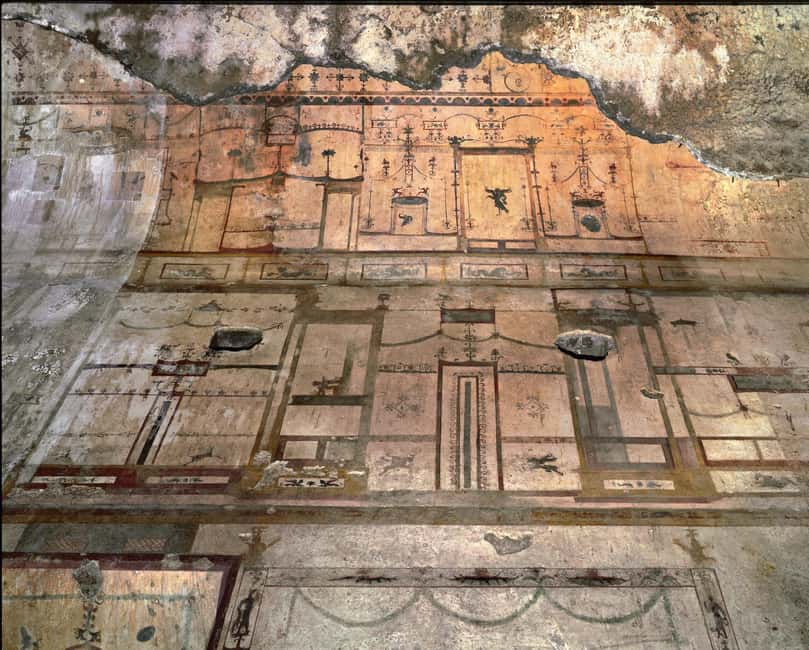
- Art and engineering together: Hear about the site’s Roman paintings and the use of concrete in its construction.
- A guide-led visit: The Domus Aurea tour lasts about 70 minutes, with English, Italian, French, and Spanish available.
- A chilly underground stop: The interior temperature is around 10°C, so a jacket is useful even on a warm day.
- Plan for the restrictions: The site is not suitable for wheelchair users or people with mobility impairments or claustrophobia.
Nero’s Golden House, seen through VR
The Domus Aurea is the remains of an outsized imperial project. After a fire devastated parts of Rome, Nero set out to link palace homes on the Palatine with extensive gardens on the Esquiline, creating a vast residence meant to serve as a dynastic center. The surviving complex gives you a sense of that ambition, but not a complete picture of its original scale or appearance.
That gap between ruin and former splendor is where the virtual reality presentation helps. With an Oculus headset, you see a digital reconstruction of the Golden Vault and get a visual idea of how the space may have appeared in Nero’s time. It is not a substitute for the ancient rooms around you. It is a way to compare what remains with a plausible view of what has been lost.
The distinction matters. Much of the Domus Aurea is underground and incomplete, and a visit can otherwise feel like looking at fragments without knowing how they fit together. The VR sequence gives those fragments a reference point, so details such as a vaulted ceiling or painted surface have more meaning.
The presentation is short, according to the description of the experience, so think of it as one well-chosen tool rather than a full virtual tour. The site itself remains the main event: you are there to see the architecture and decoration in place, with a guide to explain how the palace worked and why it was built.
Starting near the Colosseum
The meeting point is in front of the Colosseo metro station, at street level near the green kiosk. Look for staff carrying a C.I.S Tours sign. You are asked to arrive 20 minutes before the booked start time, a useful buffer in an area where it is easy to get turned around among metro exits, crowds, and major sights.
This tour begins at the Colosseum area, then continues to the Domus Aurea for a 70-minute guided visit. The full activity lasts about 90 minutes. That difference likely allows time for meeting and the VR component, but the precise order and timing of each element are not specified. Check your selected start time when booking, and do not plan another timed activity immediately afterward.
The tour skips the ticket line, and the admission ticket, guide, VR presentation, taxes, and fees are included in the $67 price. That is a useful package if you want someone to explain the site rather than simply enter and wander. The value depends on what you want from the visit: the guided interpretation and digital reconstruction are central to the experience, while independent visitors who prefer to read at their own pace may want to compare alternatives.
Participant names are required because the tickets are nominative. Bring identification for each person, including children. It is also sensible to keep your bag small: luggage and large bags are not allowed.
More guided tours in Rome:
- Colosseum, Roman Forum & Palatine Guided Tour
★ 4.7 · 63,148 reviews - Vatican Museums, Sistine Chapel & St Peter’s Basilica Guided Tour
★ 4.5 · 39,149 reviews - Rome: Colosseum, Palatine Hill and Roman Forum Guided Tour
★ 4.8 · 32,814 reviews
Inside the Domus Aurea
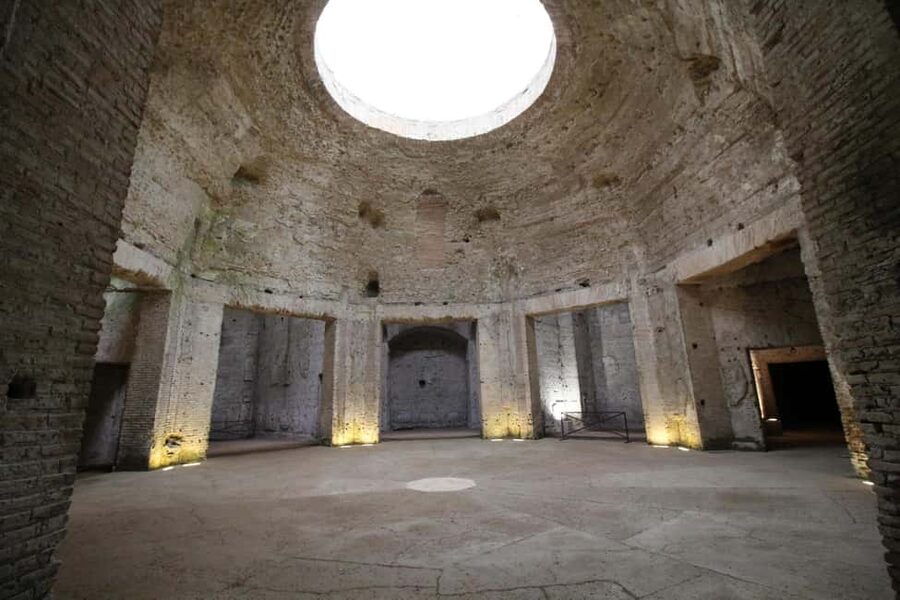
The tour focuses on rooms and passageways that help tell the story of Nero’s residence. Among the named stops are the Octagonal Hall, the Cryptoporticus, and the Hall of Birds. Each offers a different way into the complex, from architectural form to painted decoration and the movement of people through the palace.
The Octagonal Hall is especially useful for understanding the scale and ingenuity of Roman building. Its distinctive shape and roof are a reminder that the palace was more than a collection of decorated rooms. The guide also discusses Roman concrete, a material that helped builders create complex interior spaces. This is a practical detail with lasting significance: the construction methods are part of what makes the remains worth seeing, not just the imperial story attached to them.
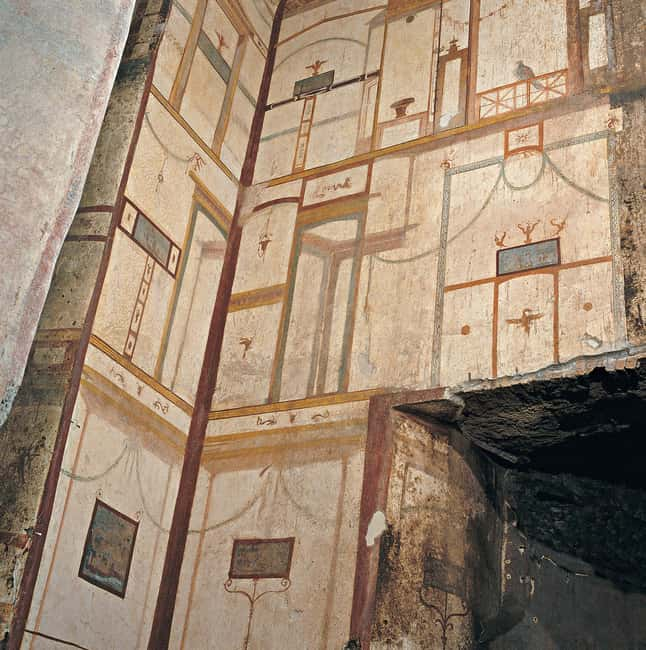
The Cryptoporticus gives you a different perspective on the palace layout. Rather than a grand reception room, it is a passage through the complex, and that change in scale helps you picture the day-to-day circulation of a large residence. The Hall of Birds, meanwhile, points you toward the decorative program. Domus Aurea is notable for its Roman painting, and the decoration is among the site’s most compelling features.
Do not expect every room to look complete or polished. These are archaeological remains, and restoration work is ongoing. That incompleteness is part of the visit: you see traces of the building and its decoration, then rely on the guide and VR to help fill in what time has taken away.
The guide-led format is valuable here because the palace’s purpose and history are not self-explanatory. Nero wanted a residence on a scale associated with Hellenistic palaces, combining the Palatine homes with the Esquiline gardens. The aim was not simply to build a grand private house, but to create a large dynastic residence that could contain a court and productive activities. That context makes the remains easier to read as a planned complex rather than a set of disconnected chambers.
A guide’s voice matters
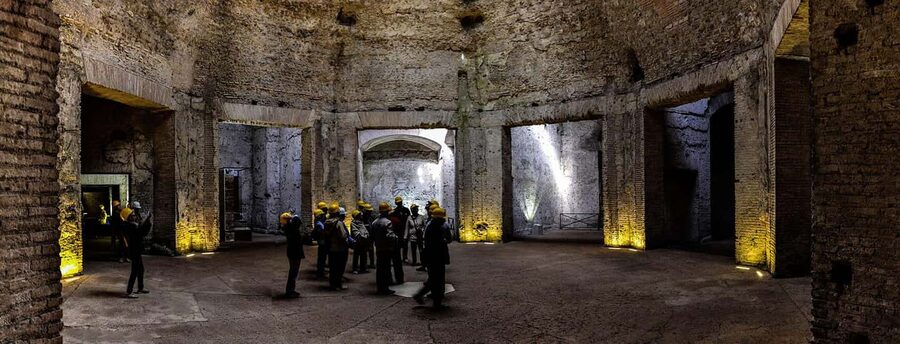
The guide is a central part of this visit. The experience is available in Italian, English, French, and Spanish, with an audio guide also listed in those languages. Guides have been praised for answering questions and taking time to explain the site. Claudia is one guide name associated with the tour, and her explanations have been described as passionate.
There is one practical caveat: acoustics in the Domus Aurea can make speech difficult to hear in some spaces. The tour information does not promise headsets, and one visitor specifically wished for them. If you have trouble hearing, position yourself close to the guide and ask for a point to be repeated rather than letting a key explanation drift away.
Language choice matters, too. If you are booking for a group, check that the selected tour language suits everyone. The guide may be engaging, but a complex archaeological site is much easier to follow when you can catch the details about the rooms, paintings, and construction.
What the VR adds, and what it cannot do
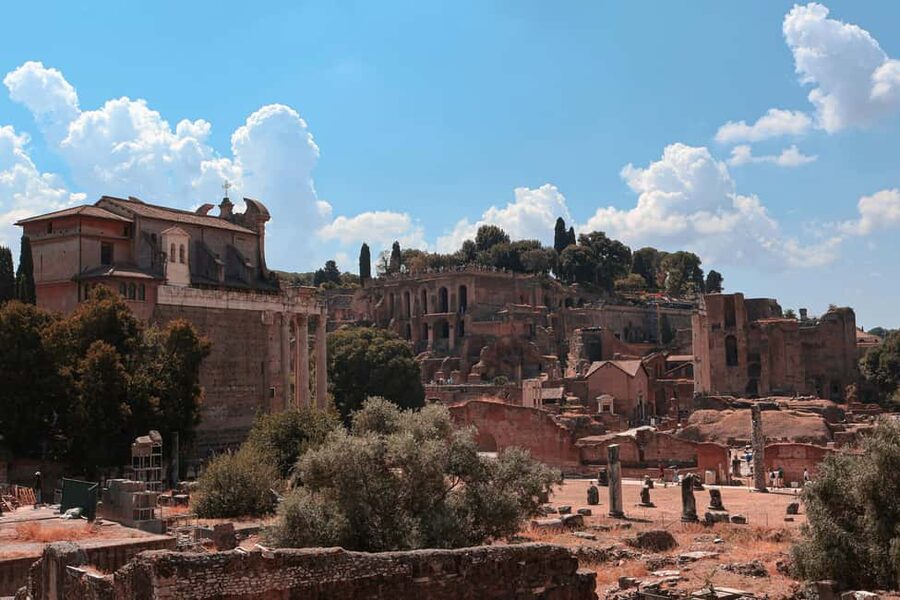
The virtual reality sequence is the tour’s signature feature, and it serves a clear purpose. The physical palace is not the Golden House in its original state. The VR reconstruction helps bridge that gap, particularly in the Golden Vault, by showing a possible appearance of the room before centuries of change.
Treat the images as a guided reconstruction, not a time machine. The experience presents how historians and archaeologists believe the place may have looked. That visual approach can make the scale and decoration easier to understand, but it cannot turn every uncertainty into a settled fact.
For many visitors, this is the difference between a visit that feels abstract and one that clicks. A room becomes easier to imagine when you have seen a visual interpretation of its former form, then can compare that image with the original fabric around you. If you enjoy technology as a way to interpret archaeology, rather than as a spectacle on its own, this pairing makes sense.
The VR may not be the main reason to choose the tour if you are already deeply familiar with Roman architecture or prefer a slower, self-directed visit. But for a first encounter with the Domus Aurea, it offers a useful orientation to a site whose best-known appearance is mostly gone.
More tours and experiences in Rome:
- Vatican: Museums & Sistine Chapel Entrance Ticket
★ 4.5 · 144,003 reviews - Vatican Museums & Sistine Chapel Tour with Optional Basilica
★ 4.3 · 67,413 reviews - Rome: Guided Tour of Colosseum, Roman Forum & Palatine Hill
★ 4.7 · 27,897 reviews - Rome: Colosseum & Forum with Audio Guide App -Optional Arena
★ 4.2 · 24,770 reviews
Comfort, access, and the $67 question
The interior temperature is around 10°C. Bring a jacket, even if Rome outside is warm, and wear comfortable shoes. The visit takes place in an archaeological complex, and the source information does not promise level access or a route suitable for all mobility needs.
The tour is not suitable for wheelchair users or people with mobility impairments or claustrophobia. If enclosed spaces make you uncomfortable, this is important to consider before booking. Food and drinks are not allowed inside, and unaccompanied minors cannot take part.
At $67 per person, this is not a low-cost entry ticket. You are paying for admission, a guide, and the VR experience, with the added benefit of skipping the ticket line. The price makes the most sense if you want interpretation and a visual reconstruction in one visit. If you only want to see the ruins and are comfortable exploring without a guide, compare the cost and options available for your dates before committing.
The tour’s overall rating is 4.7 from 194 reviews, and the strongest repeated praise is for the VR presentation and the guides’ explanations. That matches what the format is designed to do: make a fragmentary site easier to picture and understand. The main cautions are also practical rather than dramatic: bring warm clothing, arrive early, and do not assume you will hear every word from the back of a large room.
Cancellation terms are relatively restrictive: cancelling at least three days in advance gives a 60% refund. Check the full terms for your booking before paying, especially if your Rome plans may change.
Who should book this visit?
I would choose this tour if you are curious about Nero’s palace, want an expert to explain what you are seeing, and like the idea of using VR to picture the Golden Vault. It is also a strong fit if you have already seen the Colosseum and Forum and want a different side of ancient Rome, one centered on imperial life, painting, and architecture.
It is less suitable if you need step-free access, dislike enclosed spaces, or want a long, leisurely visit. The guided portion is 70 minutes, and the whole activity lasts about an hour and a half. You will get a focused introduction, not an unhurried half-day archaeological study.
Book it if the history and reconstruction appeal to you, and prepare for the cold and occasional echo. Skip it if the access restrictions rule it out or if you would rather spend your budget on a site you can explore independently. For the right visitor, the combination of surviving rooms, informed explanation, and VR makes the Domus Aurea far easier to appreciate than the ruins alone.
FAQ
How long does the tour last?
The full activity lasts 1.5 hours. The guided visit inside the Domus Aurea is listed as 70 minutes.
Where is the meeting point?
Meet at street level in front of the Colosseo metro station, near the green kiosk. Look for staff with a C.I.S Tours sign.
How early should I arrive?
Arrive 20 minutes before your booked start time.
Which languages are available?
The live guide and audio guide are available in Italian, English, French, and Spanish.
Is the Domus Aurea ticket included?
Yes. The ticket, guided tour, virtual reality experience, taxes, and fees are included.
What should I bring?
Bring a passport or ID card, comfortable shoes, and a jacket. Children also need identification.
How cold is it inside?
The temperature inside the Domus Aurea is around 10°C, so bring a warm layer.
Is the tour suitable for wheelchair users?
No. It is not suitable for wheelchair users or people with mobility impairments. It is also not suitable for people with claustrophobia.
What is the cancellation policy?
You can cancel up to three days in advance for a 60% refund.
Newly reviewed in Rome
- Rome: St. Paul’s Within the Walls New Year’s Concert Ticket★ 4.4 · 35 reviews
- Rome: Neapolitan Pizza Cooking Class in Front of the Vatican★ 4.8 · 137 reviews
- Rome: Navona Underground & Domitian Stadium Guided Tour★ 4.6 · 36 reviews
- Rome: Navona Square and École Française Underground ticket★ 3.9 · 160 reviews
- Rome: Monuments and Belvederes Bike Tour★ 4.7 · 26 reviews
- Rome: Musical Biography of Frank Sinatra Concert★ 3.9 · 100 reviews
- Rome: Monti Neighborhood Lunch or Dinner Food Tour★ 4.9 · 8 reviews
- Rome: Mini hike to the ancient Parco degli Acquedotti★ 4.9 · 9 reviews
Rome Tours, compared.

Vatican: Museums & Sistine Chapel Entrance Ticket
Read our review →
Vatican Museums & Sistine Chapel Tour with Optional Basilica
Read our review →
Colosseum, Roman Forum & Palatine Guided Tour
Read our review →
Vatican Museums, Sistine Chapel & St Peter’s Basilica Guided Tour
Read our review →
Colosseum & Forum with Audio Guide App -Optional Arena
Read our review →
Pantheon Fast-Track Ticket and Official Audio Guide
Read our review →
City Sightseeing Hop-on Hop-off Bus with Audioguide
Read our review →