Review · ROME TOURS
Rome: Domus Aurea, Nero’s Golden House guide tour
Nero’s Domus Aurea is a palace you have to picture as much as see. Its rooms survive underground, stripped of much of their original decoration, so this 90-minute tour pairs archaeological remains and an expert guide with VR scenes that show how the palace may have looked in Nero’s day.
I like two things here: the scale of the surviving complex, which puts Nero’s ambition in perspective, and the VR headset, which helps you connect bare walls and ceilings with their lavish past. A strong guide can make the history feel immediate; guides named Claudia and Simone have been singled out for clear, engaging storytelling.
The main consideration is practical, not historical: the site is cold, with a temperature around 10°C, and the tour is not suitable for wheelchair users or people with mobility impairments. Bring a warm layer, comfortable shoes and your ID.
- The VR makes the ruins easier to read: See a visual reconstruction alongside the original spaces.
- The palace is larger than its surviving rooms suggest: Its scale is one of the most striking parts of the visit.
- A guide supplies the missing context: The remains make more sense when someone explains the site and its restoration.
- Expect a chilly visit: The underground temperature is around 10°C, so dress warmly even if Rome is mild above ground.
- The meeting point needs attention: It is on Via delle Terme di Tito, but the exact arrangements can vary by booking option.
- This is a focused history tour: At 90 minutes, it suits visitors ready to walk and listen, rather than families looking for a child-centered activity.
Entering Nero’s underground palace
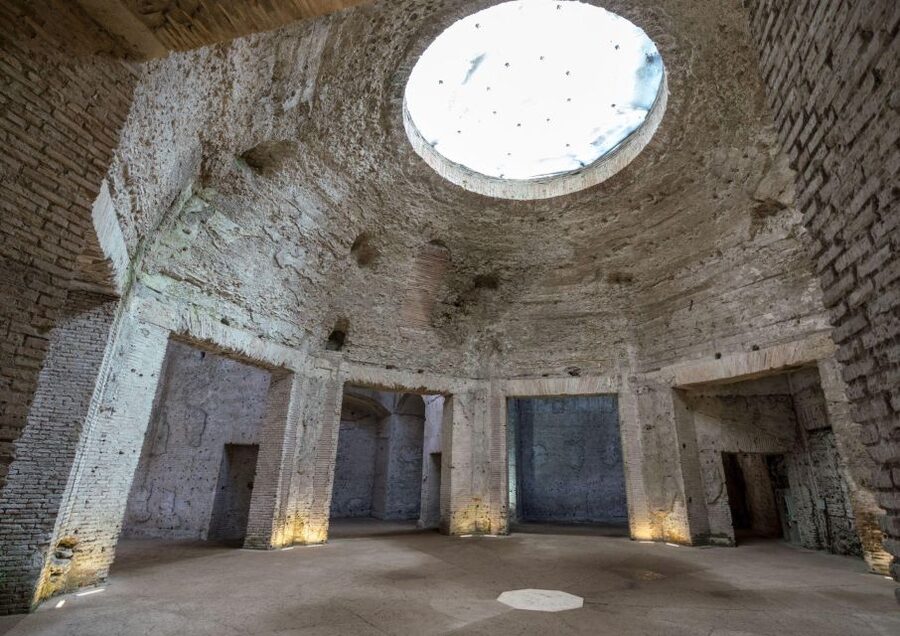
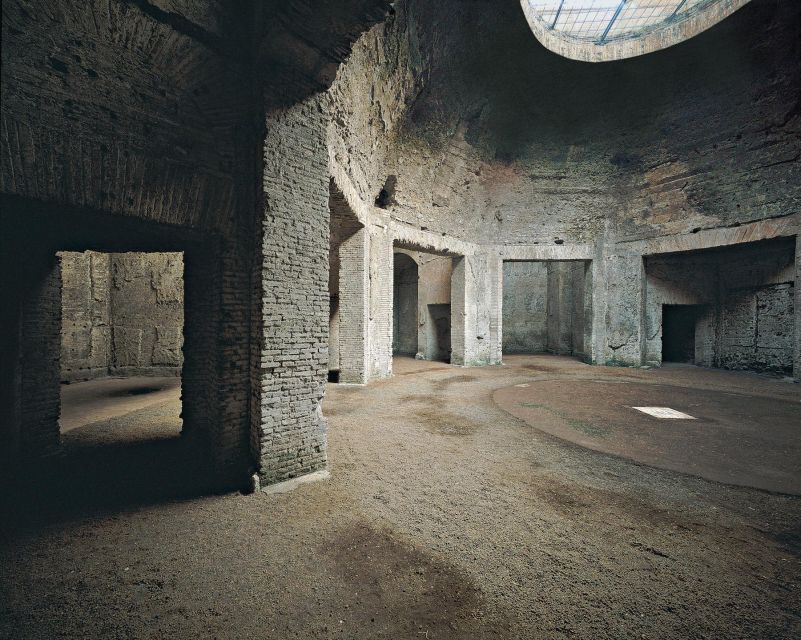
The Domus Aurea, or Golden House, was Emperor Nero’s palace complex. The tour takes you through the archaeological site, where preserved sections of the building offer a rare look at imperial Rome from inside rather than from a distant viewpoint.
The first impression may be less golden than the name suggests. You are seeing ancient remains in an archaeological setting, not a furnished palace with its original surfaces intact. That gap is exactly why the guide and VR matter: one explains what survives, while the other helps you imagine what has been lost.
I like that the tour does not ask you to rely on imagination alone. The VR scenes offer a visual sense of the palace as it may have appeared about 2,000 years ago, while the guide connects those images to the structure around you. It turns a visit to underground rooms into a clearer story about how the site once functioned and looked.
The tour lasts 1.5 hours, a useful length for a site that rewards attention but can feel demanding if you are cold or have trouble walking. Treat it as a concentrated history visit, not a quick photo stop.
Meeting on Via delle Terme di Tito
The tour has two listed starting-location options, both given as Via delle Terme di Tito. Your specific meeting point may vary with the option you book, so check your confirmation carefully and allow time to find the group.
This is worth taking seriously. Some visitors have found the instructions hard to follow, and the meeting point can be tricky to locate if your map app is not helping. One useful clue from a visitor arriving by metro was that the meeting place is up the steps from the station. Since the exact arrangements can change, use that as a guide, not a substitute for checking your own directions.
The tour includes an express security check, but that does not remove the need to arrive at the right place with the right details. The entrance requires the first and last name of every participant, and staff may refuse entry if those details are missing. Bring the same ID you used for the booking, and provide a working email address or WhatsApp number so the organizer can contact you.
Food, drinks, luggage and large bags are not allowed inside. Travel light. It is easier to move through the site without a bulky bag, and you will not have to worry about an item being turned away at the entrance.
More guided tours in Rome:
- Colosseum, Roman Forum & Palatine Guided Tour
★ 4.7 · 63,148 reviews - Vatican Museums, Sistine Chapel & St Peter’s Basilica Guided Tour
★ 4.5 · 39,149 reviews - Rome: Colosseum, Palatine Hill and Roman Forum Guided Tour
★ 4.8 · 32,814 reviews
Reading the remains with a guide
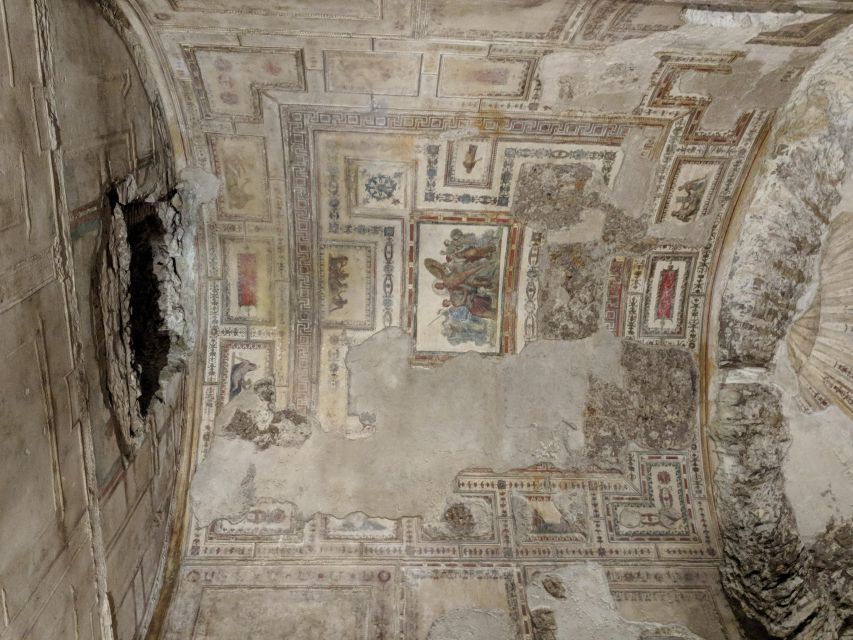
Inside, the guide’s job is to help you make sense of a palace that no longer presents itself as Nero would have known it. The tour combines an on-site explanation with video narration and VR technology. You see the surviving structure while hearing about its history and restoration.
The best guides make this a conversation with the building, not a lecture detached from it. Claudia has been praised for balancing information with humor and keeping a good pace. Simone has also been described as warm and engaging. Guides change, so those names are examples, not a promise about who will lead your departure.
Guide quality matters here because the rooms do not explain themselves. The scale of the complex is striking, but it takes context to understand why the surviving spaces are significant. A guide can help you focus on details that might otherwise pass unnoticed and explain how the restoration preserves the ancient structure.
There is some practical variation in how well you hear and follow the commentary. One visitor found it hard to hear a guide even with the audio turned up, while others praised guides for clear explanations. If your group is large, stay near the guide when possible, especially when they point out a feature. If you have trouble hearing, speak up early rather than hoping the next room will be quieter.
The tour is offered in English, Spanish, Italian and French. Choose the language that works best for you at booking, and keep in mind that a guide’s accent or speaking volume can affect how easy it is to follow. The visual reconstructions add another way to take in the story, but they do not replace the spoken explanation.
Seeing the Golden House through VR
The VR portion is the tour’s defining feature. With a headset, you get a visual reconstruction that helps bridge the distance between the preserved archaeological site and the palace in Nero’s time. Instead of looking at a room and wondering how its decoration once fit together, you can compare the current remains with a fuller imagined view.
That shift in perspective is valuable. The building’s original appearance is not simply waiting behind a curtain; much has changed over two millennia. VR gives you a way to picture the scale and finish of the palace without pretending that the present-day rooms are untouched.
The technology has drawn some of the strongest praise, especially for how it helps make the palace’s former appearance legible. One visitor described turning around repeatedly to take in the virtual scene. Another found the reconstruction more impressive than expected. Those reactions make sense: a headset can let you look around rather than just watch a short film from one fixed angle.
Still, VR is an aid, not the whole visit. The ruins and the guide’s account provide the real historical setting. The virtual scenes help you form a picture, but they are not a substitute for the original fabric of the building. I’d think of the headset as a useful interpretive tool, not a theme-park attraction.
There is also a small practical caveat. A past visitor had trouble with an app on an older phone. The tour information confirms that VR devices are included, but it does not spell out whether every part of the experience requires a personal device or app. If you receive instructions before the tour, read them in advance and contact the organizer if anything suggests you need to download something.
A restoration you can notice
The archaeological restoration is part of what makes the visit more than a walk through ancient rooms. The site has been adapted for visitors, and the modern additions have been noted for their care around the original structure and artwork. Details such as doors and windows can show how contemporary access has been fitted into an old building.
That balance matters. Archaeological sites need to protect what remains while allowing people to see it. Here, restoration work and the guided route help you get closer to the palace without turning the ancient fabric into a stage set. You can pay attention both to what is original and to the practical work that makes the visit possible.
The site’s scale also gives the history more weight. It is easy to reduce Nero’s palace to a story about excess, but walking through surviving spaces makes the size of the project tangible. You are not only hearing about an emperor. You are standing among the remains of a vast residence and considering the labor, design and resources it required.
The visit can also change how you look at later art and architecture. One visitor found the tour useful for understanding frescoes and ceilings encountered at Baroque sites. That is a helpful way to approach the Domus Aurea: it offers context for later artistic traditions, as well as a close encounter with Roman building and decoration.
More tours and experiences in Rome:
- Vatican: Museums & Sistine Chapel Entrance Ticket
★ 4.5 · 144,003 reviews - Vatican Museums & Sistine Chapel Tour with Optional Basilica
★ 4.3 · 67,413 reviews - Rome: Guided Tour of Colosseum, Roman Forum & Palatine Hill
★ 4.7 · 27,897 reviews - Rome: Colosseum & Forum with Audio Guide App -Optional Arena
★ 4.2 · 24,770 reviews
The cold, the pace and who should go
The temperature inside is around 10°C. That is chilly enough to matter, especially if you are moving slowly while listening to the guide. Bring a jacket or warmer layer, and wear comfortable shoes. Gloves or a hat may be welcome for anyone who gets cold easily.
This advice applies even when the weather outside is warm. A sunny Roman afternoon does not tell you what the underground rooms will feel like. Pack for the site, not just the streets above it.
The tour is not suitable for wheelchair users or people with mobility impairments. The site involves walking through archaeological spaces, and the activity information specifically rules out those groups. If access is a concern, contact the provider before booking rather than assuming the route will work for you.
This is best for adults and older children with a real interest in Roman history, archaeology or architecture. One visitor advised against bringing children, describing it as a poor fit for them. That is not a formal age restriction, but it is sensible to consider: this is a cool, history-focused visit built around listening, looking and moving through ancient remains, not a hands-on activity designed for young kids.
What $59 buys you
At $59 per person, the price includes the Domus Aurea entrance ticket, a professional guide, VR devices, fees and taxes. You are paying for more than access to the site. The guided interpretation and reconstruction are central to understanding what you are seeing, and they make the visit more rewarding than entering the ruins without that context.
Value depends on your interest. If you enjoy Roman history and want help picturing the palace as it once looked, the combination of guide and VR makes the price easier to justify. If you mainly want to see ancient stonework at your own pace, you may find a guided 90-minute experience less appealing.
The fee does not include a flexible cancellation option: the activity is non-refundable. That is a real drawback if your plans are uncertain. Check your schedule and the meeting details before booking, and make sure every participant’s name is ready for the entrance list.
Should you book the Domus Aurea tour?
Book this tour if you want to understand more than the visible remains, and if VR sounds like a useful way to picture Nero’s palace rather than a gimmick. The combination of archaeological rooms, restoration details and a live guide gives the site context that is hard to get from the structure alone. At 90 minutes, it is also a manageable way to add a focused history experience to a Rome visit.
Think twice if you need step-free access, dislike cold underground spaces, or are booking for young children who may not enjoy a slow, explanation-led visit. Before paying, confirm the meeting point for your selected option, enter each participant’s full name, bring ID and dress for a 10°C interior. With those details handled, this is a strong choice for a curious history-minded visitor.
FAQ
How long is the Domus Aurea tour?
The guided tour lasts 1.5 hours.
What languages are available?
The live guide is available in English, Spanish, Italian and French.
What is included in the price?
The price includes the Domus Aurea entrance ticket, a professional guide, fees and taxes, and VR devices.
How cold is it inside the Domus Aurea?
The temperature inside is around 10°C. Bring a jacket or another warm layer, and wear comfortable shoes.
Do I need to bring ID?
Yes. Bring your ID, and provide the first and last name of every participant. Entry may be refused if participant names have not been supplied.
Can I bring food, drinks or a large bag?
No. Food, drinks, luggage and large bags are not allowed inside.
Is the tour suitable for wheelchair users?
No. The activity is not suitable for wheelchair users or people with mobility impairments.
Can I cancel the tour for a refund?
No. The activity is non-refundable.
Newly reviewed in Rome
- Rome: Neapolitan Pizza Cooking Class in Front of the Vatican★ 4.8 · 137 reviews
- Rome: St. Paul’s Within the Walls New Year’s Concert Ticket★ 4.4 · 35 reviews
- Rome: Navona Underground & Domitian Stadium Guided Tour★ 4.6 · 36 reviews
- Rome: Navona Square and École Française Underground ticket★ 3.9 · 160 reviews
- Rome: Monuments and Belvederes Bike Tour★ 4.7 · 26 reviews
- Rome: Musical Biography of Frank Sinatra Concert★ 3.9 · 100 reviews
- Rome: Monti Neighborhood Lunch or Dinner Food Tour★ 4.9 · 8 reviews
- Rome: Mini hike to the ancient Parco degli Acquedotti★ 4.9 · 9 reviews
Rome Tours, compared.

Vatican: Museums & Sistine Chapel Entrance Ticket
Read our review →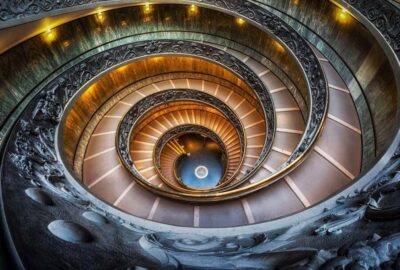
Vatican Museums & Sistine Chapel Tour with Optional Basilica
Read our review →
Colosseum, Roman Forum & Palatine Guided Tour
Read our review →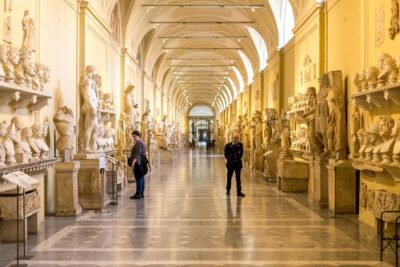
Vatican Museums, Sistine Chapel & St Peter’s Basilica Guided Tour
Read our review →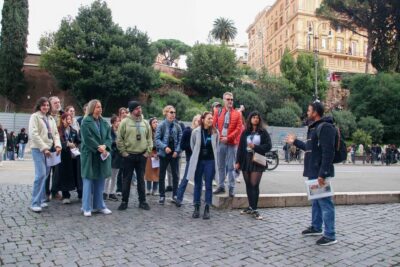
Colosseum & Forum with Audio Guide App -Optional Arena
Read our review →
Pantheon Fast-Track Ticket and Official Audio Guide
Read our review →
City Sightseeing Hop-on Hop-off Bus with Audioguide
Read our review →