
Review · APPIAN WAY TOURS
Rome: E-Bike Tour of Appia Antica, Aqueducts, and Caffarella
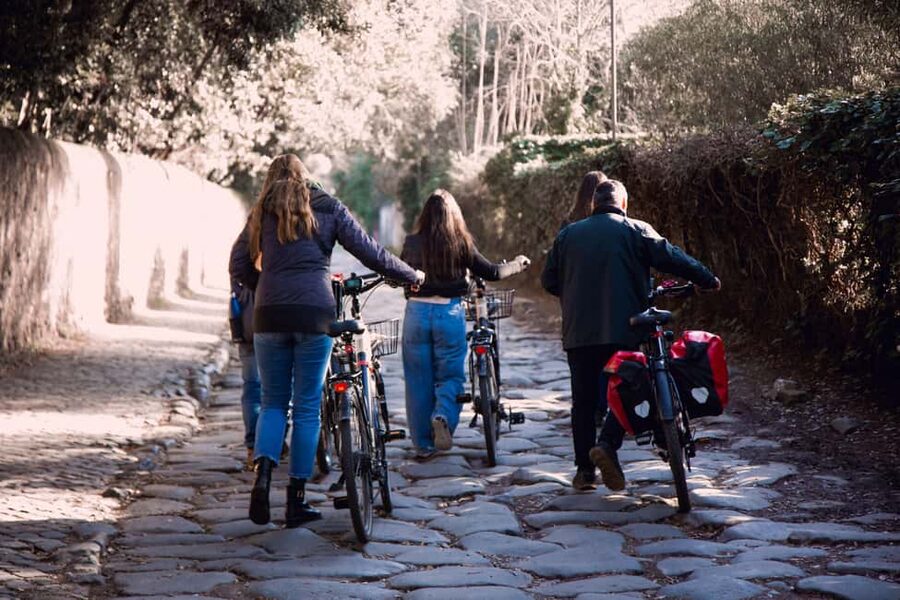
The old Appian Way was built in 312 BC, yet this ride takes you beyond Rome’s ancient stones to a rural valley where sheep, goats, horses, and pigs graze close to the city. You get a striking change of pace without needing to arrange transport or tackle the route alone.
I like two things in particular: the e-bike makes the old, uneven road more manageable, and the small group gives your guide room to explain what you’re seeing. Guides such as Monica and Adriana have been singled out for their history knowledge and attention to safe riding. One consideration: you still need to be a confident cyclist, and some sections are bumpy or on roads.
At a glance
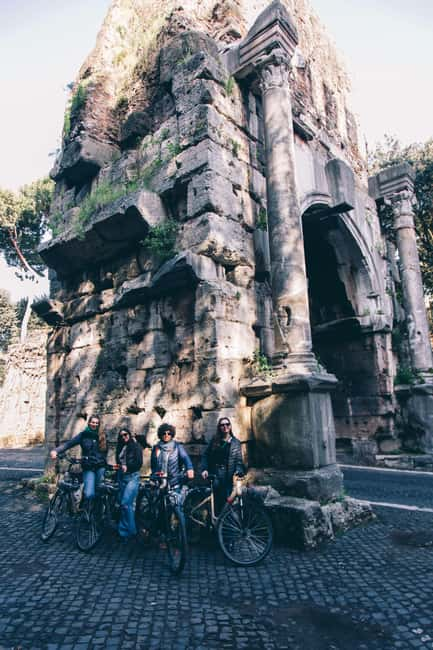
- The Appian Way: Ride part of Rome’s ancient route to Brindisi, with tombs and monuments along the way.
- A full change of scene: Leave the city center for the Aqueducts Park and Caffarella Valley.
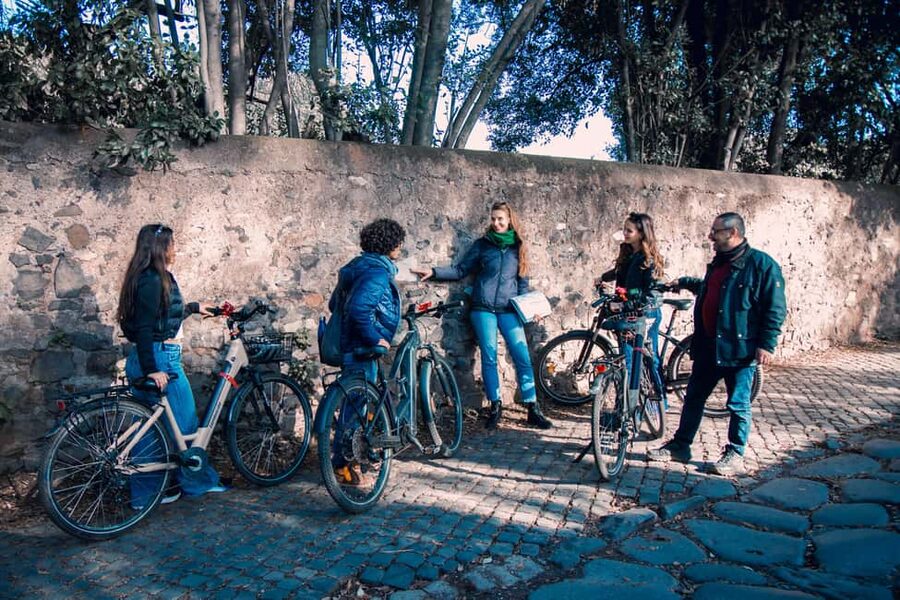
- Small group: Tours are limited to eight people, with an English- or Dutch-speaking guide.
- Four hours on an e-bike: The motor assistance helps on hills and rough patches, but you still pedal and steer.
- A proper pause: The route includes a 20-minute stop at a local bar.
- A few limits to know: The tour runs rain or shine, and it is not suitable for children under 12, pregnant women, or people who cannot ride a bike.
From Circus Maximus toward the countryside
The ride begins at Rome in a Day Tours, opposite Circus Maximus. Arrive 15 minutes early to get acquainted with your bike and handle the paperwork. That little buffer matters: a bike that fits you well makes a long ride more comfortable, and one rider wished for a better fit for a smaller frame. Tell the staff your height before setting off and take time to check the saddle and controls.
Circus Maximus gives you an impressive opening view. This enormous ancient stadium once held up to 300,000 spectators for chariot races. From here, the route moves past newer landmarks before reaching the Appian Way, giving your guide a chance to connect Rome’s famous monuments with its water systems and defensive walls.
The Baths of Caracalla are an early stop and a useful introduction to the scale of Roman public works. The tour allows 20 minutes for a photo stop. You should expect an outdoor look rather than a lengthy visit inside: the focus is on the monument and the route onward, not a full exploration of the baths.
Next comes Porta San Sebastiano, part of the Aurelian Walls. These fortifications help explain how Rome protected its expanding city. The stop also sets up a shift in scenery: soon, the dense center gives way to the ancient road and open ground beyond the walls.
More Appian Way tours in Rome:
- Rome EBike Tour: Appian Way, Catacombs & Roman Aqueducts
★ 5.0 · 1,766 reviews - Rome: Appian Way, Catacombs, & Roman Aqueducts E-bike Tour
★ 4.9 · 1,421 reviews - Rome:Appian Way E-bike Tour with Catacombs, Aqueducts & Food
★ 4.9 · 1,210 reviews
The Appian Way’s stones and tombs
The Via Appia Antica, or Appian Way, was one of Rome’s great roads. Construction began in 312 BC under the censor Appius Claudius Caecus, and the road once ran from Rome to Brindisi. The route’s lasting appeal is not only its age. It is the way the road’s monuments, old stones, and countryside still sit together in a place that feels markedly different from central Rome.
Your guide takes you past the Church of Domine Quo Vadis, where the tour stops for about 20 minutes. The church is associated with the story of Saint Peter encountering Christ on the road. From there, the route passes the Catacombs of Saint Callistus and other catacombs. The itinerary describes this as a pass-by, so don’t expect an underground visit as part of the ride.
The historic sites continue with the Villa of Maxentius, the Tomb of Cecilia Metella, and the Tumulus of the Curiazi. The Tomb of Cecilia Metella is one of the best-known monuments along this stretch of the road, while the remains of the villa offer a glimpse of a grand Roman residence. Each stop is planned as a photo stop, so you can look around and hear an explanation without turning the outing into a series of long indoor visits.
Further along is Villa dei Quintili, another major Roman residence in the area. The route brings several archaeological sites into one outing, which is the practical advantage of traveling by bike: you can cover ground between them without spending the day on foot or figuring out separate bus connections. The trade-off is that you see these places in passing or from designated stops, rather than giving each one the time it would deserve on a dedicated visit.
The old road can be uneven. Riders have found the cobbled sections one of the most memorable parts, but they can also be challenging. E-assist helps with effort, not balance, so keep both hands on the handlebars and ride at a pace that feels safe. Closed-toe shoes and comfortable clothes are sensible; choose clothing that can get dirty.
Aqueducts Park and Rome’s water supply
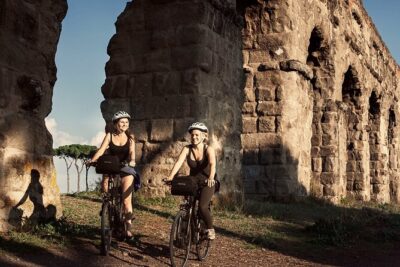
After the Appian Way, the tour heads to Parco degli Acquedotti, or Aqueducts Park. Set aside around 30 minutes here. The remains of ancient aqueducts cross a wide, open park, and their scale is easier to grasp when you see the arches stretching across the ground rather than encountering a single fragment in a city street.
Water is a theme introduced earlier at the Baths of Caracalla and developed here in the countryside. Rome’s aqueducts brought water to the city in remarkable quantity, supporting its baths, fountains, and daily life. A guide can help you read the structures as working infrastructure, not just dramatic ruins. This is one of the tour’s strongest history-and-place pairings: the engineering is ancient, but its purpose becomes clear as you follow the route back toward Rome.
The open park also gives you a break from the close-packed monuments of the center. There is room to ride, stop, and take in the arches. The e-bike helps make the transition between sites less tiring, though you should still expect a real cycling outing rather than a motor-assisted sightseeing bus.
Caffarella Valley’s unexpected quiet
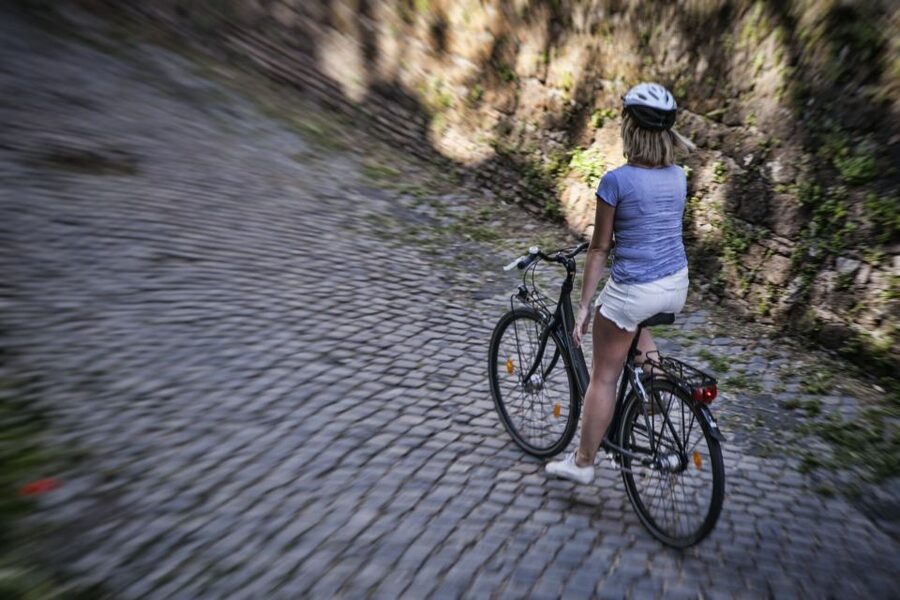
The ride then follows the Almone River into Caffarella Valley. This green stretch is a sharp contrast with central Rome, and one of the tour’s most appealing features. Horses, sheep, goats, and pigs may be close by, a reminder that countryside can begin surprisingly near a major city.
The tour spends around 30 minutes in Caffarella Park, including a stop at the Nymphaeum of Egeria. This elegant structure is thought to have belonged to the villa of Herodes Atticus. The setting gives the ancient remains a different feel from the roadside tombs: here, archaeology and nature share the same quiet space.
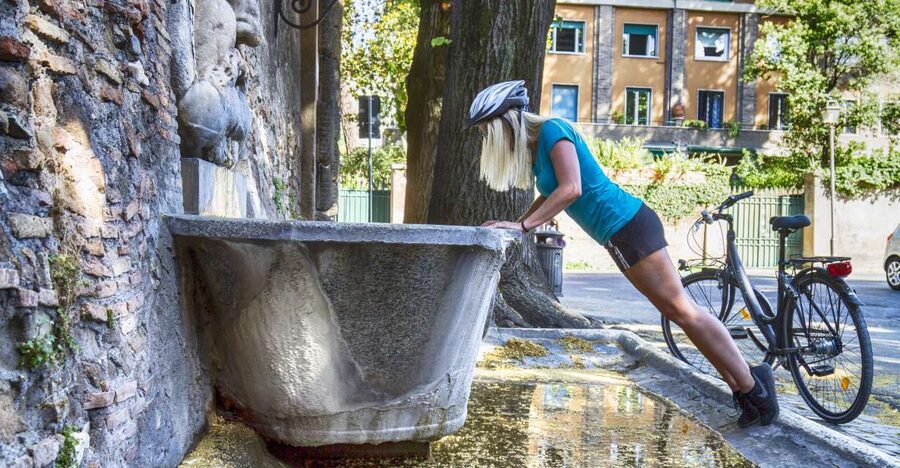
A 20-minute break at a local bar is built into the route. It is a welcome chance to rest, have a coffee or snack, and let your legs recover before continuing. If you’re used to sightseeing in Rome’s busy center, this pause and the surrounding countryside can make the whole half-day feel less like a checklist and more like a proper outing.
More bike tours in Rome:
- Rome: Top Highlights & Hidden Gems Tour by Cannondale E-Bike
★ 4.9 · 1,760 reviews - Rome City Small Group Bike Tour with quality Cannondale EBike
★ 5.0 · 1,380 reviews - Rome by Night – Ebike Small Group Tour – Food and Wine (Option)
★ 5.0 · 1,275 reviews - Rome: E-Bike Night Tour with Food and Wine Tasting
★ 4.9 · 1,131 reviews
What the e-bike changes
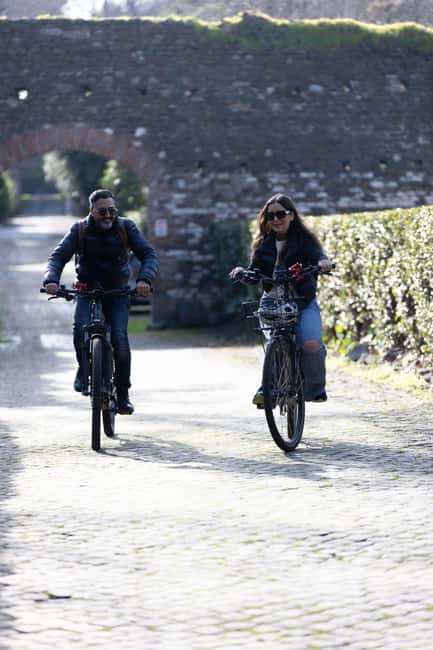
The tour uses company-owned electric bikes, and the bikes have been described as well maintained and fully charged. That matters on a route with hills, rough paving, and a fair distance between stops. E-assist makes the ride more accessible to regular cyclists who may not want to work hard for four hours, but it does not remove the need to ride confidently.
Safety is worth thinking about, especially if you are traveling with teenagers or are not used to city traffic. The route includes some roads, but guides have kept groups on quieter stretches where possible and used crossings or stopped traffic at busy sections. A group capped at eight makes it easier to stay together and hear instructions. Even so, you need to follow your guide’s signals and be comfortable sharing the road when required.
The tour operates rain or shine. Wear practical clothes that can take a little dust or dirt, and closed-toe shoes. There is no need to dress for a formal sightseeing stop; you’ll be outdoors and moving for most of the four hours. Since bike fit can affect comfort, speak up at the start if the frame, saddle, or riding position doesn’t feel right.
Guides, pace, and value
The guide is central to this experience. Guides including Monika, Monica, Adriana, Alannah, Federico, and Martin have led the route. The strongest accounts describe guides who explain the monuments clearly, answer questions, and pay attention to the group’s comfort and safety. Some riders have had a private-feeling outing when no one else booked their time slot, but the standard group limit is eight, so you should not count on having a private tour.
The stated price is $88 per person for four hours, including the e-bike and experienced guide. The value depends on what you want from Rome. If your priority is entering major monuments and spending hours inside them, this is not that kind of tour. If you want to link Roman roads, tombs, aqueducts, and countryside in one half-day, the bike and guide help you cover ground that would be awkward to manage on foot.
You also get more than a ride between photo stops. The route offers context about preservation, Roman engineering, and the city’s edge. In the 1950s, building pressure threatened historic and natural areas around Rome. Archaeologist, urbanist, journalist, and politician Antonio Cederna campaigned to protect the Appian Way and its surroundings. That effort helps explain why the route still passes through open land rather than an unbroken spread of development.
There is a practical comfort to the small group, too. With no more than eight people, it is easier to ask questions and keep a steady pace than it would be in a large cycling convoy. For a first-time rider in Rome, having a guide manage route choices and crossings is a genuine part of the value.
Who should book this ride?
Choose this tour if you can ride a bicycle confidently and want a break from Rome’s busiest sights. It suits people interested in archaeology, engineering, and open-air scenery, as well as families with children aged 12 and older who are competent cyclists. The route can work particularly well after several days of walking and queuing, since the e-bike offers a change in pace and helps with the rougher stretches.
Think twice if you dislike cycling on roads, struggle on uneven ground, or need step-free access. The tour is not suitable for people with mobility impairments, pregnant women, children under 12, or anyone unable to ride a bike. It also runs in wet weather, so your comfort depends in part on being willing to cycle outside when conditions are not ideal.
I’d book it if you want to see a side of Rome that is hard to reach by walking alone and are happy to spend four hours in the saddle. Ask for a bike that fits before the group sets off, listen closely at road crossings, and leave your schedule open enough to enjoy the stops rather than treating them as quick photo errands.
FAQ
How long is the e-bike tour?
The tour lasts four hours.
How much does the tour cost?
The stated price is $88 per person.
What is included?
An experienced tour guide and an e-bike are included.
What languages are available?
The live tour guide speaks English or Dutch.
How large is the group?
The group is limited to eight participants.
Where does the tour start and end?
It starts and ends at Rome in a Day Tours, Electric Bike and Vespa Excursions.
Do I need to know how to ride a bicycle?
Yes. You need to know how to ride a bicycle to join the e-bike tour.
Is the tour suitable for children?
It is not suitable for children under 12.
What should I wear or bring?
Wear comfortable clothes that can get dirty, and closed-toe shoes.
Does the tour run in bad weather?
Yes. The tour takes place rain or shine.
Newly reviewed in Rome
- Rome: Neapolitan Pizza Cooking Class in Front of the Vatican★ 4.8 · 137 reviews
- Rome: St. Paul’s Within the Walls New Year’s Concert Ticket★ 4.4 · 35 reviews
- Rome: Navona Underground & Domitian Stadium Guided Tour★ 4.6 · 36 reviews
- Rome: Navona Square and École Française Underground ticket★ 3.9 · 160 reviews
- Rome: Monuments and Belvederes Bike Tour★ 4.7 · 26 reviews
- Rome: Musical Biography of Frank Sinatra Concert★ 3.9 · 100 reviews
- Rome: Mini hike to the ancient Parco degli Acquedotti★ 4.9 · 9 reviews
- Rome: Monti Street Food Tour★ 4.5 · 14 reviews
Appian Way Tours, compared.
Rome EBike Tour: Appian Way, Catacombs & Roman Aqueducts
Read our review →
Appian Way, Catacombs, & Roman Aqueducts E-bike Tour
Read our review →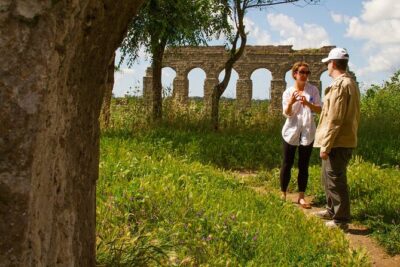
Rome Underground: Catacombs Tour, Aqueducts and Appian Way
Read our review →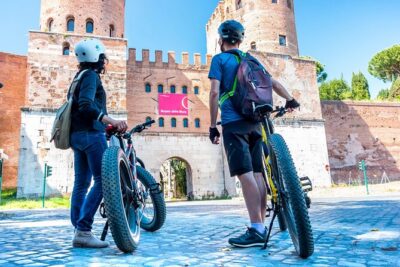
Appian Way Aqueducts Bike Tour (Catacombs & Lunch Option)
Read our review →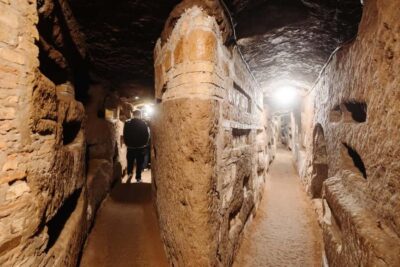
Appian Way, Catacombs and Aqueducts Park Tour with Top E-Bike
Read our review →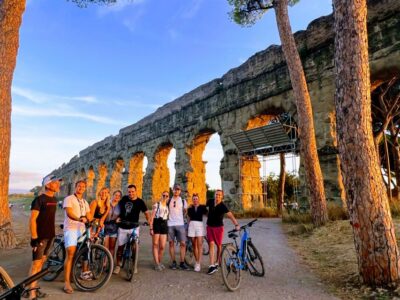
Appian Way & Catacomb Sunset E-bike Tour with Aperitif
Read our review →
Rome Catacomb & Appian Way Small-Group Tour by Golf Cart
Read our review →Browse the lists this tour appears in