

Review · JEWISH GHETTO TOURS
Rome: Jewish Ghetto Walking Tour
Rome’s Jewish Ghetto is a small part of the city with a history that reaches back more than 2,000 years. This walk links its ancient monuments with the story of Rome’s Jewish community, ending on Tiber Island with accounts of a wartime hospital and a temple now used as a church.
I like two things in particular: the route puts the Theater of Marcellus and Portico d’Ottavia in the same frame as the neighborhood’s Jewish history, and the guides make room for stories and questions rather than relying on a list of dates. The included kosher gelato or coffee adds a welcome pause.
One consideration: the tour passes the Great Synagogue, but does not include a stated visit inside. And if you arrive late, the group will not wait, so plan to reach the orange Roman Vacations sign at Trajan’s Column early.
What makes this walk worthwhile
- An ancient starting point: Meet at Trajan’s Column, then head toward monuments that predate the Colosseum.
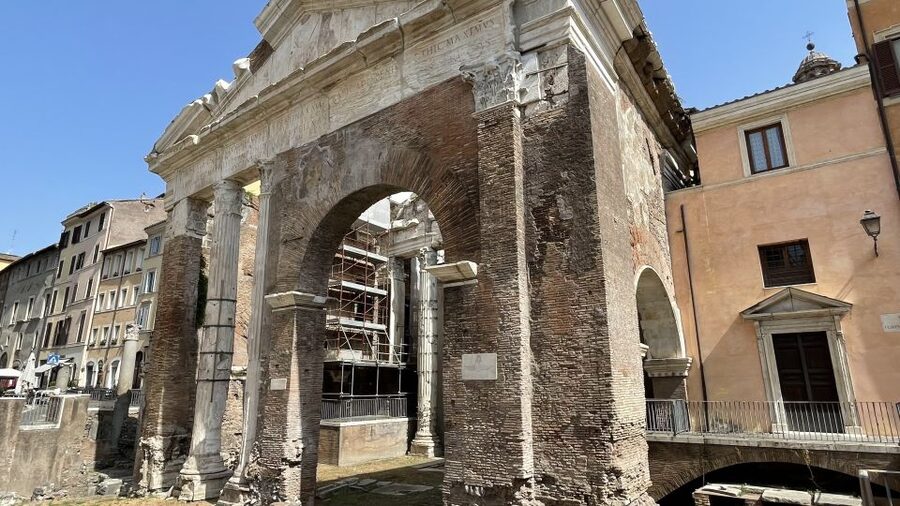
- A story-led route: The Theater of Marcellus, Turtle Fountain, and Portico d’Ottavia give your guide vivid places to connect Roman and Jewish history.
- A look at the Ghetto’s past: See the remaining piece of the wall and pass the Great Synagogue as the guide discusses the community’s history and resilience.
- A sweet pause: Kosher gelato or coffee is included. Any additional food and drinks are at your own expense.
- A quieter finish: Cross Rome’s oldest functioning bridge to Tiber Island for stories about its hospital and ancient temple.
- A guide makes the difference: Past guides have included James, Angela, Tom, Daniel, and Maria. Expect a live English-speaking guide, with a style that can vary by person and group.
From Trajan’s Column toward the old Jewish quarter
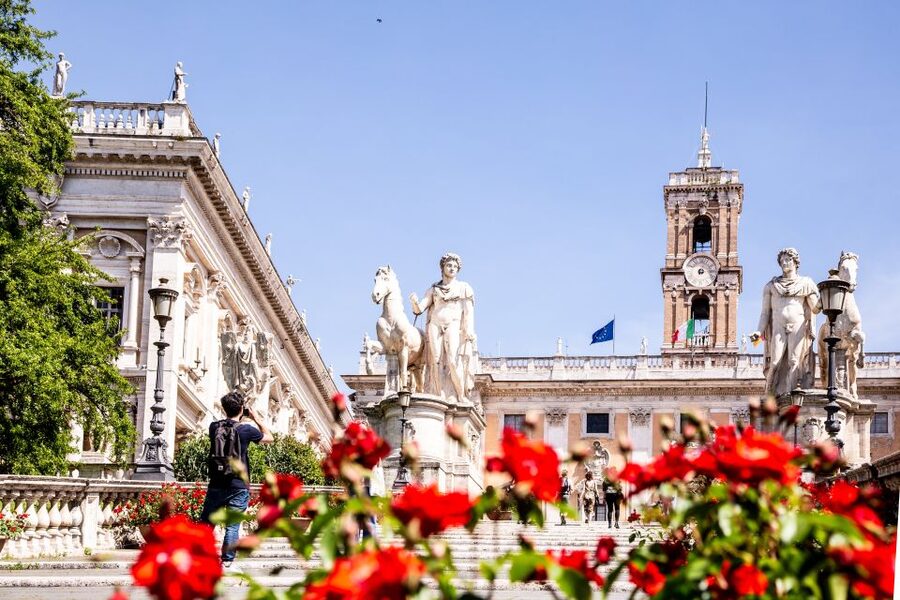
The meeting point is Foro Traiano, 84, near Trajan’s Column. Look for the orange Roman Vacations sign. Arrive on time: the tour does not delay for late arrivals, and missed tours are not refunded. From here, the route leads into one of Rome’s oldest neighborhoods, where layers of ancient architecture sit beside streets shaped by centuries of Jewish life.
The walk lasts 2.5 hours, a useful length for a neighborhood tour with several stops. It is long enough for a guide to build context as you move, but short enough to fit into a day of sightseeing. You will be on foot throughout, so comfortable shoes matter. Bring water, weather-appropriate clothing, and sun protection; tours go ahead in all weather, and an umbrella may come in handy.
The route works best when you are ready to listen and look closely. Some of its appeal lies in the contrast between places that are immediately recognizable, such as the Theater of Marcellus, and details that make more sense once a guide explains what happened here. Several past participants singled out guides’ storytelling and their ability to put Roman history in clear, manageable pieces. James, Angela, Tom, and Daniel are among the named guides, though you should not assume a particular person will lead your departure.
More Jewish Ghetto tours in Rome:
- Rome: Trastevere or Jewish Quarter Street Food Tour
★ 4.8 · 3,839 reviews - Jewish Ghetto and Trastevere Tour Rome
★ 4.5 · 1,729 reviews - Jewish Ghetto and Synagogues with Jewish Roman Guide 3 Hours
★ 5.0 · 907 reviews
The Theater of Marcellus, an ancient landmark in use
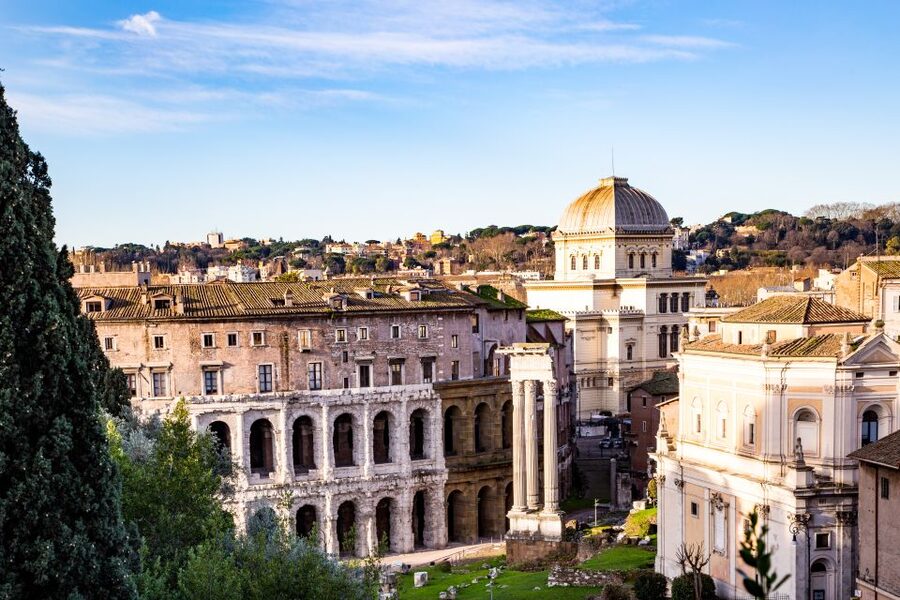
The Theater of Marcellus is an early highlight, with about 20 minutes set aside for a guided stop. It is older than the Colosseum, a comparison that helps reset your sense of Rome’s timeline. The tour’s broader theme is visible here: the city is not a collection of ruins sealed off from daily life. Some ancient structures remain part of the city people live in and move through.
This stop is a good place to ask how the theater fits into Rome’s long story, especially if you already know the headline monuments but want a wider view. Guides on this tour often put Jewish history in context alongside Roman history and the story of Italy. That wider frame is useful because it gives the neighborhood more than one historical layer.
The stop is guided rather than a separate admission visit. Expect to hear the guide explain the site and its place in the route, then continue on foot. If you want time to study the structure at your own pace or go inside a particular site, this tour may not provide that. Its value is in connecting places through narration as you walk.
Turtle Fountain and the small stories in Piazza Mattei
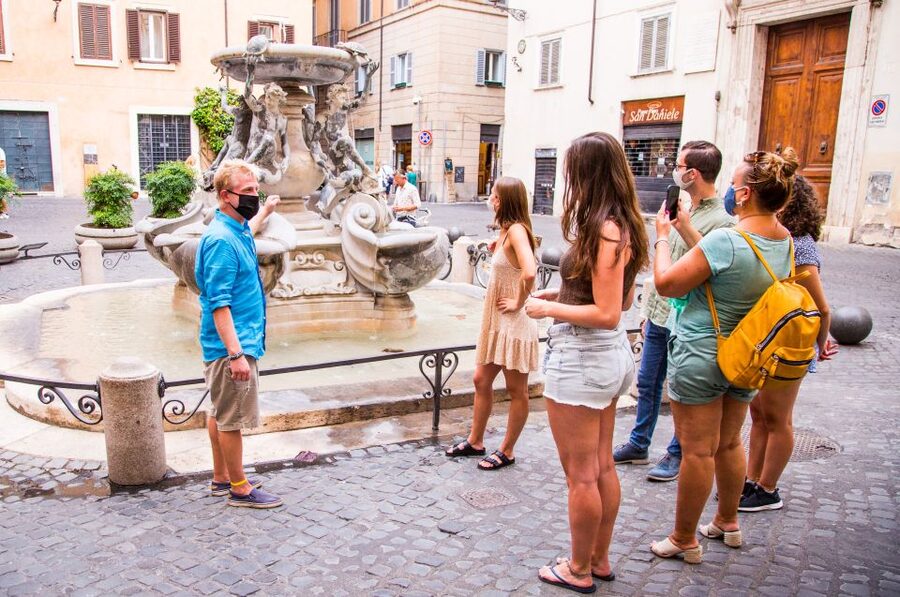
At Piazza Mattei, the group pauses for roughly 20 minutes at the Turtle Fountain. The guide tells a story of unrequited love connected with this well-known fountain. It is a change of scale after the theater: instead of a grand monument, you get a compact square and a personal tale tied to a particular spot.
That shift is one reason the route can hold the interest of a mixed group. You are not asked to take in a steady stream of dates and buildings. A story gives you something human to remember, and the square provides a natural pause before the walk moves further into the Jewish Ghetto.
The included refreshment is kosher gelato or coffee, described as homemade kosher gelato in the tour details. Treat it as a small included break, not a meal. Extra food and drinks are not included, and the exact choice may depend on what is available. One past participant described a broader food-and-wine experience, but the stated inclusion for this tour is gelato or coffee, so plan on that rather than counting on additional tastings.
The Jewish Ghetto and the remaining wall
The neighborhood itself is the heart of the experience. The guide explains the Ghetto’s difficult past and the endurance of Rome’s Jewish community, while showing you the last remaining piece of the wall that kept the community in this area for centuries. This is where the route’s monuments and human history meet most directly.
A guided walk is particularly useful here because the visible remains alone cannot tell the full story. The group moves through streets where the past is not always presented as a single, tidy attraction. A guide can explain how the neighborhood changed and why its history matters, while leaving time for questions. Past participants have praised guides such as Angela and James for making the subject clear and engaging, and for answering questions with care.
The tour also passes the Great Synagogue of Rome. That is an important landmark on the route, but do not book on the assumption that you will go inside. Entry to the synagogue is not listed as included, and some people have wished for an interior visit. If seeing the inside is essential to you, check separately before choosing this walk.
This is a thoughtful tour for anyone interested in Jewish history, not only Jewish visitors. Several people who joined without a personal connection to the subject found the experience meaningful. The guide’s role is to give you context and invite curiosity, not to assume what you already know. If a particular part of the history matters to you, bring questions; small groups have sometimes allowed for more discussion, but group size is not guaranteed.
More walking tours in Rome:
- Rome: Trastevere & Campo de Fiori Street Food Walking Tour
★ 4.9 · 2,768 reviews - Rome: Paranormal Night Walking Tour & Secret Backstreets
★ 4.9 · 1,921 reviews - Rome by Night Walking Tour – Legends & Criminal Stories
★ 4.5 · 1,003 reviews - Rome: Guided City Center Evening Sightseeing Walking Tour
★ 4.4 · 953 reviews
Portico d’Ottavia, where old Rome remains visible
The Portico d’Ottavia gets about 15 minutes of guided attention. Along with the Theater of Marcellus, it shows how ancient structures can remain part of the modern city rather than sitting apart from it. That makes the stop more than a photo opportunity: it helps you see how the neighborhood’s layers overlap.
The walk’s pacing matters here. A short stop gives the guide time to point out the site and explain its significance, but it is not a long, independent visit. If you enjoy taking photographs or lingering over architectural details, you may want to return on your own later. The tour is designed to carry you forward through a sequence of places, with the guide’s explanations as the thread.
For first-time visitors to Rome, the Portico also broadens the picture beyond the city’s best-known ancient sites. You get a closer look at an area where monuments and neighborhood history share the same streets. For repeat visitors, it offers a fresh route through a part of Rome that can be easy to miss if you stick to the main landmarks.
Across the bridge to Tiber Island
The final stop is Tiber Island, with about 15 minutes of guided time. To get there, you cross Rome’s oldest functioning bridge. The island gives the tour a distinct ending, with stories about a hospital that saved people during World War II and about Asclepius, whose temple is now a church.
The guide’s stories bring together different periods once more: ancient religion, the island’s later use, and wartime events. You finish with a sense that the tour has covered more than one neighborhood’s past. It has also traced how the city’s places have changed meaning over time.
The island is the tour’s endpoint, not a ride back to the meeting point. Keep that in mind when planning what comes next. The route is a walk rather than a loop, and the supplied information does not include onward transport. It is a fitting finish if you want to continue exploring nearby on your own, but leave yourself a moment to orient before rushing to another timed activity.
Guides, pace, and the value of the ticket

At $65 per person, the tour is best judged by the quality of the guiding, not by the number of stops alone. You are paying for 2.5 hours of English-language interpretation across several sites, along with kosher gelato or coffee. The monuments are viewed as part of a walking tour; no admission to the Great Synagogue or other paid attractions is listed.
The strongest reason to book is the guide. Past tour leaders named in participant accounts include James, Angela, Tom, Daniel, Maria, and Elena. People describe a range of strengths: James’s story-based explanations, Angela’s energy and warmth, Tom’s ability to set Roman history in context, and Daniel’s clear delivery and considerate pace. These are examples of what guides have brought to the walk, not a promise that you will have one of them.
Group size can vary. Some departures have been small, and a few have become private when no one else booked. That can make it easier to ask questions and hear the guide, but you should not count on a private tour. The stated duration is 2.5 hours, though individual guided stops listed along the route add up to less time; walking between places and the full flow of the experience fill the remaining time.
The walk requires ordinary city-street stamina, but one guide has been praised for adjusting the pace for someone who had difficulty walking. That is encouraging, though it is not a formal accessibility guarantee. If you have a specific mobility concern, contact the provider before booking rather than assuming the route will meet your needs.
Timing is worth thinking through, too. One participant advised against a Friday afternoon tour just before the Sabbath begins. The reason and effect may depend on the day and circumstances, but if Friday timing is important to you, check the available start times and consider how the schedule fits your plans. Tours operate in all weather, so dress for conditions, and bring a cover for bare shoulders if you may enter a church.
Who should book this Rome walk
I would choose this tour if you want more than a quick look at the Jewish Ghetto and value a guide who can link buildings to the lives and history around them. It suits curious first-time visitors, repeat visitors looking for a different part of Rome, and families with teenagers who enjoy stories as much as monuments. The guide-led format also helps if you want to ask questions rather than simply follow a map.
It may be a weaker fit if you need an interior visit to the Great Synagogue, want extended time at each monument, or prefer to explore at your own pace. The tour’s strength is the connected narrative, not access to buildings or long independent stops. The pace and presentation depend on the guide and group, so ask questions early and let the guide know if you need a slower walk.
At this price, the combination of ancient sites, neighborhood history, a live guide, and a small refreshment makes sense if those are your priorities. Book it for the stories and context, not as a food tour or a synagogue interior visit. And set out early for Trajan’s Column: in Rome, arriving at the right column is a small but useful first victory.
FAQ
How long is the Jewish Ghetto walking tour?
The tour lasts 2.5 hours.
Where is the meeting point?
Meet at Foro Traiano, 84, by Trajan’s Column. Look for an orange Roman Vacations sign.
What language is the tour in?
The live guide speaks English.
Is food included?
Kosher gelato or coffee is included. Extra food and drinks are not.
Does the tour go inside the Great Synagogue?
A visit inside is not specified. The route passes the Great Synagogue.
What should I bring?
Wear comfortable shoes and weather-appropriate clothing. Bring a sun hat, sunscreen, an umbrella, and a reusable water bottle. Bring a cover for bare shoulders if you will enter a church.
Newly reviewed in Rome
- Rome: Neapolitan Pizza Cooking Class in Front of the Vatican★ 4.8 · 137 reviews
- Rome: St. Paul’s Within the Walls New Year’s Concert Ticket★ 4.4 · 35 reviews
- Rome: Navona Underground & Domitian Stadium Guided Tour★ 4.6 · 36 reviews
- Rome: Navona Square and École Française Underground ticket★ 3.9 · 160 reviews
- Rome: Monuments and Belvederes Bike Tour★ 4.7 · 26 reviews
- Rome: Musical Biography of Frank Sinatra Concert★ 3.9 · 100 reviews
- Rome: Mini hike to the ancient Parco degli Acquedotti★ 4.9 · 9 reviews
- Rome: Monti Street Food Tour★ 4.5 · 14 reviews
Jewish Ghetto Tours, compared.

Trastevere or Jewish Quarter Street Food Tour
Read our review →
Jewish Ghetto and Synagogues with Jewish Roman Guide 3 Hours
Read our review →
Eat Like a Roman Ghetto & Campo de’ Fiori Food Tour
Read our review →
Jewish Ghetto & Piazza Navona: Food, Wine & Sightseeing Rome Tour
Read our review →
Food & Wine Tour of Campo de Fiori, Ghetto, Trastevere
Read our review →
Jewish Ghetto & Campo de Fiori by Night Food Wine Tour
Read our review →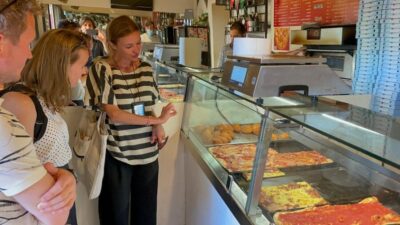
Food and Wine Tour, Trastevere and Jewish Ghetto
Read our review →Browse the lists this tour appears in