Review · ROME TOURS
Ancient Rome with Archaeology – Small Group Only
The most useful thing about this tour is its focus on how Rome’s monuments developed, not just what happened at each one. Guide Leonardo connects the Colosseum, Imperial Forums, Roman Forum and Capitoline Hill with the quieter archaeological area around the Theater of Marcellus, giving you a wider picture of the ancient city.
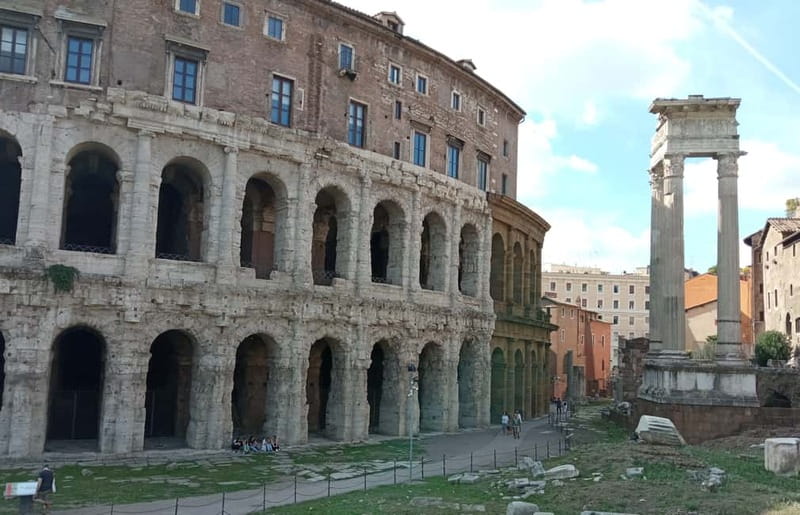
I like two things in particular: the small group, capped at six, makes it easier to follow a detailed explanation and ask questions; and the route ends among the Theater of Marcellus, Temple of Apollo and Porticus of Octavia, a welcome change from the headline ruins. One consideration: you do not go inside the monuments, so this is a history-and-viewpoints walk, not a ticketed visit.
At a glance
- Six people maximum: A small group suits a tour built around discussion and close attention to ancient architecture.
- A connected route: Leonardo links the Colosseum, Imperial Forums, Roman Forum and Capitoline Hill rather than treating each as a separate photo stop.
- A less familiar finish: The walk reaches the archaeological area around the Theater of Marcellus, the Temple of Apollo and the Porticus of Octavia.
- Outside views only: Monument entry and tickets are not included. The Roman Forum and Colosseum are seen from vantage points.
- A brisk, light walk: The experience lasts about 2.5 hours, with roughly 30 minutes listed at each main stop.
- English or Portuguese: The live tour is offered in either language, with starting times varying by availability.
A short walk through Rome’s long story
Rome’s ancient center is easier to read when you know what you are looking at. This walk sets out to provide that context, following a route through some of the city’s best-known ruins and ending in a smaller archaeological area near the former Jewish Ghetto.
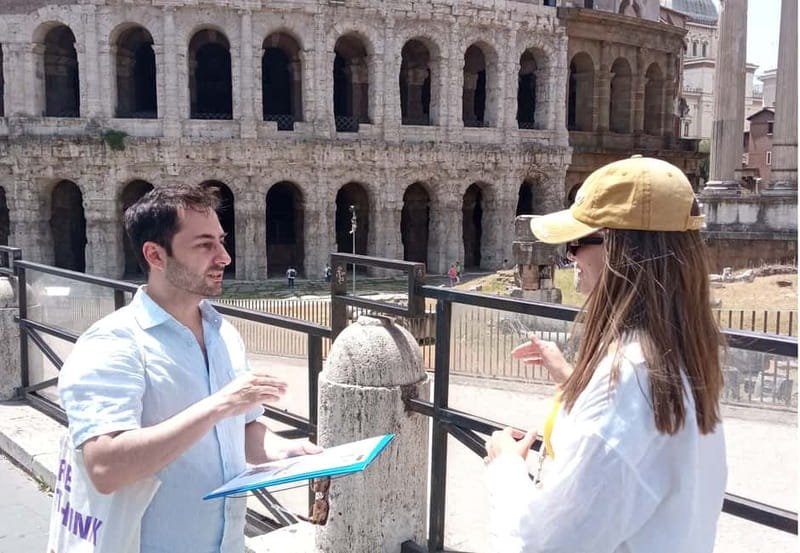
The guide, Leonardo, begins with a brief introduction to Rome’s timeline and the main features of its art and architecture. That framing matters. The stones and columns can be striking on their own, but the experience becomes more useful when you can connect a building’s purpose and period to the city around it.
The tour is designed around archaeology, history and art history. In practical terms, expect explanations of why, when and how the monuments were built, and how the city changed as Rome grew from a small settlement into an imperial capital. The emphasis is on making the visible remains understandable, rather than simply moving from one famous name to the next.
The group is limited to six participants. That is a good size for a walking discussion: small enough for questions and a more personal pace, but still a group experience. The tour description says Leonardo adapts the walk to participants’ interests, pace and time, though the route itself covers a lot of ground in two and a half hours.
The tour has a perfect rating from seven reviews, a small sample but a positive sign. The most specific praise concerns the depth of detail about Roman architecture and history, and an opening historical introduction that helped make the buildings easier to appreciate. That is the core promise here: not access to the monuments, but a guide who helps you interpret them.
More tours and experiences in Rome:
- Vatican: Museums & Sistine Chapel Entrance Ticket
★ 4.5 · 144,003 reviews - Vatican Museums & Sistine Chapel Tour with Optional Basilica
★ 4.3 · 67,413 reviews - Colosseum, Roman Forum & Palatine Guided Tour
★ 4.7 · 63,148 reviews
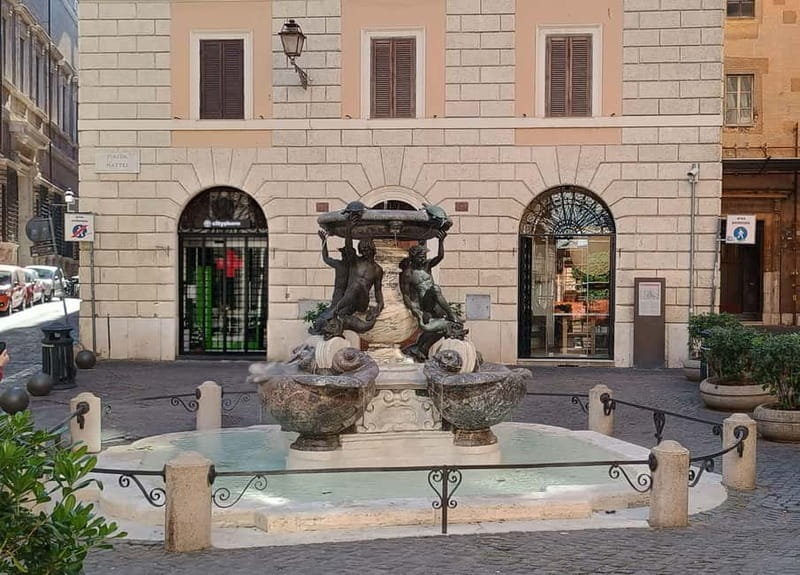
Starting at the Fountain of the Turtles
The stated meeting point is in front of the Fountain of the Turtles at Piazza Mattei, 1. It is a clear landmark in central Rome and a more distinctive place to begin than a generic street corner. The guide may start the introductory talk in a café or while walking, so the first few minutes set the tone rather than follow a rigid lecture format.
From there, the tour moves toward the major ancient sites. The route is described as light walking and suitable for all ages, with physical access provided by the city. That makes it a reasonable choice if you want a guided overview without strenuous hiking, though the full experience still involves walking between several areas.
One practical point deserves a check before you go: the tour information gives the meeting point as the start and says the activity ends back there, but the itinerary also lists drop-off locations near the Colosseum. Confirm the final stop with Leonardo when arranging your visit, especially if you have another booking or need to plan your route afterward.
Seeing the Colosseum from the outside
The Colosseum is one of the tour’s main stops, with about 30 minutes allocated for a guided walk and explanation. You see the monument from viewpoints rather than entering it. That distinction is important: the tour does not include an admission ticket or time inside the arena.
An exterior explanation can still make the Colosseum more legible. The goal is to understand the building in its historical and architectural setting, and to connect it with the wider development of ancient Rome. If you have never seen the monument before, this gives you a guided introduction without the added time and cost of an interior visit.
But if walking through the Colosseum is high on your list, treat this tour as a complement, not a substitute. You will need to arrange a separate ticketed visit to go inside. The same applies to the Roman Forum and other monuments on the route.
Reading the Imperial Forums as a group
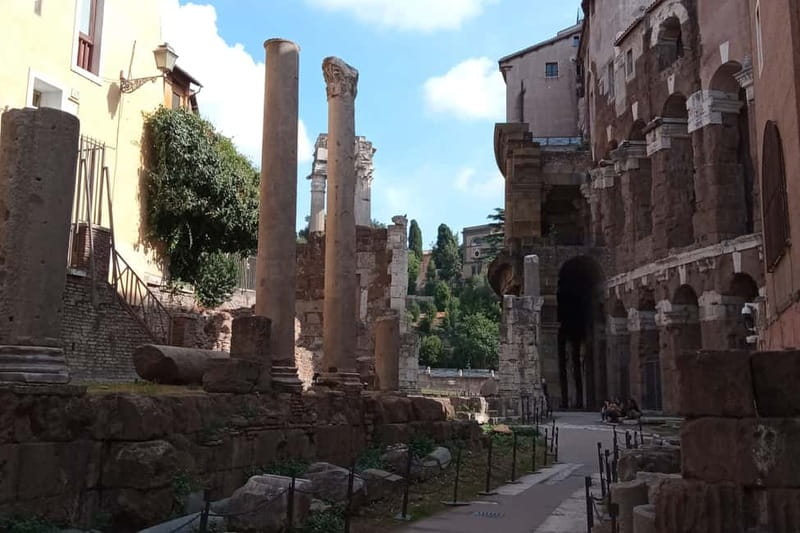
The Imperial Forums are allotted another 30-minute stop. Rather than describing this area as one isolated ruin, Leonardo’s approach is to explain the monuments as part of Rome’s growth and changing political life. The tour’s emphasis on archaeology helps place what you see in context, including how successive building projects shaped the ancient city.
This portion is valuable for anyone who has looked at the forums before and found them hard to distinguish. Ancient remains can look like a jumble of fragments without a guide to explain how they relate to each other. A small group gives you room to pause, listen and ask for clarification.
You should still expect a guided viewing, not an extended visit to every structure. The schedule spreads about 30 minutes across each main stop, and the experience covers several sites overall. The benefit is breadth and connection; the trade-off is that you will not linger at every ruin.
Same city, a different way to spend the day:
- Vatican Museums, Sistine Chapel & St Peter’s Basilica Guided Tour
★ 4.5 · 39,149 reviews - Rome: Colosseum, Palatine Hill and Roman Forum Guided Tour
★ 4.8 · 32,814 reviews - Rome: Guided Tour of Colosseum, Roman Forum & Palatine Hill
★ 4.7 · 27,897 reviews - Rome: Colosseum & Forum with Audio Guide App -Optional Arena
★ 4.2 · 24,770 reviews
Making sense of the Roman Forum
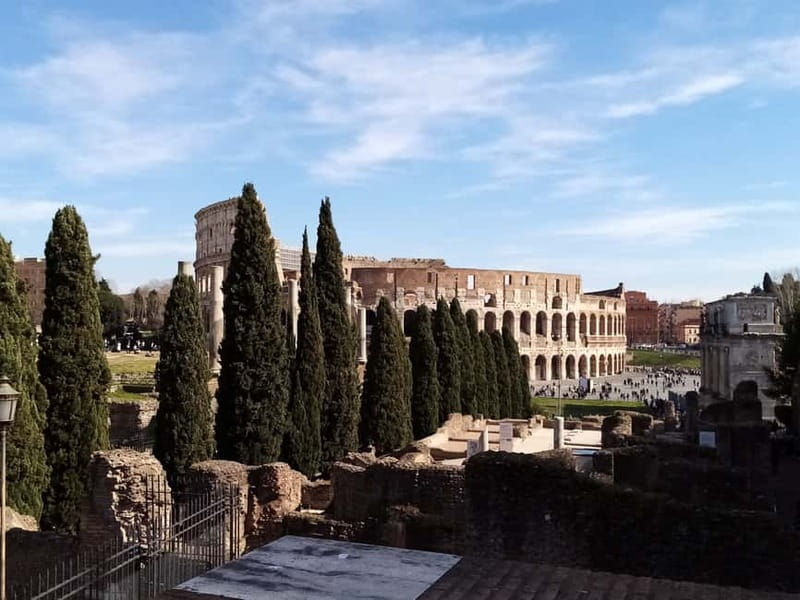
The Roman Forum is another central stop, with time for a guided overview and sightseeing. It is one of the most important places to understand the scale and complexity of ancient public life, but it can be difficult to interpret without some historical groundwork.
That is where the introductory timeline and the guide’s focus on architecture become useful. The aim is to help you understand the temples, basilicas and other remains as parts of a working civic center, rather than as disconnected columns. The tour includes a vantage point for viewing the temples and basilicas, so the experience is oriented toward explanation and sightlines, not entry into the archaeological site.
The distinction has a practical side. If you want to explore the Forum at your own pace, wander among the remains or spend more time at particular structures, you will need a separate visit. If your priority is to get a coherent overview before deciding what deserves more time, this guided stop can serve as a strong orientation.
Palatine Hill and the larger Roman story
Palatine Hill is named among the places covered in the experience, alongside the Colosseum, Imperial Forums, Roman Forum and Capitoline Hill. The detailed stop schedule does not give it a separate 30-minute slot, so think of it as part of the broader explanation and route rather than a guaranteed stand-alone visit.
Its inclusion helps convey the long arc of Rome’s development. The tour begins with the city’s earliest origins and traces the change from a small settlement to a great capital. That broad frame helps you see why the ancient center is not one single historical moment, but a series of layers built and altered over time.
As with the other major sites, the experience does not include entry. If you want to walk through Palatine Hill itself, plan a separate admission visit rather than assuming this tour takes you inside.
Looking across Rome from Capitoline Hill
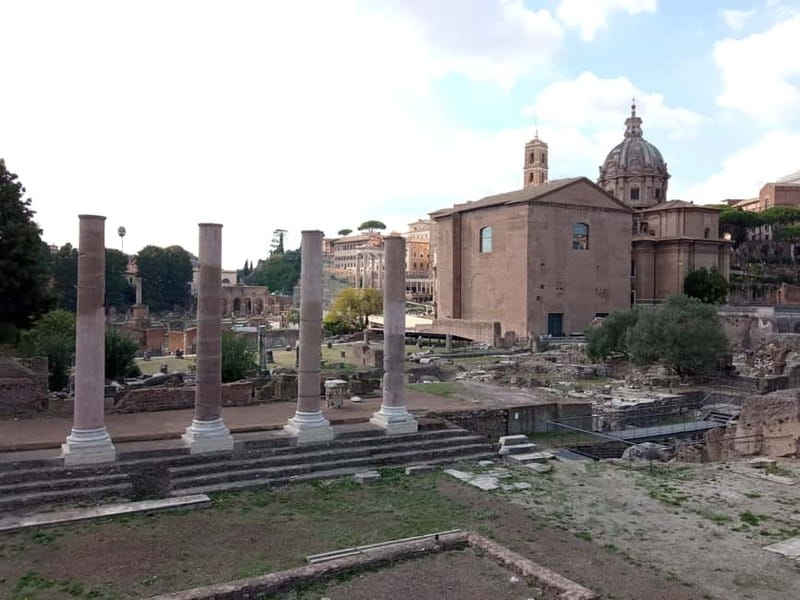
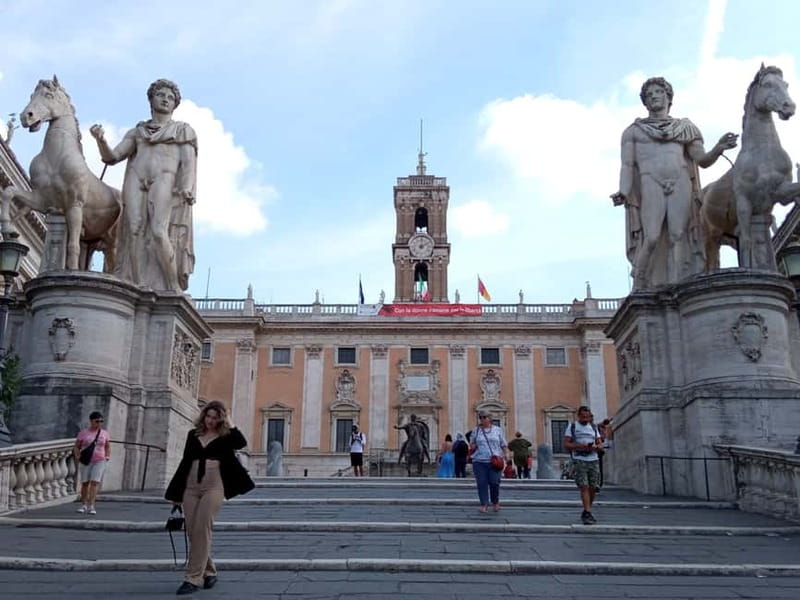
The route continues to Piazza del Campidoglio on Capitoline Hill, with another 30 minutes for a guided visit, sightseeing and walking. The square gives the tour a different perspective from the archaeological sites below. Here, the guide can help you connect the city’s layout and monuments, rather than focusing only on individual ruins.
Capitoline Hill is a useful point in the walk because the experience covers both the ancient remains and the urban setting around them. The tour’s subject is not just what survives, but how the city developed and how its monuments fit into that history. For a visitor trying to build a mental map of ancient Rome, that wider view can be as helpful as the close-up details.
The pace is still brisk. You are covering several major areas in a short tour, so this is not the time to expect long, unhurried stops. If you enjoy learning on foot and moving between viewpoints, that rhythm should work well. If you prefer to study one site at length, consider pairing the walk with a separate visit.
Finishing among the Theater of Marcellus ruins
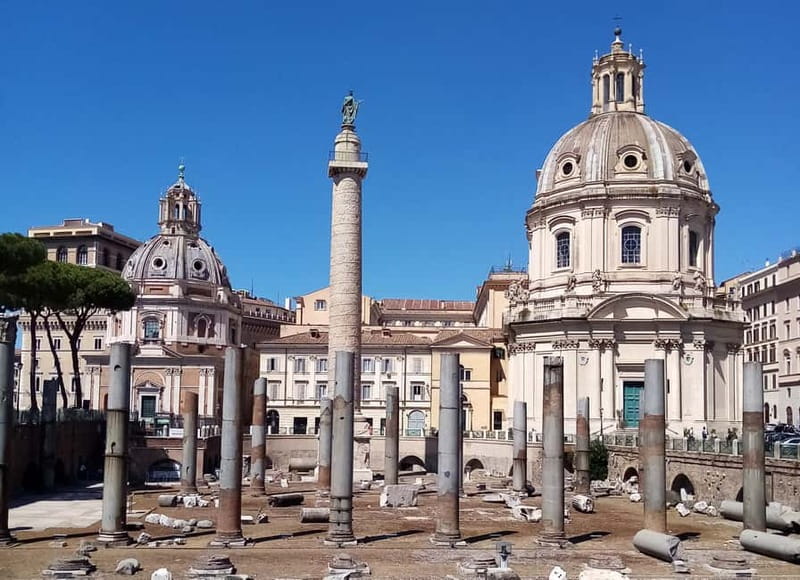
The final archaeological area is one of the most distinctive parts of the route. The tour reaches the Theater of Marcellus, the Temple of Apollo and the Porticus of Octavia, ending near the area of Rome’s former Jewish Ghetto. The archaeological area here has free entry, unlike the ticketed monuments elsewhere in the walk.
This quieter finish gives the tour a change of pace after the Colosseum and Forum. The Theater of Marcellus is a major ancient structure, while the nearby remains bring several layers of Rome’s past into one final stretch. You get to end not only with a famous landmark, but with a cluster of archaeological sites that can be easier to overlook when planning a first visit.
The route’s final area is also a good reason to choose this experience over a tour that only covers the biggest names. The headline monuments are essential, but the closing section broadens the picture and leaves you with a sense of how much ancient Rome extends beyond the most familiar ruins.
What $36.08 gets you
At $36.08 per person, this is a modestly priced guided overview of several major ancient areas. The value rests on the guide’s interpretation and the small group, not on admissions or exclusive access. You are paying for two and a half hours of explanation across a broad route, with a maximum of six participants.
That can be a good deal if you want an informed introduction before exploring the sites on your own. The tour’s strongest point is its effort to connect architecture, history and archaeology. The specific praise for Leonardo’s historical introduction and detailed explanations suggests that the learning element is central, not an optional extra.
The price is less compelling if you are mainly seeking entry to the Colosseum or Forum. Tickets are not included, and the tour does not enter the monuments. You will need to budget separately for any interior visits you want, and you should not book this expecting a ticket bundle.
Who should book this walk
I would choose this tour if you want a compact, guided overview of ancient Rome and prefer understanding the monuments to simply collecting exterior photos. It suits first-time visitors who need the sites explained, as well as repeat visitors who want a clearer account of how the city evolved.
It is also a good fit if you like small groups, appreciate a personal pace and want a guide who can answer questions. The English and Portuguese options make it accessible to speakers of either language, and the light-walking format is intended for all ages.
I would look elsewhere, or add another visit, if your main goal is to go inside the Colosseum, Roman Forum or Palatine Hill. Those experiences are not part of this walk. Also check the end point with the guide, since the stated return to the starting point differs from the listed drop-off locations.
For a first orientation to Ancient Rome, the combination of famous monuments, archaeological context and a less expected finish is appealing. Book it for the explanations and the route, then plan separate entry tickets if you want to explore the interiors.
FAQ
How long is the Ancient Rome tour?
The tour lasts about 2.5 hours. Starting times vary, so check availability for the date you want.
Where does the tour start?
The meeting point is in front of the Fountain of the Turtles at Piazza Mattei, 1.
Where does the tour finish?
The activity information says it ends back at the meeting point, while the itinerary also lists drop-off locations near the Colosseum. Confirm the final point with Leonardo before the tour.
Does the tour go inside the Colosseum or Roman Forum?
No. The tour views the monuments from outside and does not include entry or tickets.
Which places are covered?
The route includes views or visits around the Colosseum, Imperial Forums, Roman Forum, Palatine Hill, Capitoline Hill and the archaeological area of the Theater of Marcellus, Temple of Apollo and Porticus of Octavia.
How large is the group?
The group is limited to six participants.
What languages does the guide speak?
The live tour is offered in English and Portuguese.
Is the walk suitable for all ages?
It is described as a light walking tour suitable for all ages and does not require strenuous effort. The activity notes that physical accessibility is provided by the city.
Is admission included in the $36.08 price?
No. Tickets and entry into the monuments are not included. The archaeological area around the Theater of Marcellus is described as having free entry.
Newly reviewed in Rome
- Rome: Neapolitan Pizza Cooking Class in Front of the Vatican★ 4.8 · 137 reviews
- Rome: St. Paul’s Within the Walls New Year’s Concert Ticket★ 4.4 · 35 reviews
- Rome: Navona Underground & Domitian Stadium Guided Tour★ 4.6 · 36 reviews
- Rome: Navona Square and École Française Underground ticket★ 3.9 · 160 reviews
- Rome: Monuments and Belvederes Bike Tour★ 4.7 · 26 reviews
- Rome: Musical Biography of Frank Sinatra Concert★ 3.9 · 100 reviews
- Rome: Monti Neighborhood Lunch or Dinner Food Tour★ 4.9 · 8 reviews
- Rome: Mini hike to the ancient Parco degli Acquedotti★ 4.9 · 9 reviews
Rome Tours, compared.
Vatican: Museums & Sistine Chapel Entrance Ticket
Read our review →
Vatican Museums & Sistine Chapel Tour with Optional Basilica
Read our review →
Colosseum, Roman Forum & Palatine Guided Tour
Read our review →
Vatican Museums, Sistine Chapel & St Peter’s Basilica Guided Tour
Read our review →
Colosseum & Forum with Audio Guide App -Optional Arena
Read our review →
Pantheon Fast-Track Ticket and Official Audio Guide
Read our review →
City Sightseeing Hop-on Hop-off Bus with Audioguide
Read our review →