
Review · OSTIA ANTICA TOURS
From Rome: Ostia Antica Guided Half-Day Trip by Train
Ostia Antica is where Roman history gets wonderfully everyday. Instead of looking at a single monument, you walk the old port’s streets, past shops and baths, toward the Baths of Neptune and an amphitheater built for 3,500 spectators. The city once had more than 100,000 residents, and its scale makes the past feel close at hand.
I like two things especially: the small group of up to 12, which makes it easier to hear and ask questions, and the direct train ride from Rome, which brings a remarkable archaeological site within half a day’s reach. Guides such as Rob, Cat, Catarina, Alberto, and Laura have all led tours here, with clear storytelling and a pace that leaves room to take in the place.
The main consideration is that three hours on foot can be demanding, and the site is not suitable for wheelchair users. The tour also ends with a choice: return with the group or stay in Ostia, in which case your train ride back is unescorted.
At a glance: Ostia Antica from Rome

- Roman city, not a single ruin: Walk along the Decumanus Maximus and see the remains of taverns, warehouses, thermal baths, and theaters.
- A striking Neptune mosaic: The Baths of Neptune are crowned by a mosaic showing the sea god in a chariot drawn by four horses.
- A real ancient public toilet: The communal Forica has a marble bench with 20 openings around a large open room.
- A small group on a large site: Up to 12 people follow an English-speaking guide through a sprawling archaeological park.
- An easy rail trip: The train journey is about 15 minutes outbound and 20 minutes back, with tickets included.
- Stay on for more: After the guided walk, you can explore the site, visit modern Ostia, or head to a nearby beach.
Why Ostia Antica is a worthwhile change of pace
Ostia was Rome’s harbor town and a working city, not simply a place of grand temples and public monuments. That distinction is the pleasure of this visit. You see how people moved through streets, gathered at the baths, watched performances, and handled the business that helped Rome prosper.
The site was founded in the 4th century BC and eventually became home to more than 100,000 people. Its remains cover a broad area, with enough surviving walls and streets to give you a sense of a city rather than a collection of isolated ruins. A guide helps connect the buildings to daily life, so a shopfront or public washroom becomes more than an old stone structure.
Ostia is often compared with Pompeii, and the comparison is useful, though the two places offer different experiences. Ostia is close to Rome and can feel much quieter. Its appeal lies in the preserved urban fabric and the chance to picture an ancient port town at work, rather than in a single dramatic event.
More day trips from Rome in Rome:
- From Rome: Pompeii, Amalfi Coast, and Sorrento Day Trip
★ 4.6 · 7,031 reviews - From Rome: Pompeii, Amalfi Coast and Positano Day Trip
★ 4.6 · 6,620 reviews - Pompeii, Amalfi Coast and Positano Day Trip from Rome
★ 4.5 · 6,250 reviews
Meeting at Piramide and taking the train
The tour starts at Cafe Piramide, near the Piramide Metro Station on Line B. Look for the cafe on the right when facing the station, with white umbrellas outside and train tracks nearby. Your guide will hold a City Wonders sign. The meeting point is by the station, but take a moment to check you are at the cafe itself rather than across the street.
The train ride is a practical part of the trip, not a complicated transfer. Your guide provides the return ticket and accompanies the group to the archaeological area. The outbound ride takes about 15 minutes; the return ride is listed at about 20 minutes. If a public transport strike or another unforeseen transit problem interrupts service, a minibus is provided at no extra cost.
The train makes this a low-effort day trip from central Rome, but allow enough time to reach the meeting point. Once the group is together, your guide explains the plan and keeps track of everyone during the journey. That helps if you are new to Rome’s transit system or simply want to spend your attention on the ruins rather than the route.
Walking the Decumanus Maximus
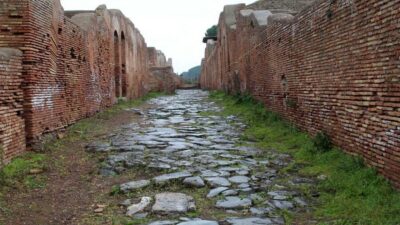
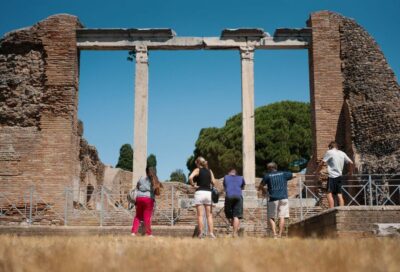
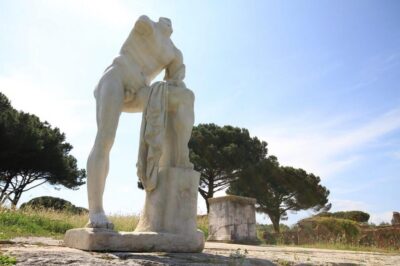
The guided visit lasts about three hours, and the main street, the Decumanus Maximus, is a natural starting point. Walking this broad thoroughfare gives you a sense of the city’s layout and scale. Roman statues line the walkways, while the remains of commercial buildings, taverns, warehouses, baths, and theaters offer clues to the mix of work and public life here.
A guide is particularly useful at a site this large. It is easy to pass a building without knowing what it was or why it mattered. Guides including Rob, Cat, Alberto, and Laura have been praised for vivid explanations, humor, and a steady pace. Some use acting or visual aids to help you picture the original structures and the people who used them. The value is not just more facts; it is learning where to look and what a building tells you.
The tour is designed to cover key areas rather than every corner of Ostia. That is a sensible trade-off on a half-day visit. You get context for the major features without having to navigate the whole site alone, and a small group gives you a better chance to ask questions than a large crowd would.
The Baths of Neptune and their mosaic
The Baths of Neptune are among the tour’s most memorable stops. The complex is crowned by a well-preserved mosaic of Neptune riding in a chariot pulled by four horses. Even if you have already seen Roman mosaics in Rome, the scale and setting here make this one worth pausing over.
The baths also help bring the public side of Roman life into focus. They were more than a place to wash; they were a major part of the city’s shared spaces. Your guide can place the mosaic and the surrounding remains in context, making it easier to imagine how a bath complex fitted into the routines of a port town.
More Ostia Antica visits in Rome:
- Ancient Ostia Antica Semi-Private Day Trip from Rome by Train with Guide
★ 4.5 · 579 reviews - Horse Sanctuary & Trail Ride in Ostia Antica
★ 4.5 · 276 reviews - Ostia Antica Semi Private Tour from Rome
★ 5.0 · 238 reviews - Ostia Antica Small Group Tour
★ 4.8 · 49 reviews
Taking a seat at the amphitheater
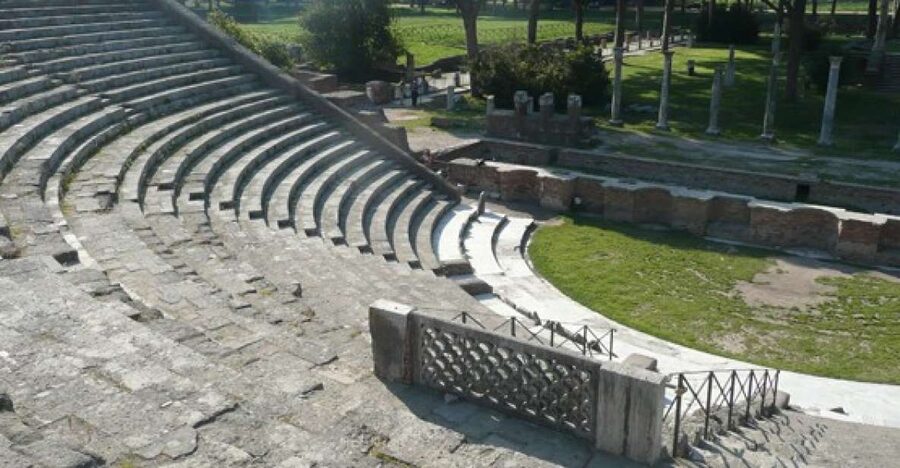
Ostia’s amphitheater was built in 12 BC and could hold about 3,500 spectators. You can stand in the structure and look toward the seating, a simple way to understand its purpose and scale. The setting invites you to imagine a crowd arriving for a performance, without needing a grand reconstruction to make the point.
This is one of the stops where the guide’s storytelling can do a lot. The stonework alone tells only part of the story; the people and public events are what make the place legible. The amphitheater is also a useful pause in the walk, a chance to take in the site as a whole before moving on.
The Forica: an unvarnished detail of Roman life
The communal Forica is a public washroom, and it is one of the most human stops on the route. A marble bench runs around the walls of a large open room, with 20 well-spaced openings. It is a practical, slightly comic reminder that Roman history was made by people with ordinary needs, not only emperors and generals.
This kind of detail is part of what makes Ostia such a strong complement to Rome’s monumental sights. The Forica is not beautiful in the usual sense, but it is memorable. It also gives your guide a chance to talk about daily routines with a little humor.
What three hours on site feels like
Expect plenty of walking over uneven ground. Comfortable shoes are essential, and sports shoes are specifically recommended. The site is extensive, so even a focused guided route covers a fair amount of ground. There is a toilet break and time for a snack or drink at the snack bar, but do not treat the visit as a seated excursion.
The pace is generally meant to keep the group moving while allowing time at important stops. Small-group size helps here: it is easier to hear explanations, keep together, and ask questions. Still, summer heat can make the walk harder. One guide, Alberto, was noted for finding shade during a hot visit, but you should bring water and dress for the weather rather than count on shade at every stop.
Baby strollers are not allowed, and the tour is not suitable for wheelchair users. These limitations matter at a site with a long walking route and uneven archaeological remains. If anyone in your group has mobility concerns, this is a good experience to assess carefully before booking.
Stay in Ostia, or return to Rome
At the end of the guided portion, you can stay at Ostia Antica and explore independently, head into modern Ostia, or go to a nearby beach. The freedom to stay makes the trip more flexible than a simple out-and-back excursion. If you want to see more of the archaeological park, you can take your time rather than rushing back to Rome with the group.
The onsite museum is another possible addition. It has been noted as newly opened, but opening hours can vary; in winter, it may close early. If the museum is important to you, check its hours before the trip and consider visiting it soon after the guided tour. The guided route ends near the museum, which makes that plan convenient.
For the beach, bring beachwear and a towel, as both are listed among the suggested items. The tour does not include hotel pickup or drop-off, and the guide does not escort the return journey if you remain in Ostia. Your train ticket is provided, but plan to make your way back on your own. Those who return with the group are expected to reach Piramide Metro Station at about 1:00 PM.
Is $58 good value?
At $58 per person, the price includes the return train ticket, the Ostia Antica entry ticket, and an English-speaking guide. The guided walk is the main reason to choose this tour over simply taking the train and exploring by yourself. Ostia is large, and the remains make more sense when someone explains how the port city worked and points out features you might otherwise miss.
The small group adds value, too. With a maximum of 12 participants, the guide can keep the group together without turning the visit into a parade. You have a better chance to ask questions and hear the explanations, while still benefiting from an organized route through the main sights.
The price does not include hotel transport, and the guide’s service does not cover an independent stay in Ostia. If you plan to remain afterward, factor in the extra time and effort of finding your own way back. But for a well-organized half-day, with transport and admission covered and a guide to make the ruins understandable, the cost is reasonable.
Who should book this trip
I would choose this tour if you are interested in Roman daily life, want a break from Rome’s busiest monuments, or have already visited the major sights and want a different angle on the ancient city. It also suits anyone who likes archaeology but does not want to spend the day puzzling over an extensive site alone.
Families with older children may enjoy the mix of stories, public spaces, and unusual details such as the Forica. The three-hour walk is the key consideration for children or anyone who tires easily. Bring comfortable shoes, and remember that strollers are not permitted.
If your priority is a very short outing with little walking, this is not the best fit. Nor is it suitable for wheelchair users. But if you can manage a few hours on foot, Ostia offers a rewarding look at a Roman port city, with the option of adding a museum visit or beach stop afterward.
Should you book?
Book this half-day trip if you want a well-guided introduction to Ostia Antica and value having the train, admission, and route handled for you. Its strongest points are the everyday details, the small group, and the chance to explore further after the guided walk. Choose another outing if uneven ground, extended walking, or an unescorted return from Ostia would be a problem.
FAQ
How long is the Ostia Antica tour?
The activity lasts about four hours, including train travel. The guided visit at the archaeological site lasts about three hours.
Where is the meeting point?
Meet at Cafe Piramide beside Piramide Metro Station on Line B. Look for the white umbrellas outside and a guide holding a City Wonders sign.
Are train tickets and entry included?
Yes. The tour includes a return train ticket from Rome to Ostia Antica, admission to the archaeological site, and an English-speaking guide.
Can I stay in Ostia after the guided tour?
Yes. You can remain at Ostia Antica, explore modern Ostia, or go to a nearby beach. If you stay, your return train journey is unescorted, though your ticket is provided.
What should I bring?
Wear comfortable shoes or sports shoes. Bring beachwear and a towel if you plan to go to the beach.
Is the tour accessible to wheelchair users or strollers?
No. The activity is not suitable for wheelchair users, and baby strollers are not allowed.
More half-day tours in Rome
- Hadrian’s Villa and Villa d’Este Half-Day Trip from Rome
★ 3.5 · 808 reviews - Rome Golf Cart Tour : Half-Day Private or Small Group Sightseeing
★ 5.0 · 528 reviews - Catacombs and Roman Countryside Half-Day Walking Tour
★ 4.5 · 411 reviews - Rome: Hadrian’s Villa and Villa d’Este Half-Day Tour
★ 4.2 · 165 reviews
More train trips in Rome
- Rome to Pompeii Guided Tour with Wine & Lunch by High Speed Train
★ 5.0 · 1,379 reviews - Rome: Pompeii Tour with Wine and Lunch by High Speed Train
★ 4.8 · 485 reviews - Venice Day Trip from Rome by High-Speed Train with Happy Hour
★ 4.5 · 445 reviews - From Rome: Day Trip to Venice by High-Speed Train
★ 4.6 · 352 reviews
Newly reviewed in Rome
- Rome: Neapolitan Pizza Cooking Class in Front of the Vatican★ 4.8 · 137 reviews
- Rome: St. Paul’s Within the Walls New Year’s Concert Ticket★ 4.4 · 35 reviews
- Rome: Navona Underground & Domitian Stadium Guided Tour★ 4.6 · 36 reviews
- Rome: Navona Square and École Française Underground ticket★ 3.9 · 160 reviews
- Rome: Monuments and Belvederes Bike Tour★ 4.7 · 26 reviews
- Rome: Musical Biography of Frank Sinatra Concert★ 3.9 · 100 reviews
- Rome: Monti Neighborhood Lunch or Dinner Food Tour★ 4.9 · 8 reviews
- Rome: Mini hike to the ancient Parco degli Acquedotti★ 4.9 · 9 reviews
Ostia Antica Tours, compared.
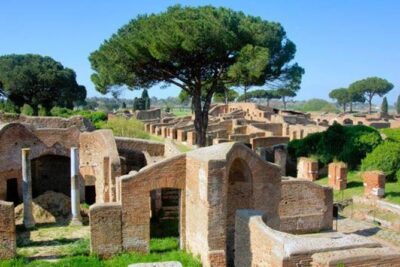
Ancient Ostia Antica Semi-Private Day Trip from Rome by Train with Guide
Read our review →
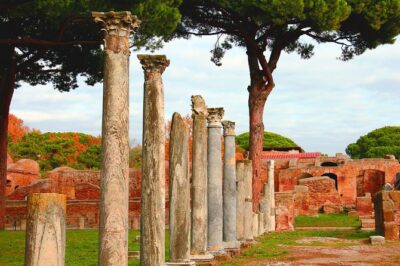
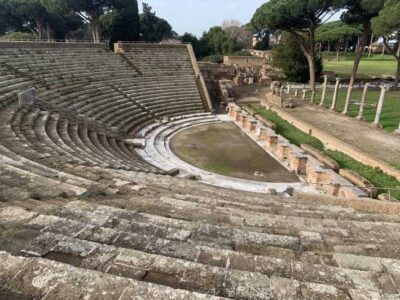
Ostia Antica: Hidden City Guided ENGLISH Tour with Transfer
Read our review →Browse the lists this tour appears in