Review · ROME TOURS
Rome: Basilica of St Mary Major Catholic Pilgrim Tour
St Mary Major holds a rare combination of treasures: a Holy Door, a relic said to be wood from the crib of the baby Jesus, and the Salus Populi Romani icon, traditionally attributed to St Luke. A Catholic guide connects these objects to the basilica’s faith and history, so you’re not left guessing at what you’re seeing.
I especially like the focus on mosaic symbolism and the chance to see the basilica through a pilgrim’s eyes. I also like that the group is limited to 10, making it easier to ask questions and follow the guide’s explanations.
The main consideration is time. The tour is advertised as one hour, though the visit may run 60 to 90 minutes, and $65 is a substantial price for a single church. It makes most sense if you want a guided, faith-centered visit rather than a quick look around.
What to know before you go
- A papal basilica with a Holy Door: Examine one of Rome’s four Holy Doors, which open during Jubilee Years.
- A relic linked to the Nativity: See wood traditionally identified as part of the crib of the baby Jesus.
- A revered Marian icon: View the Salus Populi Romani, which Catholic tradition attributes to St Luke the Evangelist.
- Mosaics with a lesson to teach: Your guide interprets biblical symbolism in the mosaics behind the altar.
- A small group: No more than 10 people take part, with radio headsets provided for groups of seven or more.
- A focused visit: The tour begins and ends at Santa Maria Maggiore, with no transport included.
Why St Mary Major rewards a guided visit
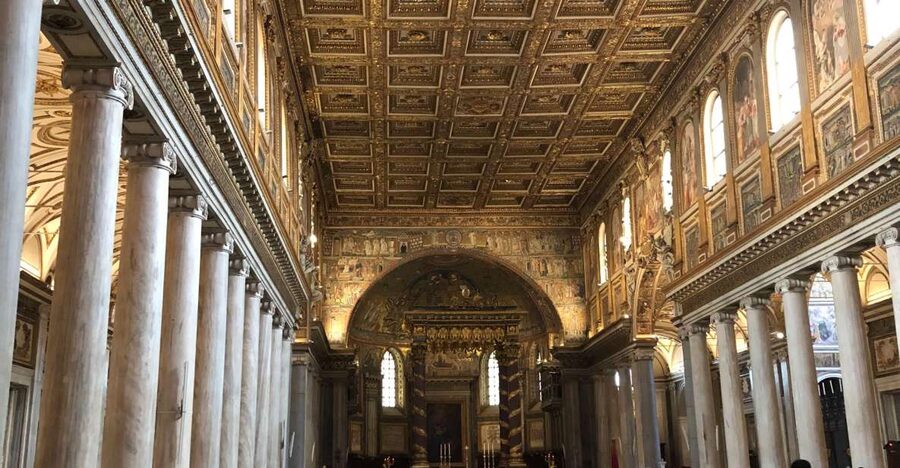
Santa Maria Maggiore, or St Mary Major, is one of Rome’s four Major Papal Basilicas. It is also one of the city’s oldest churches dedicated to the Virgin Mary, a distinction it shares with Santa Maria in Trastevere. Its status gives it particular importance for Catholic pilgrims, but you don’t need to be Catholic to appreciate the art, architecture and layers of meaning inside.
The basilica has five different names, each tied to its history. The guide introduces them as part of the visit, offering a useful reminder that a church’s identity can grow and change over time. You won’t just hear a list of dates and titles: the aim is to connect the building’s stories to the objects and images you see.
That approach matters here. A basilica can be beautiful and still feel hard to read if you don’t know what its symbols refer to. A guide who can explain the imagery turns the visit from a visual stop into a more coherent story.
Crucis Tours presents this as a Catholic pilgrim tour, led by a devout guide. That perspective is a strength if you want to understand why the basilica’s relics and icon matter to believers. If you prefer a strictly secular art-history tour, you may find the religious interpretation more prominent than you want.
More tours and experiences in Rome:
- Vatican: Museums & Sistine Chapel Entrance Ticket
★ 4.5 · 144,003 reviews - Vatican Museums & Sistine Chapel Tour with Optional Basilica
★ 4.3 · 67,413 reviews - Colosseum, Roman Forum & Palatine Guided Tour
★ 4.7 · 63,148 reviews
Meeting at the fountain and approaching the Holy Door
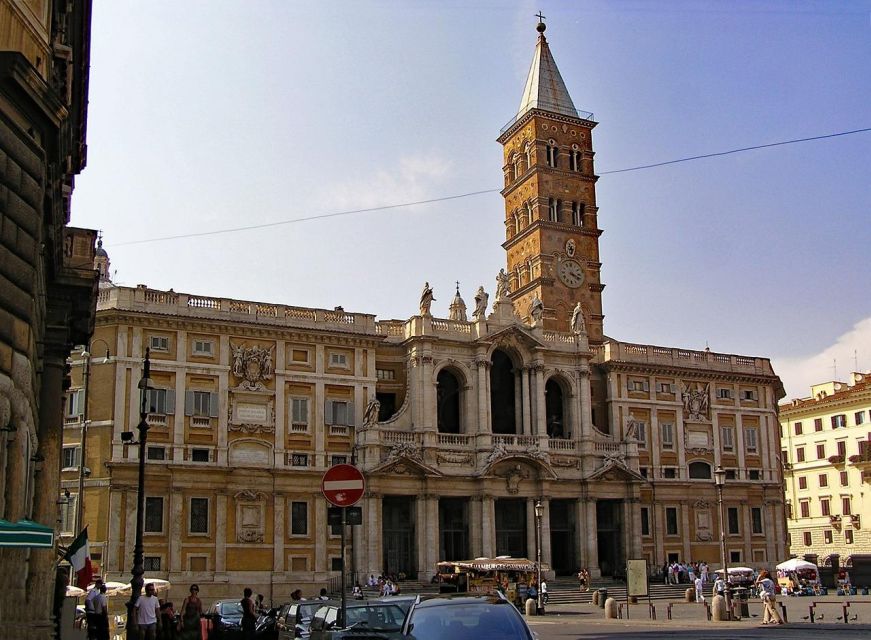
You meet the guide at the fountain in front of the basilica’s main entrance, on Piazza Santa Maria Maggiore. Take care with your directions: the main front faces the piazza, not Via Cavour. The fountain is a clear meeting point, but it’s worth checking the map before setting off so you don’t end up on the wrong side of the building.
Before going inside, the group looks closely at the Holy Door. St Mary Major is one of four Major Basilicas in Rome with a Holy Door, which opens during a Jubilee Year. The practice is tied to pilgrimage and the Catholic tradition of seeking a Plenary Indulgence. Even outside a Jubilee, seeing the door gives you a concrete starting point for understanding the basilica’s role in the wider life of the Church.
The tour includes express security screening. That is useful at a major religious site, though it does not remove the need to arrive at the meeting point on time. The tour does not include transport to or from the basilica, so plan your own route.
Inside the basilica: relics and devotion
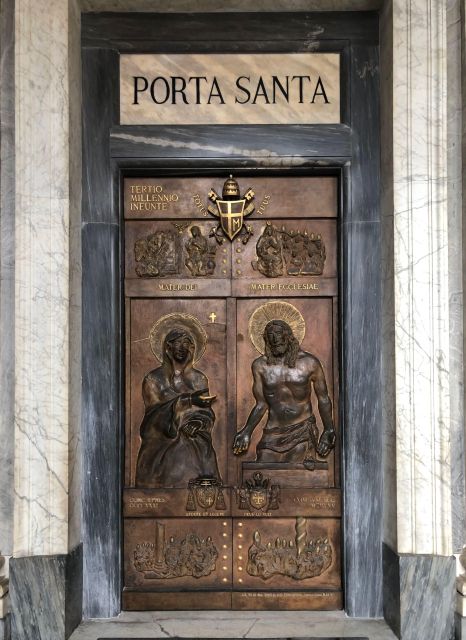
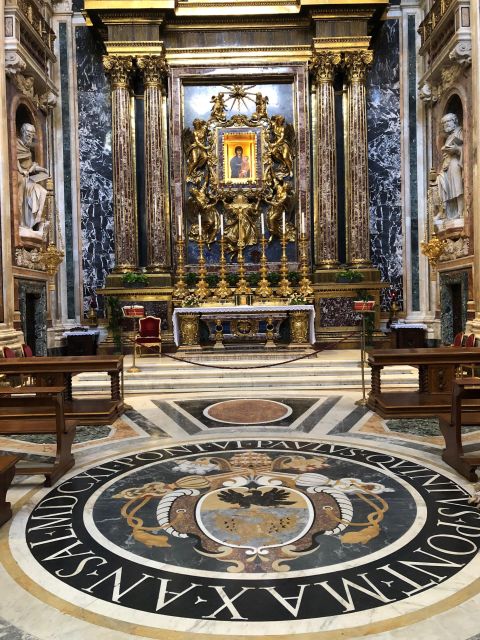
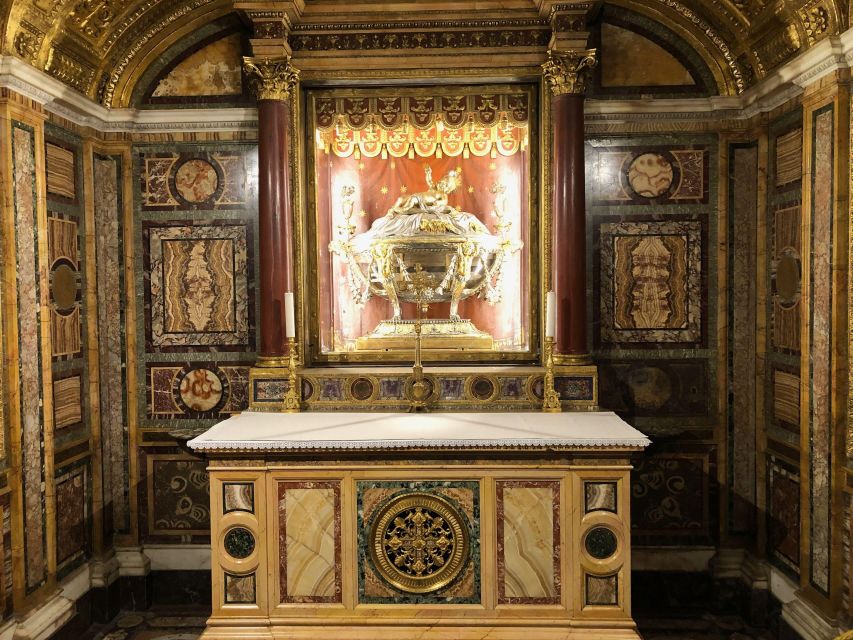
Once inside, the guide brings the basilica’s history into focus and points out several objects of special importance to Catholic pilgrims. The relic of wood said to come from the crib of the baby Jesus is among the visit’s main draws. Relics can be difficult to interpret if you encounter them without context; a guide can explain both their religious significance and their place in the basilica.
You’ll also see the Salus Populi Romani, a Marian icon that Catholic tradition says was painted by St Luke the Evangelist. The name is commonly associated with Mary as the protector of the Roman people. For Catholic visitors, the icon is an object of devotion as well as an artwork. For others, it offers a window into the long relationship between the city, its people and their religious imagery.
Another object included in the visit is the glass sarcophagus of Pope St Pius V. These stops help give the tour a clear focus: this is not simply a walk through a grand building, but a look at what makes St Mary Major a place of pilgrimage.
The guide’s religious viewpoint is central to the visit, but the tour is not described as a service. A homily is available on request. If you want one, ask the guide; it is not something to assume will be part of every tour.
Reading the mosaics behind the altar
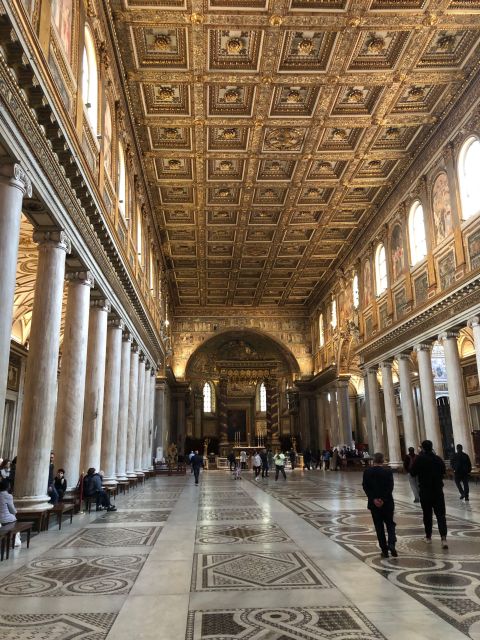
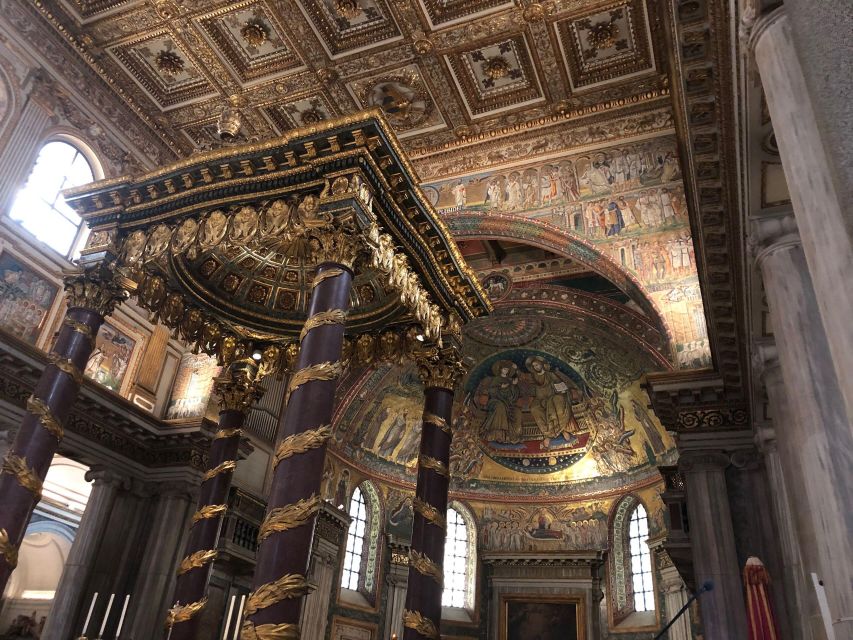
The mosaics are one of the strongest reasons to take a guided visit. They are filled with biblical symbolism and references to both the Old and New Testaments. You can certainly admire their colour and detail on your own, but without an explanation it is easy to miss what the scenes are communicating.
The guide’s task is to make those connections clear. Rather than treating the mosaics as decoration, the tour presents them as a form of religious teaching. That is particularly useful if you want to understand how visual art helped communicate biblical stories and Catholic ideas.
The group size supports this kind of interpretation. With a maximum of 10 participants, the guide can address questions without having to speak to a crowd. Tom, one of the guides associated with the tour, has been praised for making the visit conversational and welcoming questions. Wen has also led the tour. You cannot choose a particular guide from the information provided, but those names suggest the experience can include more than a one-way lecture.
Groups of seven or more receive radio headsets. That can help you hear explanations clearly, especially when the group is moving through a large interior. Smaller groups may not need them, but the limited size should make it easier to stay close to the guide.
Same city, a different way to spend the day:
- Vatican Museums, Sistine Chapel & St Peter’s Basilica Guided Tour
★ 4.5 · 39,149 reviews - Rome: Colosseum, Palatine Hill and Roman Forum Guided Tour
★ 4.8 · 32,814 reviews - Rome: Guided Tour of Colosseum, Roman Forum & Palatine Hill
★ 4.7 · 27,897 reviews - Rome: Colosseum & Forum with Audio Guide App -Optional Arena
★ 4.2 · 24,770 reviews
One hour, or closer to 90 minutes?
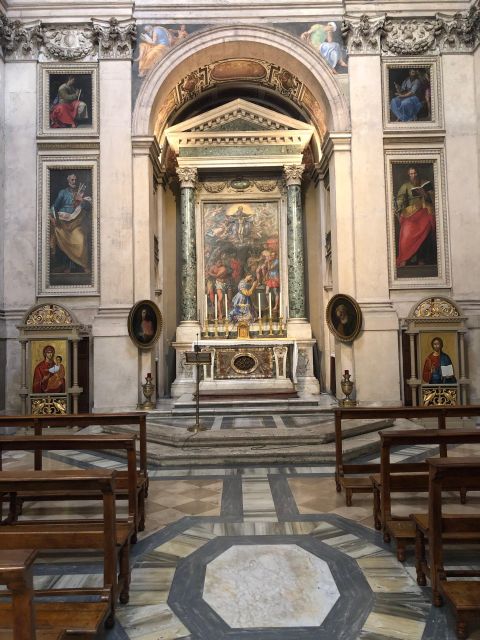
The tour is listed as one hour, while the visit description allows for 60 to 90 minutes. Treat the hour as a rough guide, not a guarantee that you’ll be back outside exactly 60 minutes after starting. If you have another timed activity immediately afterward, leave some breathing room.
The route begins and ends at St Mary Major. After the visit, the guide brings the group back to the steps at the main entrance. There is no transport included, and the tour does not continue to another site unless you have booked the larger Via Crucis Pilgrim Tour.
That longer tour is described as continuing to the Relics of Christ’s Passion and the Major Basilica of St John Lateran, among other places. The St Mary Major tour itself stays focused on this one basilica. That is a sensible choice if you want time to understand its key objects rather than squeeze several churches into one short outing.
Is $65 good value?
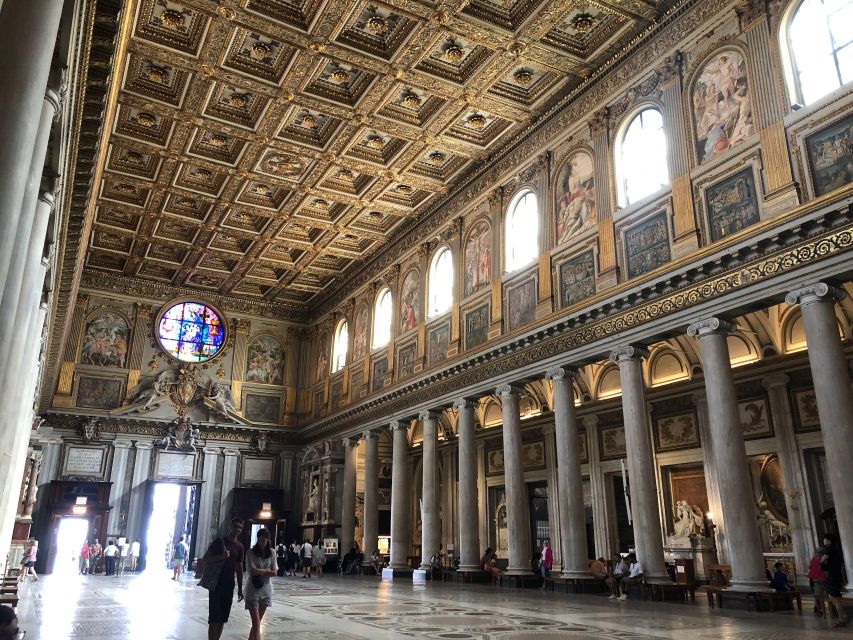
At $65 per person, this is not the cheapest way to enter a church. The value depends on what you want from the visit. If you are comfortable exploring independently and mainly want to see the interior, you may prefer to visit without a paid guide. But if the Holy Door, relics, icon and mosaics interest you as parts of a Catholic pilgrimage, the guide’s explanations are the main reason to pay.
The price includes all taxes and fees, plus radio headsets for groups of seven or more. Transport and a guide tip are not included. Clerics can visit free, but need to contact the provider.
The tour’s small group limit adds value for anyone who wants to ask questions. A guide who can explain unfamiliar symbols may also save you the time and effort of trying to piece the story together from signs or guidebooks. The price is easiest to justify if you want that interpretation and are comfortable with the tour’s devotional emphasis.
Practical details that affect your visit
The tour is offered in English and Chinese. It is not suitable for visitors wearing shorts or short skirts, so choose clothing that meets the basilica’s stated dress requirements. If you are unsure whether your planned outfit is appropriate, dress more modestly rather than risk a problem at the entrance.
You can cancel up to 24 hours in advance for a full refund, and there is a reserve-now, pay-later option. For day-of coordination, download WhatsApp so the provider can contact you if there is a meeting-point issue. Those are useful safeguards, but they don’t replace checking that you’re heading to Piazza Santa Maria Maggiore.
Who should book this tour?
I’d recommend it to Catholic pilgrims, visitors interested in Marian devotion, and anyone who wants to understand what the basilica’s most important objects mean. The guide’s focus on symbolism is especially helpful if you enjoy learning how art communicates belief, rather than simply taking in the building’s appearance.
It can also suit a curious non-Catholic visitor who is open to hearing the site explained from within the Catholic tradition. The small group and short format make it a manageable way to add context to a Rome visit.
I’d think twice if you want a broad, secular survey of church architecture, need a tightly timed one-hour visit, or would rather spend $65 on a longer tour. St Mary Major is the whole focus here, and that is either the point or the limitation, depending on your plans.
Should you book?
Book this tour if you want a guide to connect St Mary Major’s Holy Door, crib relic, icon and mosaics to Catholic history and devotion. Skip it if you only want a brief look inside or prefer to explore without a religious focus. For the right visitor, the small group and close attention to the basilica’s symbols make this a purposeful hour in Rome.
FAQ
How long does the St Mary Major tour last?
It is listed as one hour, though the visit may last 60 to 90 minutes. Leave extra time if you have another appointment afterward.
Where is the meeting point?
Meet at the fountain in front of the basilica’s main entrance on Piazza Santa Maria Maggiore. The front entrance faces the piazza, not Via Cavour.
What can I see during the tour?
The visit includes the Holy Door, wood said to come from the crib of the baby Jesus, the Salus Populi Romani icon, the glass sarcophagus of Pope St Pius V and mosaics with biblical symbolism.
Which languages are available?
The tour is offered in English and Chinese.
How large is the group?
The group is limited to 10 participants. Radio headsets are provided for groups of seven or more.
Is transport included?
No. You need to arrange your own transport to the meeting point and from the end point.
What clothing is not allowed?
Shorts and short skirts are not allowed.
Can clerics join for free?
Yes. Clerics can attend for free, but should contact the provider.
Newly reviewed in Rome
- Rome: Neapolitan Pizza Cooking Class in Front of the Vatican★ 4.8 · 137 reviews
- Rome: St. Paul’s Within the Walls New Year’s Concert Ticket★ 4.4 · 35 reviews
- Rome: Navona Square and École Française Underground ticket★ 3.9 · 160 reviews
- Rome: Navona Underground & Domitian Stadium Guided Tour★ 4.6 · 36 reviews
- Rome: Monuments and Belvederes Bike Tour★ 4.7 · 26 reviews
- Rome: Musical Biography of Frank Sinatra Concert★ 3.9 · 100 reviews
- Rome: Monti Neighborhood Lunch or Dinner Food Tour★ 4.9 · 8 reviews
- Rome: Mini hike to the ancient Parco degli Acquedotti★ 4.9 · 9 reviews
Rome Tours, compared.
Vatican: Museums & Sistine Chapel Entrance Ticket
Read our review →
Vatican Museums & Sistine Chapel Tour with Optional Basilica
Read our review →
Colosseum, Roman Forum & Palatine Guided Tour
Read our review →
Vatican Museums, Sistine Chapel & St Peter’s Basilica Guided Tour
Read our review →
Colosseum & Forum with Audio Guide App -Optional Arena
Read our review →
Pantheon Fast-Track Ticket and Official Audio Guide
Read our review →
City Sightseeing Hop-on Hop-off Bus with Audioguide
Read our review →