Review · ROME TOURS
Popes and Artists: sex, lies and betrayals in the 1600s
Rome’s Baroque masters had more than commissions and marble on their minds. This small-group walk connects Bernini, Borromini and Caravaggio to the rivalries, duels and papal politics that shaped their lives, taking you from the Trevi Fountain to Piazza Navona and the House of Fiammetta.
I like two things in particular: the route puts Caravaggio’s three paintings in St. Louis of the French in the middle of a story about his life, and the group is capped at 10, so there is room to follow a guide’s explanation without a crowd pressing in. If Luisa leads your tour, you may get the benefit of a university professor’s approach to the subject, with stories that go beyond the usual art-history summary.
The trade-off is that this is a walking tour for people who enjoy stories and context, not a leisurely visit focused on lingering at each site. It lasts 2.5 hours, covers several stops, and is not suitable for people with mobility impairments.
Five things to know before you go
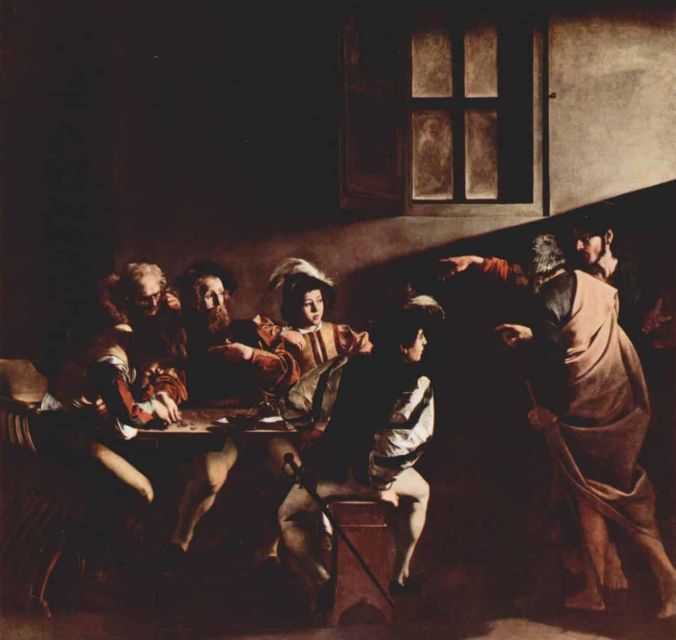
- Caravaggio is a highlight: The tour includes the three paintings in St. Louis of the French, along with the story behind them.
- Art comes with plenty of drama: Expect tales of competition, revenge, duels, courtesans and the popes who commissioned or opposed artists.
- The route mixes famous sights and quieter corners: You’ll visit the Pantheon and Piazza Navona, as well as streets and buildings tied to artists’ private lives.
- The group stays small: No more than 10 people join, which suits a walk built around explanation and conversation.
- Budget 2.5 hours on foot: Wear comfortable shoes, and remember that sleeveless shirts are not allowed in the churches.
Baroque Rome, told through its troublemakers
This tour makes a clear choice: rather than treating Baroque art as a parade of famous names and masterpieces, it uses the artists’ personal lives to make the work and the city easier to understand. Bernini, Borromini and Caravaggio appear not just as creators, but as men working amid competition, powerful patrons and volatile relationships.
That angle can make a city-center walk feel more revealing than a simple list of monuments. You’ll still see major sites, but the guide’s attention also goes to the streets and buildings connected with less public episodes. The stories include fights, betrayals, passion, revenge and the complicated role of popes and cardinals in artistic life.
The tone is lively, but the subject is history, not gossip for its own sake. One Italian visitor described the guide as a university professor who led the group through the history of Rome’s popes and artists, while other comments praise Luisa’s storytelling and the way she links curiosity to historical context. If you enjoy learning how people lived alongside the art they made, that approach is a strong reason to book.
The walk is in English or Italian, and the maximum group size is 10. That small cap matters here: a guide can point out details and build a story across several stops, rather than simply delivering a speech to a large group. Still, the route is compact and full of material, so expect a steady sequence of places and explanations, not long stretches of free time.
More tours and experiences in Rome:
- Vatican: Museums & Sistine Chapel Entrance Ticket
★ 4.5 · 144,003 reviews - Vatican Museums & Sistine Chapel Tour with Optional Basilica
★ 4.3 · 67,413 reviews - Colosseum, Roman Forum & Palatine Guided Tour
★ 4.7 · 63,148 reviews
Starting near the Trevi Fountain
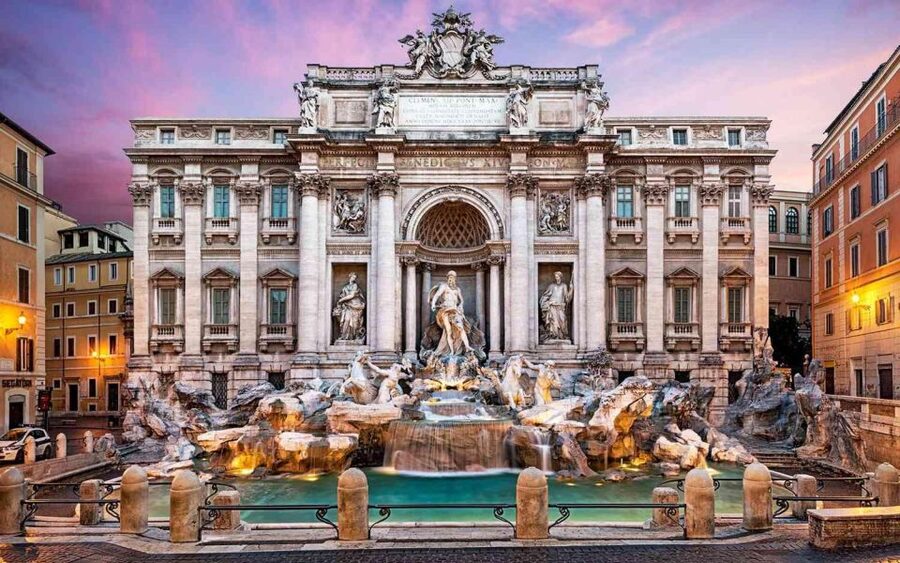
The meeting point is Via della Stamperia, 72, in front of the Accademia di San Luca, a painting academy. It places you close to the Trevi Fountain, where the tour begins with about 15 minutes at the first stop.
The fountain is one of Rome’s most familiar sights, but the tour’s purpose is not simply to admire it and move on. It sets up the walk through a city where art, public space and powerful patrons are closely linked. The guide’s framing of the artists’ lives gives you a different lens for the streets ahead.
Do arrive ready to walk, rather than expecting a seated introduction. Comfortable shoes are specifically recommended, and the route continues through the historic center on foot. The tour ends at Piazza Fiammetta, so you’ll finish in a different part of the center from where you started.
Piazza di Pietra and Sant’Ignazio
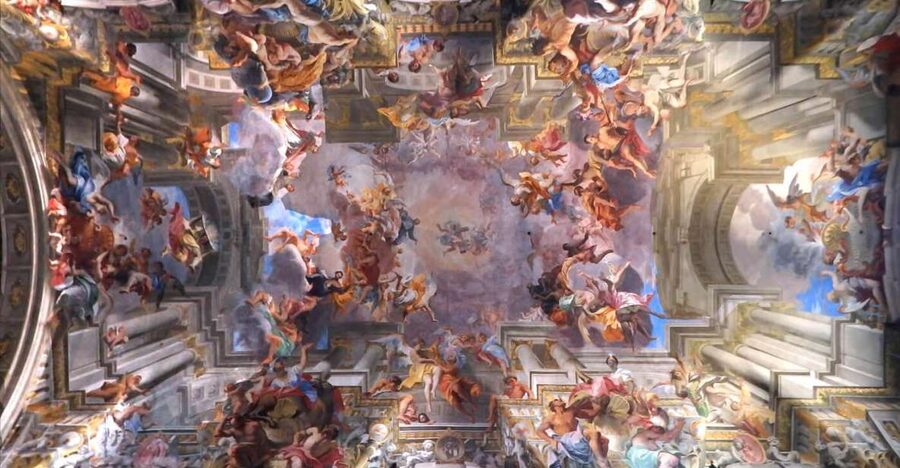
From the fountain, the route moves to Piazza di Pietra for a 15-minute visit and guided explanation. The square is a chance to keep the focus on Rome’s built environment as well as its artists. The tour uses such locations to bring the period’s history into the streets themselves, rather than keeping the story inside a museum.
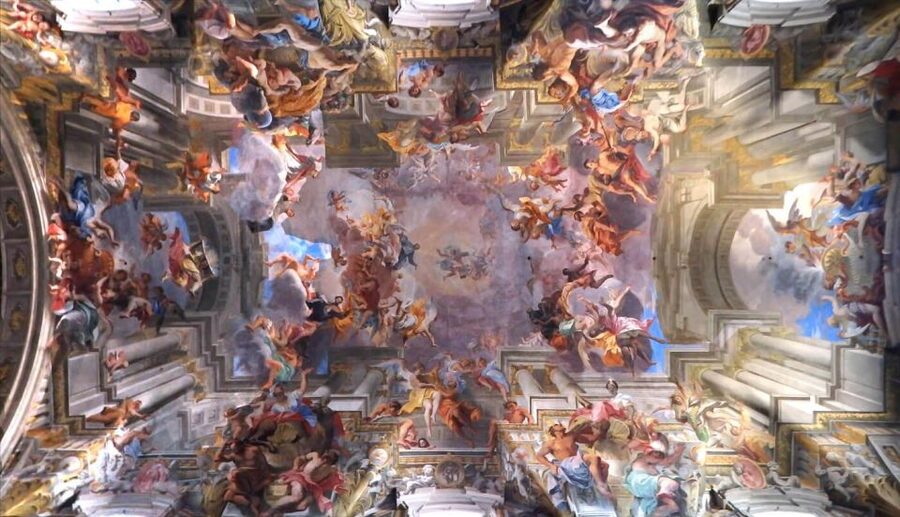
Next comes the Church of Sant’Ignazio di Loyola, with about 20 minutes for a visit and explanation. It is one of the longer stops, giving the guide room to build context around Baroque Rome and the forces that supported its art. The experience is strongest if you like hearing how an artist’s world, including the church and its patrons, shaped the work you see.
Church visits also come with a practical dress code: sleeveless shirts are not allowed. If you’re visiting Rome in warm weather, plan for clothing that keeps you comfortable while still covering your shoulders. The tour does not provide a separate dress-code section for each church, so it is easiest to dress appropriately from the start.
Raphael’s tomb inside the Pantheon
The Pantheon is scheduled for a 10-minute visit and guided tour. Here, you’ll see the tomb of Raphael, a useful moment in a walk centered largely on Baroque artists because it connects the later period to one of the earlier masters whose legacy continued to matter in Rome.
Ten minutes is short for a building as famous as the Pantheon. Think of this as a focused stop within a larger route, not a full independent visit. If you want to spend longer looking around, you may want to return on your own, but the tour’s purpose is to connect the tomb and the place to its wider story.
The short stop also helps keep the overall route moving. With several churches, piazzas and artist-related stories in 2.5 hours, the guide has to balance time at individual sites against the value of seeing how they fit together.
Same city, a different way to spend the day:
- Vatican Museums, Sistine Chapel & St Peter’s Basilica Guided Tour
★ 4.5 · 39,149 reviews - Rome: Colosseum, Palatine Hill and Roman Forum Guided Tour
★ 4.8 · 32,814 reviews - Rome: Guided Tour of Colosseum, Roman Forum & Palatine Hill
★ 4.7 · 27,897 reviews - Rome: Colosseum & Forum with Audio Guide App -Optional Arena
★ 4.2 · 24,770 reviews
Caravaggio at St. Louis of the French
For many art lovers, the central stop is the Church of St. Louis of the French. The tour includes entry to churches and an explanation of the paintings, and here the focus is Caravaggio’s trilogy. The paintings are presented alongside the story behind them, rather than as isolated works to view without context.
That combination is what makes this stop especially useful. Caravaggio’s art is compelling on its own, but knowing that the works have an unusual story behind them gives you a reason to look more closely and listen for the links between the paintings and the artist’s life. The tour’s larger themes of conflict, ambition and patronage come into sharper focus here.
Allow the guide to set the scene before you rush ahead to the next stop. The scheduled visit is about 15 minutes, so this is not a long, unhurried gallery session. If Caravaggio is a particular interest, you may want to revisit the church later and give the paintings more time.
Piazza Navona and the artists’ rivalry
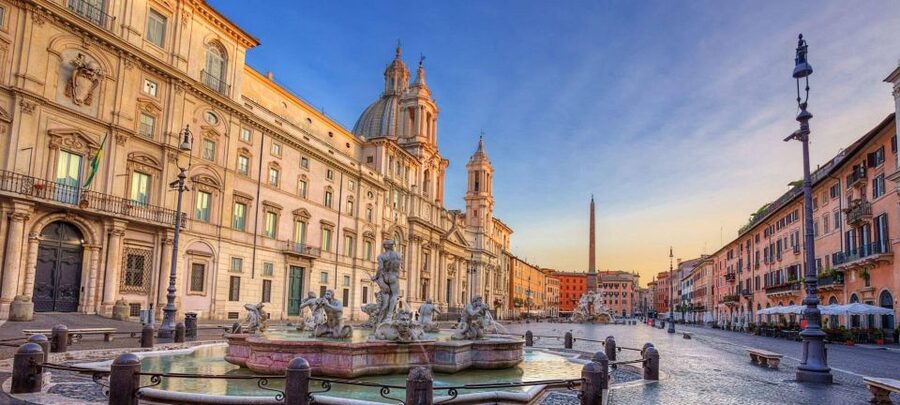
The walk continues to Piazza Navona, with about 20 minutes for a guided visit. The square is a natural place to explore the competition between two famous sculptors, a story that fits the tour’s interest in how rivalry shaped artistic life. Instead of looking only at the public grandeur of the piazza, you’ll hear about the personalities and ambitions behind the work.
This is where the tour’s approach can be most rewarding for people who already know the basic sights. Piazza Navona is a major stop on many Rome itineraries, but a story about artistic competition gives it a more specific purpose. You’re not just moving from one beautiful square to another; you’re following the social forces that helped make Baroque Rome what it is.
The guide’s storytelling is a major part of the value. Luisa is praised for making art history engaging and for sharing stories that are not usually found in conventional guidebooks. That does not mean every stop is a secret place, or that the walk avoids Rome’s best-known landmarks. Rather, it gives familiar places a less familiar narrative.
Ending at the House of Fiammetta
The tour finishes at Piazza Fiammetta, in front of the House of Fiammetta. The closing story turns to this beautiful woman of the 1500s and the duels fought for her love. It is a fitting final chapter for a walk that has treated art history as a human story full of desire, status and rivalry.
The end point also gives the route a sense of direction. You begin by the Trevi Fountain and finish at a less obvious address, moving through the center while tracing stories that connect public monuments with private lives. The House of Fiammetta may be less familiar than the Pantheon or Piazza Navona, but that contrast is part of the tour’s appeal.
The subject matter spans more than one century, from Fiammetta in the 1500s to the Baroque world of the 1600s. That broad time frame gives the guide room to show how Rome’s artistic culture and its human dramas developed across generations.
Is $59 good value?
At $59 per person, this is not simply a paid walking route between free public sights. The price includes church entry and explanations of the paintings, along with a live guide for 2.5 hours. You’re paying for a small-group account of the city’s art and personalities, not just directions from one landmark to the next.
I’d consider it good value if you want a guide to connect the art with the lives and rivalries behind it. The inclusion of St. Louis of the French and the Caravaggio paintings is a clear draw, while the stops at the Pantheon, Piazza Navona and other central sites help make the route feel varied. The small group limit also supports the kind of explanation this tour depends on.
It may be less compelling if you mainly want to enter major monuments at your own pace, spend a long time with each artwork, or avoid walking. The schedule is active, with several stops and a total duration of 2.5 hours. You’ll get a stronger return if you enjoy listening, asking questions and letting a guide supply the links between places.
The tour has earned a perfect 5 rating from 10 reviews, and the recurring praise centers on the guide’s storytelling, enthusiasm and art-history knowledge. Luisa is named repeatedly, including as a university professor and a guide who shares historically grounded stories beyond standard guidebook material. She may not lead every departure, so treat her as a useful indication of the tour’s style rather than a guaranteed guide.
Who should book this walk?
This tour suits you if you’re curious about Baroque art but want more than dates, styles and artist names. It is especially appealing if Caravaggio interests you, or if you enjoy learning about the rivalries and private lives that sit behind public masterpieces. The mix of famous sites and stories about artists’ less visible lives gives the walk a clear identity.
It also works well for anyone who likes a lively guide-led format. The reviews repeatedly point to storytelling as the tour’s strongest feature, with Luisa singled out for enthusiasm and for making lesser-known art history engaging. If you prefer to explore silently or set your own pace, a self-guided visit may suit you better.
Think carefully about mobility before booking. The route is on foot, and the tour is not suitable for people with mobility impairments. Wear comfortable shoes, and avoid sleeveless shirts for the church visits.
I’d book this walk if you want Rome’s art served with human conflict, not as a dry lecture or a checklist of monuments. At $59, it makes the most sense for curious visitors who value a skilled storyteller, a small group and access to church art with explanation. If you want long visits at each landmark, or need an accessible route, choose another way to explore the center.
FAQ
How long is the tour?
The tour lasts 2.5 hours.
What is the maximum group size?
The small group is limited to 10 participants.
Which languages are available?
The live tour guide speaks English and Italian.
Where does the tour start?
Meet at Via della Stamperia, 72, in front of the Accademia di San Luca building.
Where does the tour end?
The tour ends at Piazza Fiammetta, in front of the House of Fiammetta.
Are church entries included?
Yes. Entrance to churches and explanations of the paintings are included.
What should I wear?
Wear comfortable shoes. Sleeveless shirts are not allowed.
Newly reviewed in Rome
- Rome: Neapolitan Pizza Cooking Class in Front of the Vatican★ 4.8 · 137 reviews
- Rome: St. Paul’s Within the Walls New Year’s Concert Ticket★ 4.4 · 35 reviews
- Rome: Navona Underground & Domitian Stadium Guided Tour★ 4.6 · 36 reviews
- Rome: Navona Square and École Française Underground ticket★ 3.9 · 160 reviews
- Rome: Musical Biography of Frank Sinatra Concert★ 3.9 · 100 reviews
- Rome: Monuments and Belvederes Bike Tour★ 4.7 · 26 reviews
- Rome: Monti Neighborhood Lunch or Dinner Food Tour★ 4.9 · 8 reviews
- Rome: Mini hike to the ancient Parco degli Acquedotti★ 4.9 · 9 reviews
Rome Tours, compared.
Vatican: Museums & Sistine Chapel Entrance Ticket
Read our review →
Vatican Museums & Sistine Chapel Tour with Optional Basilica
Read our review →
Colosseum, Roman Forum & Palatine Guided Tour
Read our review →
Vatican Museums, Sistine Chapel & St Peter’s Basilica Guided Tour
Read our review →
Colosseum & Forum with Audio Guide App -Optional Arena
Read our review →
Pantheon Fast-Track Ticket and Official Audio Guide
Read our review →
City Sightseeing Hop-on Hop-off Bus with Audioguide
Read our review →