
Review · BORGHESE GALLERY TOURS
Rome: Borghese Gallery Guided Tour with Tickets
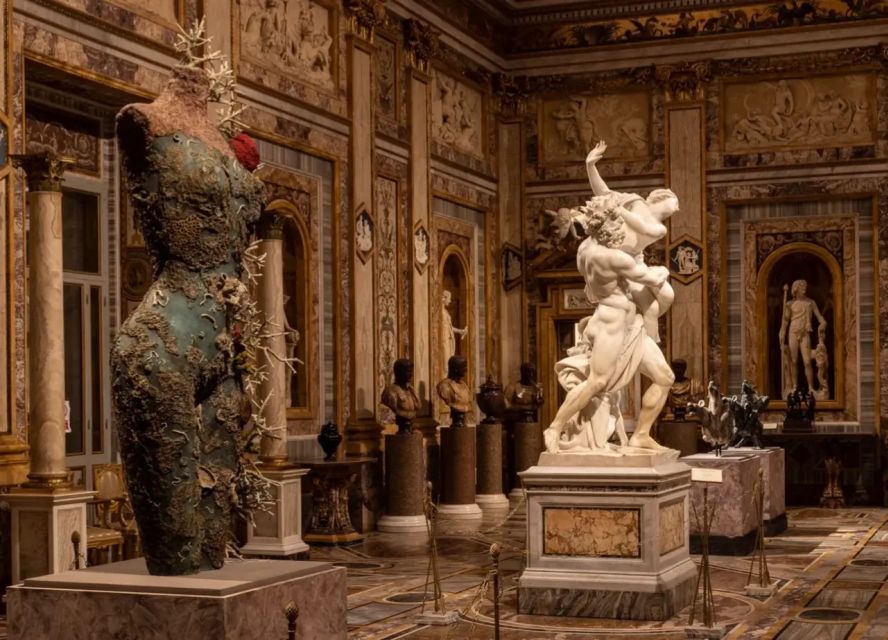
Bernini’s Apollo and Daphne seems to move as you look at it: Daphne’s fingers turn to leaves, her hair lifts, and Apollo reaches for a figure already changing form. At the Borghese Gallery, that kind of close encounter is the point. A two-hour guided visit brings you face to face with sculpture and painting in a villa where the rooms are part of the spectacle.
I like two things in particular: the art historian guide gives you a story and a way to read the works, and reserved entry with express security helps you make better use of a short visit. The gallery’s intimate scale also makes it easier to give each major work your attention.
The trade-off is time. Two hours can cover a strong selection, but not every room or detail, and the pace may feel brisk if you want to linger. Some areas may also close for restoration, and the route can change.
Key points before you book
- Bernini’s sculpture is the headline: Expect close attention to works such as Apollo and Daphne, where movement and emotion seem carved into the marble.
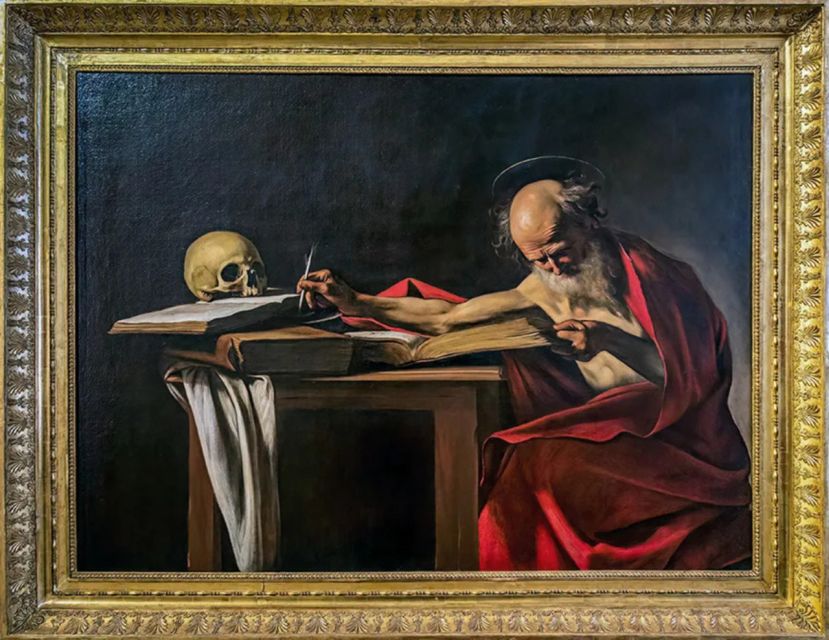
- Caravaggio gets a dedicated moment: The tour includes the gallery’s notable group of his paintings, including David with the Head of Goliath and Boy with a Basket of Fruit.
- The guide shapes the visit: Art history, stories about the works, and the history of the Borghese family help make sense of a collection that can otherwise feel like a beautiful blur.
- It is a focused two-hour tour: The route covers ground-floor sculpture and other gallery rooms, but you will not see everything at a leisurely pace.
- Small-group and private options are available: The meeting point depends on the option you book, so check your confirmation before setting out.
- Travel light: Large bags and strollers are not allowed inside. Small bags and purses are permitted, and a free cloakroom is available for larger bags.
A villa built around art
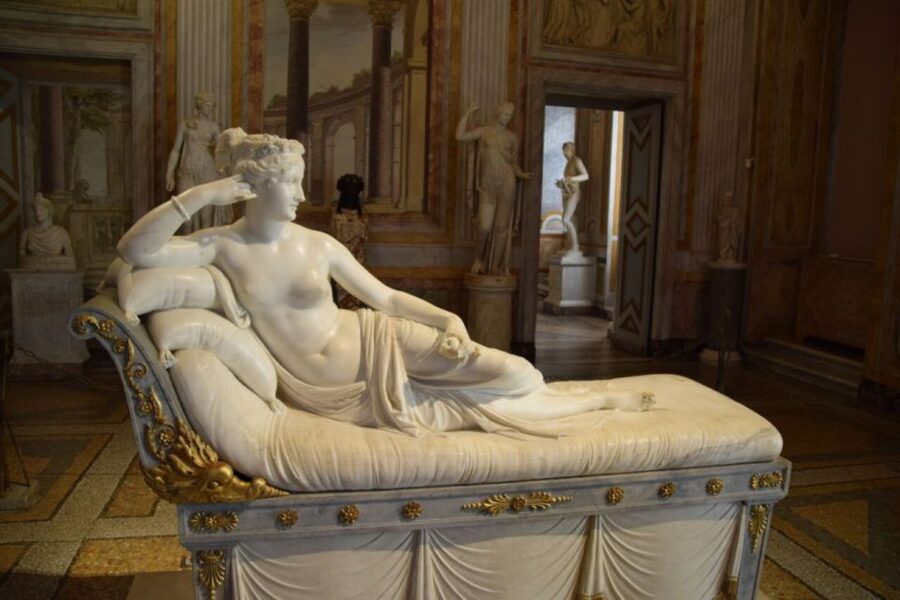
The Borghese Gallery occupies a grand 17th-century villa associated with Cardinal Scipione Borghese, whose collecting helped create the remarkable range of art on display. The tour begins outside, at one of two possible meeting points: Fontana dei Mascheroni or Piazzale del Museo Borghese. The exact location varies by booking option, so do not assume every group gathers in the same spot.
That brief introduction matters. The gallery is not simply a set of famous pictures hung in neutral rooms. Its architecture, painted ceilings, floors, and sculpture all contribute to the experience. Your guide sets the scene before you enter, connecting the villa and its collection to the people who shaped them.
This is a good place to ask questions early. If you have a particular interest in Baroque art, Roman history, or the Borghese family, tell your guide what you hope to understand. Guides have been praised for welcoming questions and adapting explanations, though each group and guide will have its own rhythm.
More Borghese Gallery visits in Rome:
- Rome: Borghese Gallery and Gardens Guided Small-Group Tour
★ 4.6 · 2,783 reviews - Rome: Borghese Gallery Guided Tour with Skip-the-Line Entry
★ 4.8 · 2,649 reviews - Rome: Borghese Gallery Skip-the-Line Tickets with Audioguide
★ 4.6 · 2,562 reviews
Reserved entry helps protect your two hours
The tour includes a reserved entry ticket and priority access through express security. That does not mean you should arrive at the last minute: you still need to find your meeting point and join your group. But it does mean the visit is organized around getting into the gallery rather than spending much of your limited time sorting out admission.
The included headsets and radios are a practical plus. In ornate rooms, a group may need to spread out to see a sculpture or painting. A headset makes it easier to hear the guide without having to crowd close or miss an explanation while looking around.
The group can be small, and private tours are also offered. That can make a real difference here. Many visitors describe the experience as personal, especially when the group is just a few people. A smaller group gives you more room to ask questions and follow the guide’s attention, though group size can vary.
Ground-floor sculpture: art that seems to move
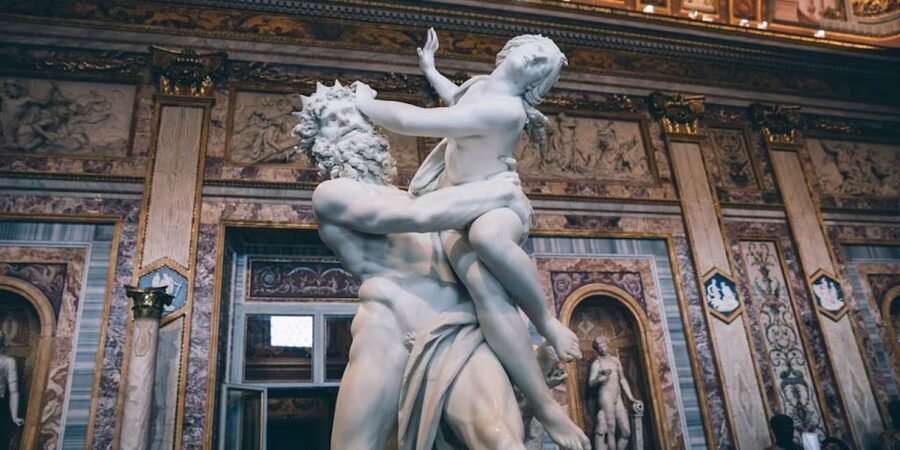
The itinerary gives the ground-floor sculptures a substantial share of the two-hour visit. This is where Bernini’s work can make the strongest first impression. In Apollo and Daphne, the marble seems to catch the instant when the myth changes: bark spreads across Daphne’s body as Apollo reaches for her. A guide can point out details you might miss when you are simply taking in the overall effect.
That close looking is one of the tour’s main strengths. Bernini’s sculptures reward more than a quick glance. Their gestures, expressions, and carefully shaped surfaces tell a story from different angles. Your guide can help you notice how the figure’s movement works in three dimensions, rather than treating the sculpture as a static object.
The route also takes in other sculpture and Roman floor mosaics. The variety helps you see the gallery as a collection spanning different periods and artistic aims, rather than a single-style museum. But there is a limit: with several major works to cover, you may not get long stretches of quiet time with any one piece.
The planned visit is divided into guided portions of 50, 40, and 30 minutes, with the ground-floor sculpture area appearing in two portions of that outline. In practice, expect the guide to lead you through a connected selection of rooms and works, not a stop-by-stop checklist you can treat as fixed. The route can change with current exhibitions or restoration work.
Caravaggio’s sharp light and shadow
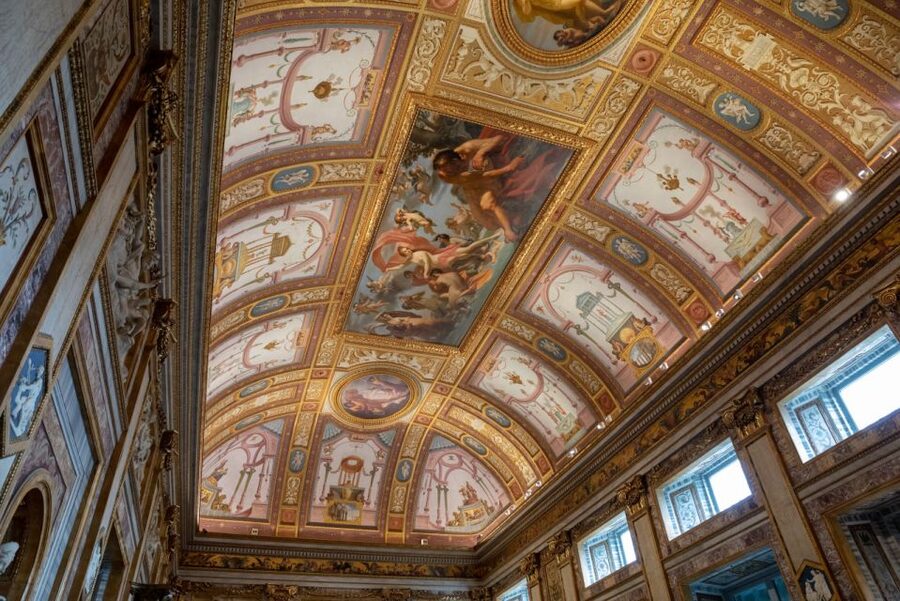
The Caravaggio room is another central part of the visit. The gallery holds a notable collection of his paintings, including David with the Head of Goliath and Boy with a Basket of Fruit. These works offer a striking contrast to the sculptural drama downstairs: Caravaggio uses light, shadow, and direct human presence to make painted scenes feel immediate.
A guide can help you understand how the paintings work, not just what they depict. Look at where the light falls, what it leaves in shadow, and how the figures meet your eye. That context can turn a familiar name into a more specific encounter with technique and intention.
The collection is often described as the largest gathering of Caravaggio’s works in a single collection. Still, the point is not to count canvases. It is to see several works in the setting of a villa assembled around art, then connect them to the broader mix of artists and periods represented here.
More museum visits in Rome:
- Vatican: Museums & Sistine Chapel Entrance Ticket
★ 4.5 · 144,003 reviews - Vatican Museums & Sistine Chapel Tour with Optional Basilica
★ 4.3 · 67,413 reviews - Vatican Museums, Sistine Chapel & St Peter’s Basilica Guided Tour
★ 4.5 · 39,149 reviews - Rome: Vatican Museums, Sistine Chapel & Basilica Tour
★ 4.3 · 13,872 reviews
Raphael, Titian, Canova, and the rooms around them
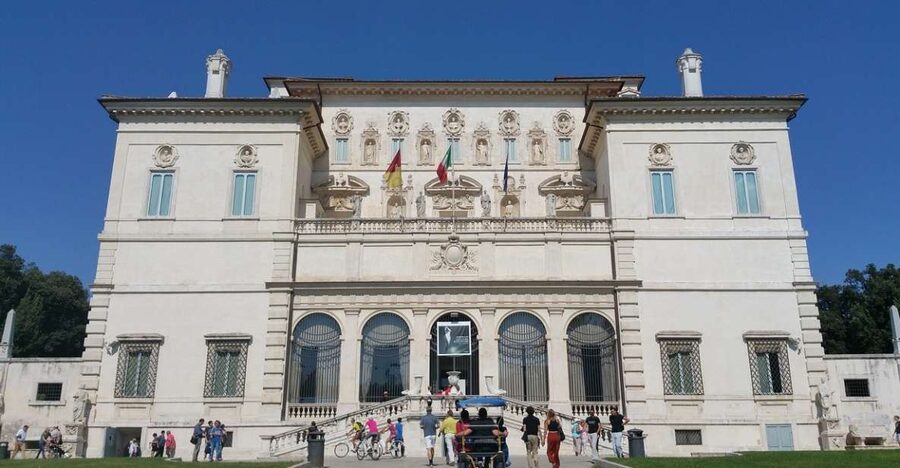
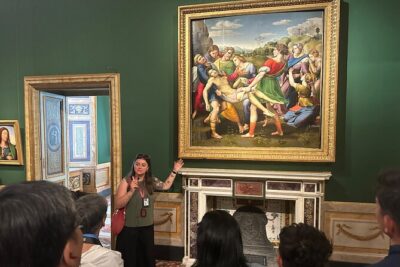
Bernini and Caravaggio may draw the most attention, but the tour also includes works by Raphael, Titian, and Canova. Raphael brings a different mood, with the serene grace that contrasts neatly with Bernini’s physical energy and Caravaggio’s drama. Seeing these styles in one visit gives you a useful sense of how varied the collection is.
The room itself deserves a look, too. Hand-painted frescoes, decorative details, sculpture, and mosaics all compete for your attention. It is tempting to focus only on the most famous artwork in each room, but glance up and around as well. The setting helps explain why the Borghese can feel as much like a decorated villa as a conventional gallery.
There is plenty to absorb, and two hours will not let you study every painting or architectural detail. One visitor who had seen the collection before found the guide’s stories and art-history context changed the experience; another wished for more time after a first visit. That is a fair expectation to bring: the tour is a strong introduction, not a substitute for a long, unhurried return.
Why a guide can make the difference
The collection is visually generous, but it can also be a lot to take in quickly. A guide helps you decide what to notice and gives the works a frame: who made them, what choices shaped them, and how they fit into the history of the gallery. Several guides have been praised for clear storytelling, attention to technique, and enthusiasm.
Past groups have mentioned guides including Henry, Enri, Gaga, Irene, Federica, Federico, Victoria, and Ursus. Names and assignments vary, so you cannot book on the assumption that you will meet a particular person. The consistent value of a guided tour is the chance to hear the art explained as you stand in front of it, with room to ask questions.
Guides also differ in style. Some visitors value detailed historical context; others especially appreciate a lively explanation that makes art accessible without assuming prior knowledge. If you are new to art history, you do not need to prepare. If you already know the major works, ask about the family’s collecting, restoration, or the details that distinguish one artist’s approach from another.
One practical point: the guide’s microphone placement can affect how clearly you hear. Headsets are provided, but stay close enough to follow the group and speak up if the sound is unclear. That small adjustment can save you from missing a useful explanation.
Is $57 good value for two hours?
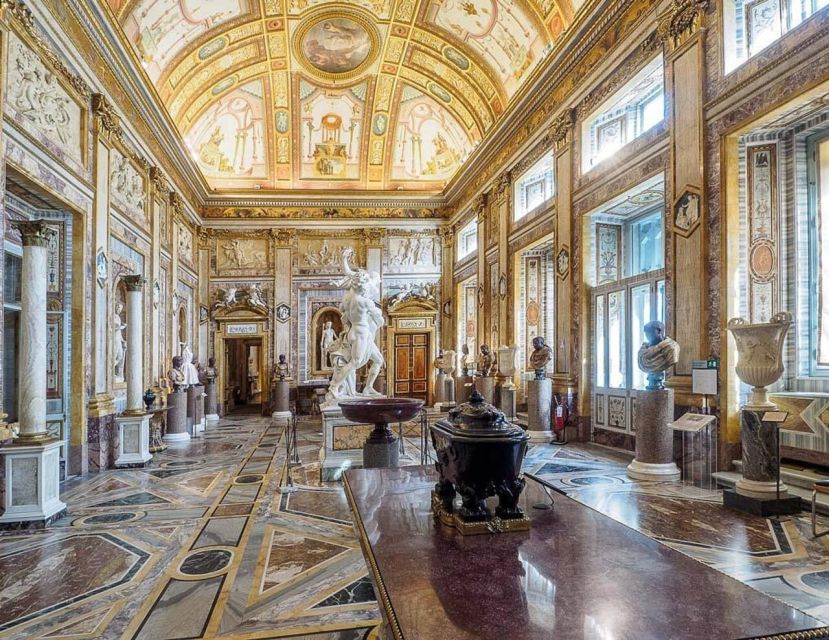
At $57 per person, this is not the cheapest way to see a museum. The price includes the gallery ticket, an art historian guide, headsets, and reserved entry with express security. You are paying for more than access: you are also paying for a focused route through a collection where interpretation can help you make sense of the rooms and the works.
The value is strongest if you want the guide’s explanations, have limited time, or find a large art collection easier to enjoy with a clear route. It is less compelling if you prefer to move at your own pace, spend a long time with a few pieces, or read about the art independently. A self-guided visit may suit you better if flexibility matters more than context.
There are small-group and private options, though the price provided here is $57 per person and may not describe every option. Check the details for the format you choose. Free cancellation up to 24 hours ahead and reserve-now, pay-later booking add flexibility, but the core decision is whether a guided two-hour overview matches how you like to visit museums.
Useful details for a smoother visit
Bring a passport or ID card. Only small bags and purses are allowed inside; larger bags can be left in the free cloakroom at the entrance. Baby strollers are not allowed, and the tour is not suitable for wheelchair users.
Pets, weapons, sharp objects, luggage, alcohol, and drugs are prohibited. The route may change if rooms are closed for restoration or exhibitions, so keep some flexibility in mind rather than building your whole day around a fixed sequence of artworks.
The tour is offered in English, Japanese, French, German, Portuguese, and Russian. Check the available starting times and your chosen meeting point before you go. If you want to explore more of the surrounding Villa Borghese area, leave room in your day: the gallery visit itself is only two hours, and the park provides a pleasant setting for a walk afterward.
Should you book this Borghese Gallery tour?
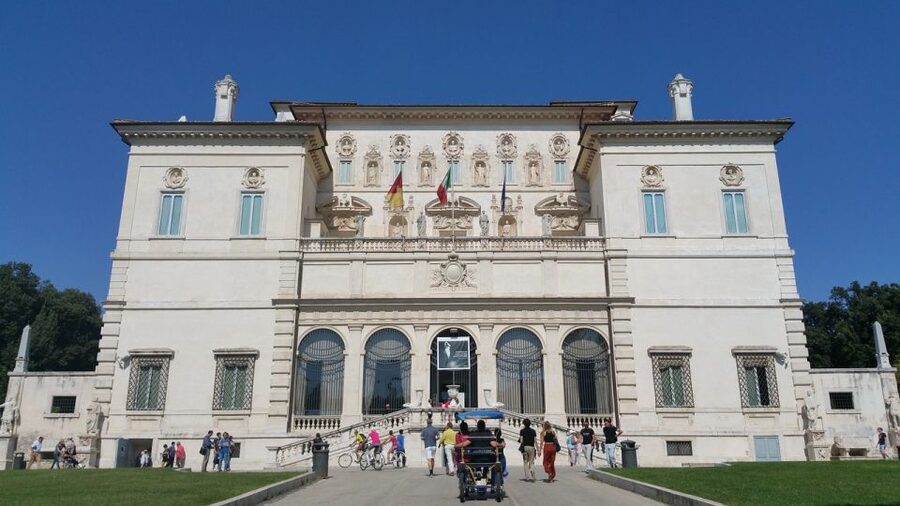
Book it if Bernini, Caravaggio, and the story behind the art are high on your Rome list, or if you want an expert-led introduction without spending half a day in a museum. The reserved entry, headsets, and guided route make good use of a short visit, while the smaller-group and private formats may offer more room for questions.
Skip it if you would rather wander slowly and choose every stop yourself. The Borghese collection deserves time, and two hours will leave works unseen. But as a first visit, this is a strong way to meet the gallery’s major artists, understand what you are looking at, and leave with a better sense of what you would like to revisit.
FAQ
How long is the tour?
The guided tour lasts two hours. The route may vary depending on current exhibitions or restoration work.
What is included in the price?
The tour includes an art historian guide, a Borghese Gallery entry ticket with priority access through express security, and headsets and radios.
Where is the meeting point?
There are two possible starting locations: Fontana dei Mascheroni and Piazzale del Museo Borghese. The meeting point depends on the option you book.
Which languages are available?
The live tour is offered in English, Japanese, French, German, Portuguese, and Russian.
Can I bring a large bag or stroller?
Large bags and luggage are not allowed inside, and baby strollers are prohibited. Small bags and purses are allowed, and a free cloakroom is available for larger bags.
Can wheelchair users join the tour?
No. The activity is listed as not suitable for wheelchair users.
Newly reviewed in Rome
- Rome: Neapolitan Pizza Cooking Class in Front of the Vatican★ 4.8 · 137 reviews
- Rome: St. Paul’s Within the Walls New Year’s Concert Ticket★ 4.4 · 35 reviews
- Rome: Navona Underground & Domitian Stadium Guided Tour★ 4.6 · 36 reviews
- Rome: Navona Square and École Française Underground ticket★ 3.9 · 160 reviews
- Rome: Monuments and Belvederes Bike Tour★ 4.7 · 26 reviews
- Rome: Musical Biography of Frank Sinatra Concert★ 3.9 · 100 reviews
- Rome: Monti Street Food Tour★ 4.5 · 14 reviews
- Rome: Monti Neighborhood Lunch or Dinner Food Tour★ 4.9 · 8 reviews
Borghese Gallery Tours, compared.
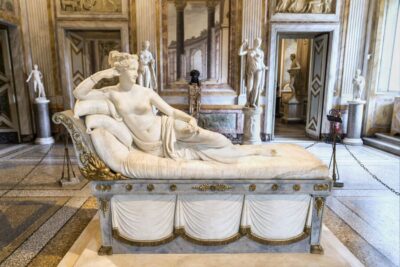
Borghese Gallery and Gardens Guided Small-Group Tour
Read our review →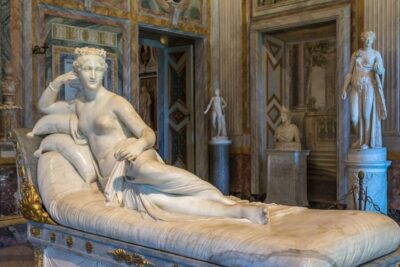
Borghese Gallery Guided Tour with Skip-the-Line Entry
Read our review →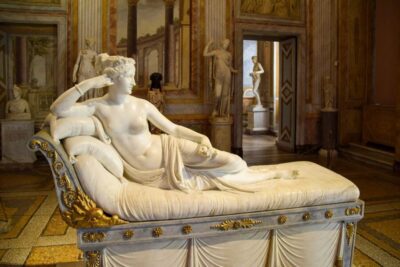
Borghese Gallery Skip-the-Line Tickets with Audioguide
Read our review →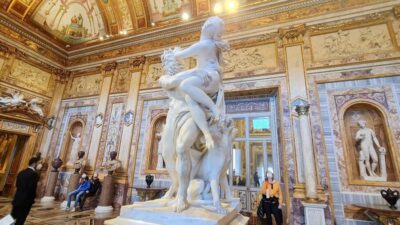
Borghese Gallery Entry Ticket & Optional Guided Tour
Read our review →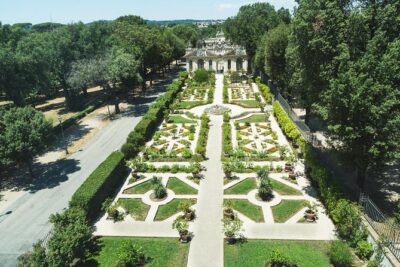
Borghese Gallery, Canova’s Masterpieces Skip-the-Line Guided Tour
Read our review →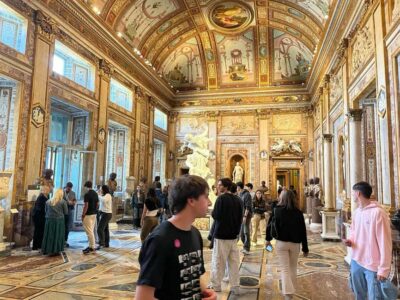
Borghese Gallery Guided Tour with priority entrance
Read our review →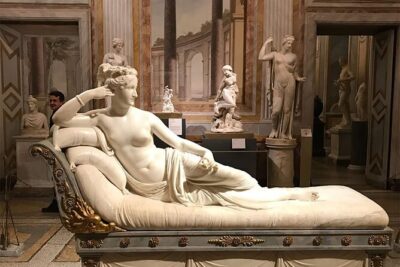
Exclusive Borghese Gallery Tour with Skip-the-Line Access
Read our review →Browse the lists this tour appears in