
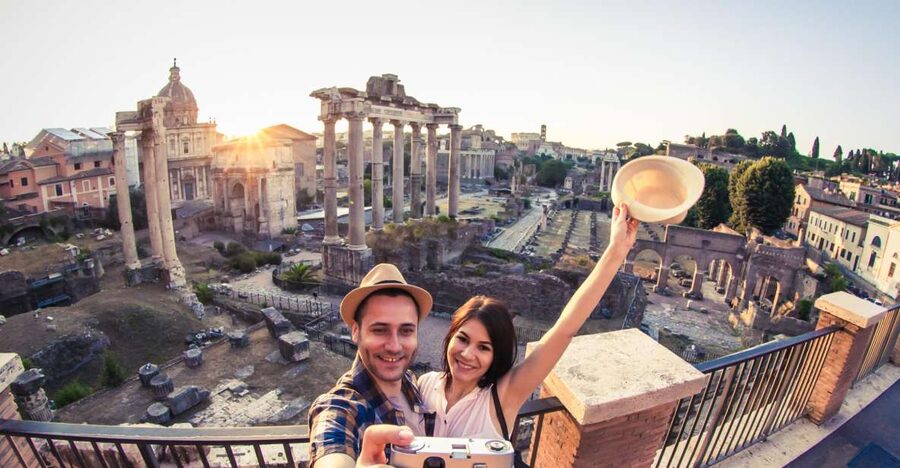
Review · ROMAN FORUM TOURS
Palatine Hill and Roman Forum Tour with Fast-Track Entrance
Palatine Hill and the Roman Forum are easier to understand when someone helps you read the ruins. This two-hour walk links the legendary birthplace of Rome with its old civic center, where the Temple of Julius Caesar, the Senate House, and the Sacred Way put the city’s political and public life into view.
I like two things especially: the hilltop views give you a useful sense of how the sites fit together, and a good guide can turn scattered stones into a story you can follow. Fast-track access also gets you through a separate entrance, though it cannot always prevent a security queue.
The main trade-off is pace. Two hours is a short visit to a large archaeological area, and the climb, uneven ground, and steps make this a poor fit if you have mobility limits or want to explore at a very leisurely speed.
What to know before you book
- Start on Palatine Hill: See the site of an early settlement dating to the 9th century BC, with views toward the Circus Maximus and Forum valley.
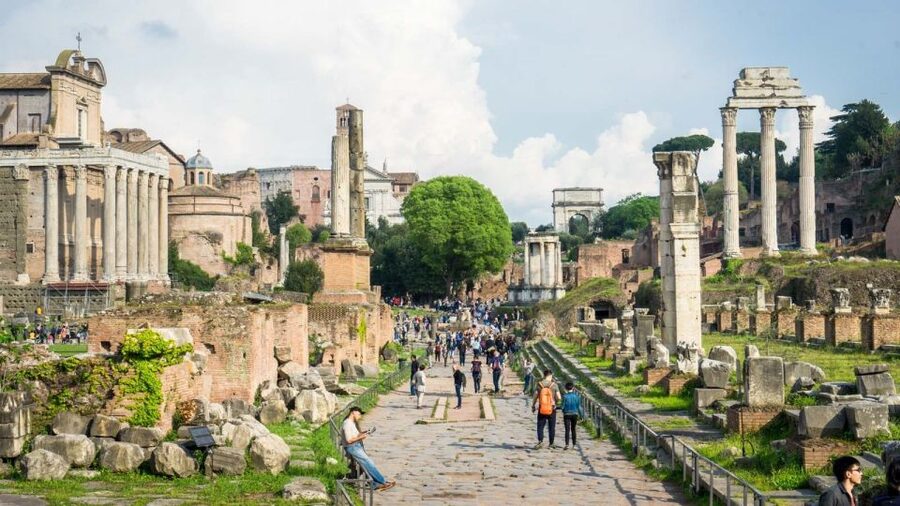
- Follow the Roman Forum’s Sacred Way: This ancient route was used for triumphal processions after military victories.
- Look for landmark ruins: The route includes the Temple of Julius Caesar, Arch of Titus, House of the Vestal Virgins, Senate House, and Basilica of Maxentius.
- Plan for a real walk: The tour lasts two hours and involves a moderate amount of walking, including steps and a hill climb.
- Bring matching identification: Your full name and date of birth must match your booking details, and each person needs valid ID at entry.
- Pack light: Large bags and backpacks are not allowed, and there is no cloakroom for storing them.
Begin on the hill above Rome
Meet your guide in front of Oppio Caffe on Via delle Terme di Tito, at the corner of Via Nicola Salvi. The guide holds a sign with your name. The meeting point is close to the Colosseum area, but the lanes and busy streets can make the final approach confusing, so leave time to find it. One useful detail from the tour experience: being able to contact a real person while walking to the meeting point has helped people who got turned around.
The tour starts with Palatine Hill, a natural place to begin because it gives you a broad view before you head down into the Forum. The hill is associated with one of Rome’s earliest settlements, dating to the 9th century BC. Your guide also introduces the story of Romulus and Remus, the abandoned brothers said to have been raised by a wolf, whose rivalry became part of Rome’s foundation legend.
It is worth keeping the distinction clear: the twins’ tale is a founding myth, not a verified account of the city’s beginnings. That is part of the appeal of the stop. A guide can show how Rome’s story mixes archaeology, political memory, and legend, rather than asking you to treat every ancient tale as literal history.
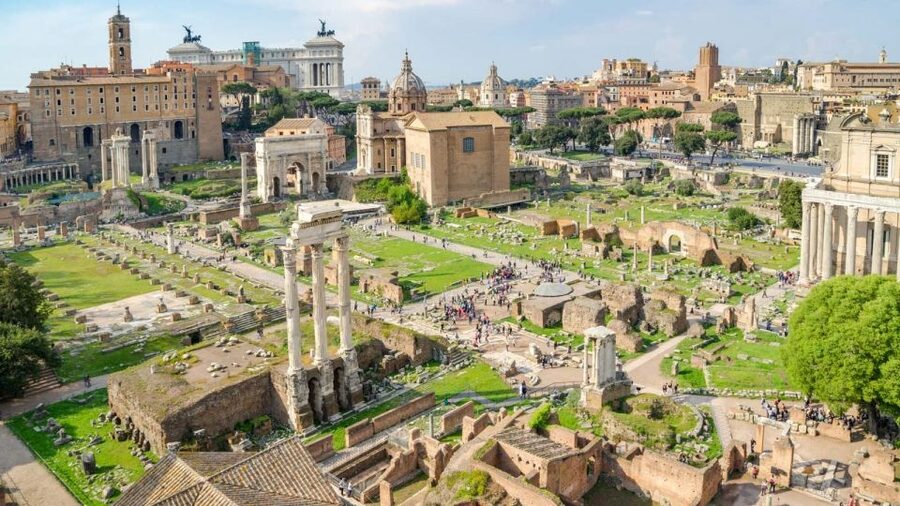
The uphill walk brings you to viewpoints over the Circus Maximus and the valley of the Roman Forum. These panoramas are more than a photo pause. From above, you can see that the Forum sits in a valley between hills and begin to grasp how the city’s public spaces related to the terrain. On a site where many buildings survive only as fragments, that wider view helps orient you.
Expect some steps and uneven walking surfaces. Comfortable shoes matter here, particularly in warm weather, when the climb can feel more demanding. The guide may pause for photographs and to keep the group together, but the visit is still a compact overview, not a slow exploration of every corner of the hill.
More Roman Forum and Palatine tours in Rome:
- Colosseum, Roman Forum & Palatine Guided Tour
★ 4.7 · 63,148 reviews - Rome: Colosseum, Palatine Hill and Roman Forum Guided Tour
★ 4.8 · 32,814 reviews - Rome: Guided Tour of Colosseum, Roman Forum & Palatine Hill
★ 4.7 · 27,897 reviews
Read the Forum as a working city
After Palatine Hill, the tour moves into the Roman Forum, once a central public area of ancient Rome. This is where the guide’s interpretation can make the biggest difference. You will see remains of religious, political, and civic buildings, but you will also need to imagine their original scale and use. Much of what once stood here is gone, and the surviving stones do not always explain themselves.
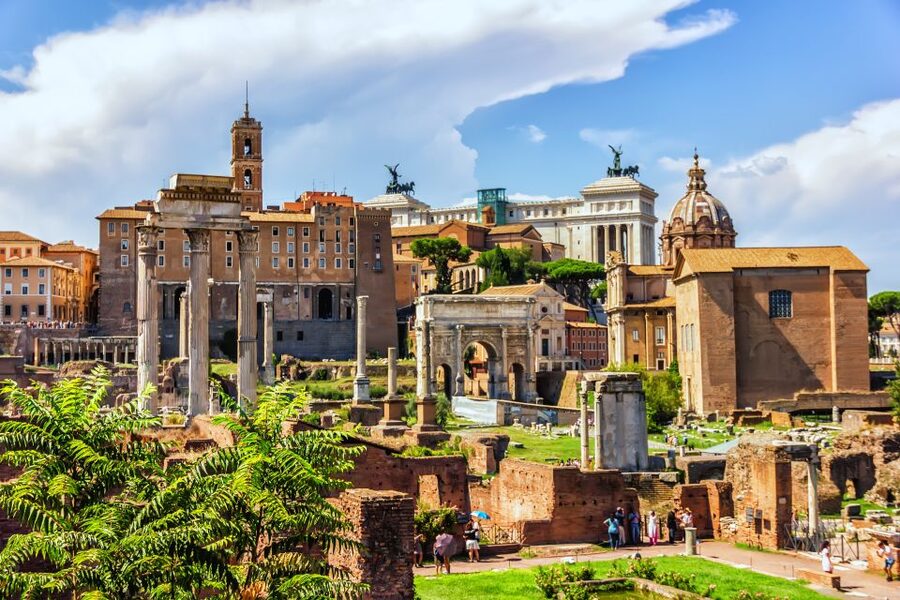
The Temple of Julius Caesar is one of the named stops. It connects the Forum’s physical remains with the political upheaval surrounding Caesar and his place in Roman memory. Nearby, the Arch of Titus offers a different kind of story, one tied to Roman victory and public display. The tour places these monuments within the larger civic setting, rather than treating them as isolated photo stops.
At the House of the Vestal Virgins, your guide can explain the role of the priestesses whose duties were tied to Rome’s religious life. The Senate House brings the Forum’s political function into focus, while the Basilica of Maxentius gives you a sense of the scale of Roman public architecture. Even when a building is partly ruined, the surviving structure can help you picture how ambitious Roman construction was.
The Sacred Way is another highlight. This ancient route ran through the Forum and was used for triumphal processions after military campaigns. Walking along it gives the site a human dimension: it was not just a collection of monuments, but a place through which crowds, officials, and victorious soldiers moved.
A guide’s storytelling matters because the Forum is expansive and its chronology is not always obvious. Guides on this tour have included Simona, Anton, Andrea, Antonio, Katia, and others. Some have been described as archaeologists or as especially skilled at explaining complex history in clear English. Your assigned guide can differ, but the tour’s strongest feature is the chance to ask questions and have the remains explained in context.
Why a guide and headset can be worth it
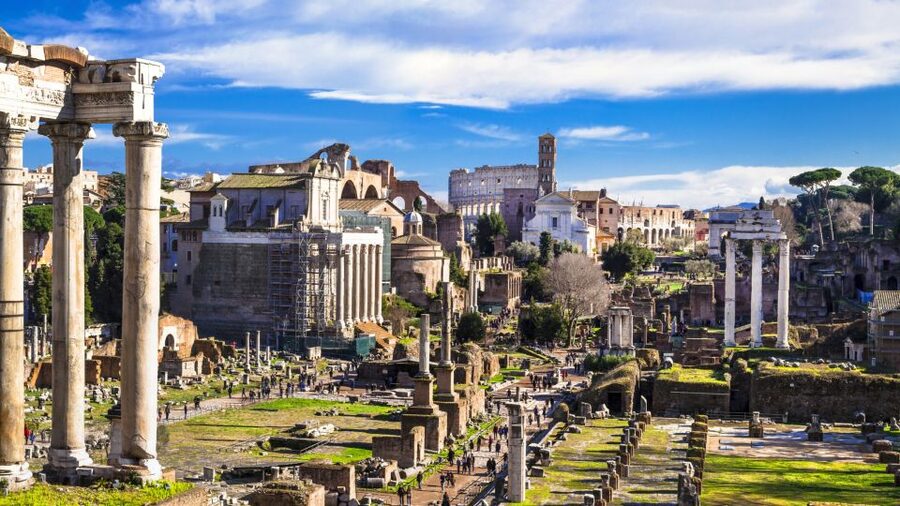
The Forum rewards some independent wandering, but it can be hard to know what you are looking at without background. A guided route gives the ruins a sequence: first the hill and its founding stories, then the Forum’s religious and political landmarks, then the road that linked public ceremony with military power. That structure is useful if this is your first visit or if you have limited time.
For groups larger than eight, headsets are included. They help you hear the guide without having to crowd close, a practical benefit in an open archaeological site where other groups and general visitor noise can compete with the explanation. The headsets have been praised for working well, but keep yours on and pay attention when the guide gives directions. The group needs to move together through the site.
The group option is listed as a small group of up to 20 people, while a private guide is available if you choose the private option. These are different ways to take the tour, so check the option you are booking rather than assuming the group size or level of privacy. A private tour may suit you if you want to set a more personal pace or ask many questions; the group version offers a shared guide and a set route.
Guides have been praised for making the material accessible to different ages, including children, and for using stories and images to help explain what is no longer standing. That sort of presentation is particularly valuable here. The stones are impressive, but the site becomes more legible when someone helps you picture the buildings and people that once filled it.
Fast-track entry helps, but security still takes time
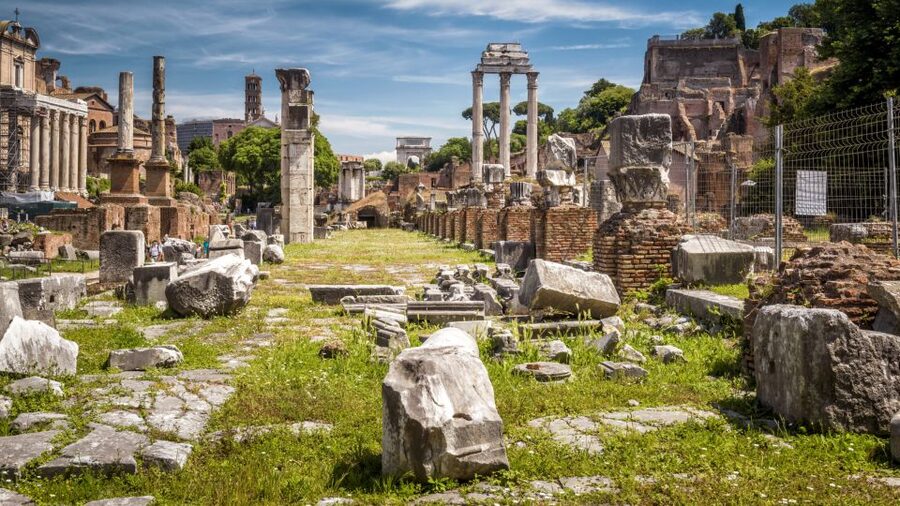
The tour includes fast-track access to Palatine Hill and the Roman Forum through a separate entrance. That can reduce the time spent waiting to enter, but it is not a promise of walking straight in. Security measures can still create a line, and everyone must pass through metal detectors.
Have a valid passport or ID card with you. At booking, you must provide each participant’s full name and date of birth, and that information is checked at the entrance. If your booking details do not match your identification, entry can be refused. Treat this as a firm requirement, not a minor formality.
Bag rules are strict enough to affect your plans. Large bags, backpacks, and suitcases are not permitted, and there is no cloakroom. Small bags are allowed, but keep yours compact and carry only what you need for the walk. Selfie sticks, glass objects, sprays, aerosols, alcohol, drugs, weapons, and sharp objects are also prohibited.
The tour begins and ends at the same meeting point, and hotel pickup and drop-off are not included. Food and drinks are also not included. Bring water if you need it, and plan your meal around the two-hour visit rather than expecting a stop for refreshments along the way.
More tours and experiences in Rome:
- Vatican: Museums & Sistine Chapel Entrance Ticket
★ 4.5 · 144,003 reviews - Vatican Museums & Sistine Chapel Tour with Optional Basilica
★ 4.3 · 67,413 reviews - Vatican Museums, Sistine Chapel & St Peter’s Basilica Guided Tour
★ 4.5 · 39,149 reviews - Rome: Colosseum & Forum with Audio Guide App -Optional Arena
★ 4.2 · 24,770 reviews
Is the $293.41 price good value?
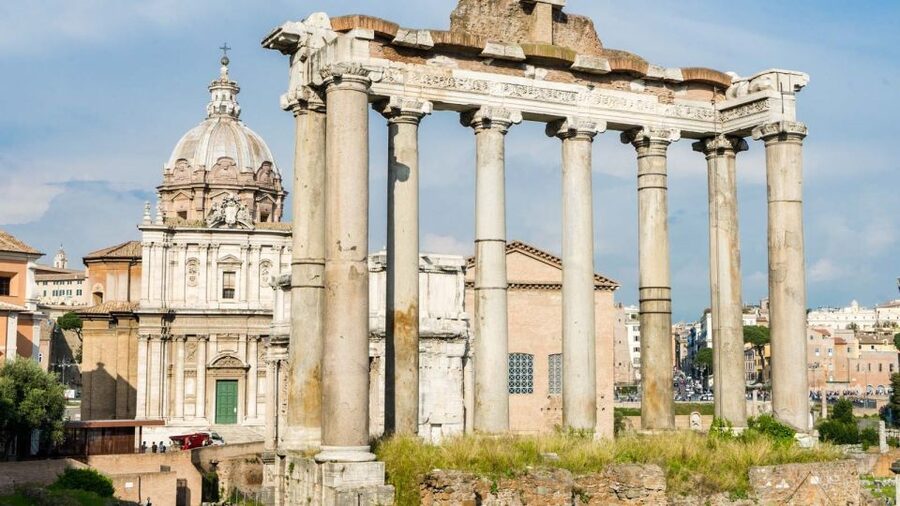
At $293.41 per person, this is a costly two-hour tour, so the value depends on what you want from the visit and which booking option you select. The price is easier to justify if you put a premium on a live guide, a planned route, fast-track entry, and the chance to ask questions. A guide can save you from spending your limited time among ruins you cannot identify or connect.
It is harder to justify if you mainly want entry to the archaeological area and are happy to explore at your own pace. The Colosseum is not included, nor are meals, transport, or hotel transfers. Check the exact option and price before booking, especially if you are comparing a private tour with the group option.
The tour’s strongest value is the guide, not simply the ticket. Past guides such as Simona, Anton, Andrea, and Antonio have been singled out for making Roman history clear, engaging, and entertaining. That quality can vary from one guide to another, of course, but the repeated emphasis on clear explanations and engaging storytelling suggests the experience is designed to do more than move you past landmarks.
The two-hour duration is a plus if you want a focused introduction, but a limitation if you hope to linger. Some people have wished for more time or stayed in the Forum after the guided portion. If your schedule allows, consider leaving extra time afterward to revisit a spot, take photographs, or explore at your own pace. The tour ends back at the meeting point, so you can plan from there.
Who will get the most from this walk
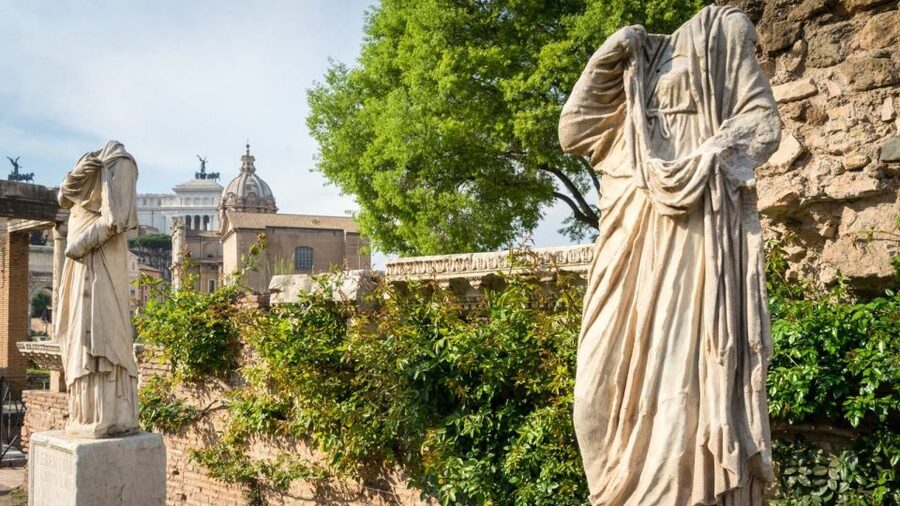
I would choose this tour if you are keen on ancient Rome but do not want to tackle a huge archaeological site without guidance. It is also a good option if you have already visited the Forum and want a more connected account of the place. One returning visitor found the guided experience made the site feel more meaningful, which makes sense: context can change how you see familiar ruins.
It may suit families with older children who can manage the walk and enjoy stories about Rome’s founders, leaders, and public ceremonies. The dramatic myths and the guide’s explanations can hold a young listener’s attention, though the tour is not designed for strollers. Baby strollers are prohibited, and the climb and steps make the route unsuitable for wheelchair users and people with mobility impairments, back problems, or certain pre-existing medical conditions.
If you have a disability, including a visual or hearing impairment, contact the local operator before booking. The tour information specifically asks you to share this in advance. The activity is not suitable for wheelchair users, and you should assess the walk honestly if uneven ground or steps are difficult for you.
You can cancel up to 24 hours in advance for a full refund, and a reserve-now, pay-later option is available. These terms add flexibility, but they do not change the practical essentials: verify the meeting point, bring valid ID, and avoid arriving with a large bag.
Should you book this Palatine Hill and Forum tour?
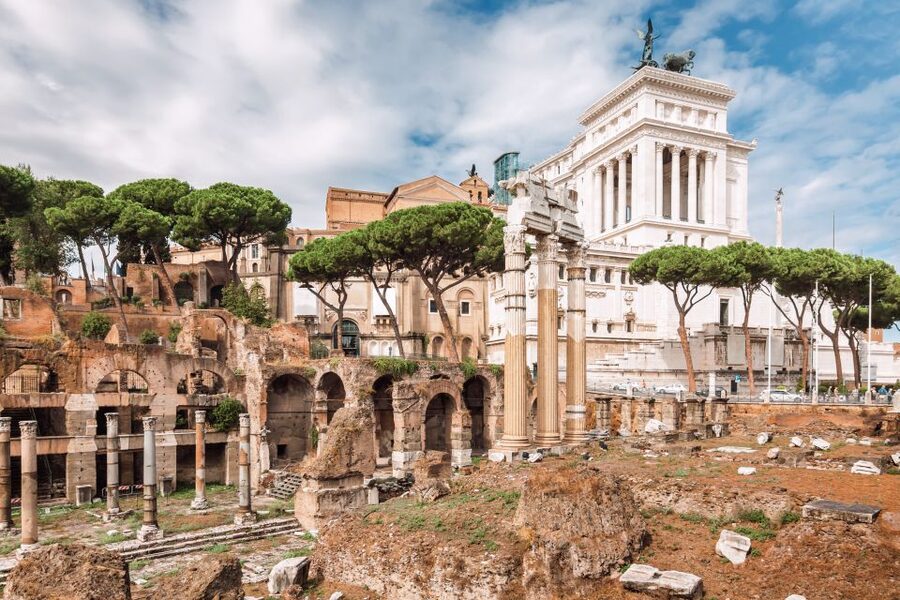
Book it if you want a brisk, guided introduction to Rome’s oldest political and religious center, and if a strong explanation matters more to you than unstructured time. The hilltop outlook, Sacred Way, and major Forum monuments make a satisfying route, while the guide can supply the missing pieces that stones alone cannot.
Skip it if you need a wheelchair-accessible visit, want the Colosseum included, or prefer to spend several hours exploring without a group schedule. At this price, you should choose the tour for its guided interpretation and convenience, not because fast-track entry guarantees an empty entrance. For an active visitor with a real interest in Roman history, it can turn two hours of ruins into a coherent introduction.
FAQ
How long is the tour?
The tour lasts two hours. Check availability for the starting times offered on your date.
Where does the tour meet?
Meet in front of Oppio Caffe on Via delle Terme di Tito, at the corner of Via Nicola Salvi. The guide holds a sign with your name.
Does the tour include the Colosseum?
No. The Colosseum is not included.
What sites are included?
The tour visits Palatine Hill and the Roman Forum. Named Forum sights include the Temple of Julius Caesar, Arch of Titus, House of the Vestal Virgins, Senate House, and Basilica of Maxentius.
Is fast-track entry guaranteed to mean no waiting?
No. The tour uses a separate entrance for fast-track access, but security measures may still cause lines. Visitors must pass through metal detectors.
What identification should I bring?
Bring a valid passport or ID card for each person. The full name and date of birth provided at booking must match the identification shown at entry.
Can I bring a backpack or suitcase?
No. Large bags, backpacks, and suitcases are not permitted, and there is no cloakroom. Small bags are permitted.
Is the tour suitable for wheelchair users?
No. It is listed as unsuitable for wheelchair users and people with mobility impairments. The route involves a moderate amount of walking and includes steps.
Newly reviewed in Rome
- Rome: Neapolitan Pizza Cooking Class in Front of the Vatican★ 4.8 · 137 reviews
- Rome: St. Paul’s Within the Walls New Year’s Concert Ticket★ 4.4 · 35 reviews
- Rome: Navona Underground & Domitian Stadium Guided Tour★ 4.6 · 36 reviews
- Rome: Navona Square and École Française Underground ticket★ 3.9 · 160 reviews
- Rome: Monuments and Belvederes Bike Tour★ 4.7 · 26 reviews
- Rome: Musical Biography of Frank Sinatra Concert★ 3.9 · 100 reviews
- Rome: Monti Neighborhood Lunch or Dinner Food Tour★ 4.9 · 8 reviews
- Rome: Mini hike to the ancient Parco degli Acquedotti★ 4.9 · 9 reviews
Roman Forum Tours, compared.
Colosseum, Roman Forum & Palatine Guided Tour
Read our review →
Colosseum & Forum with Audio Guide App -Optional Arena
Read our review →
Colosseum, Forum & Palatine Hill Tour & Optional Arena
Read our review →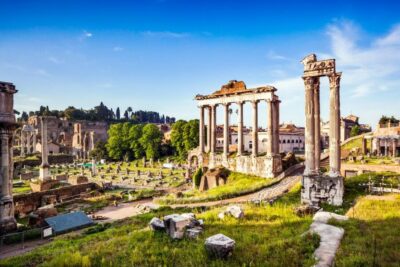
Colosseum, Roman Forum, Palatine with Multimedia Video
Read our review →
Colosseum, Forum, Palatine Hill Entry & Audioguide App
Read our review →Browse the lists this tour appears in