Review · ROME TOURS
Roman Gladiator School: Learn How to Become a Gladiator
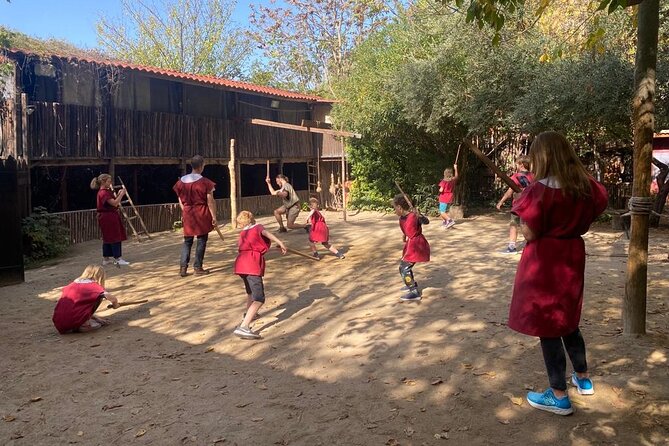
The main event here is not looking at gladiator gear behind glass. You get to put on a tunic, belt and gloves, learn basic moves with a wooden training sword, then take those moves into a mock arena fight. It is lively, hands-on Rome, with a little history before the swordplay.
I like two things in particular: the museum gives the action context, and the small-group cap of 15 leaves room for instruction rather than a crowd of spectators. The class also suits families who want to do something active after seeing the Colosseum, and adults can join in too.
One thing to plan for: the school is outside Rome’s historic center and can be tricky to locate at the end of a long driveway. Allow extra time to get there, and bring mosquito repellent, especially in warm weather.
At a glance
- Costume and wooden training sword are included: Dress in a tunic, belt and gloves before learning basic gladiator moves.
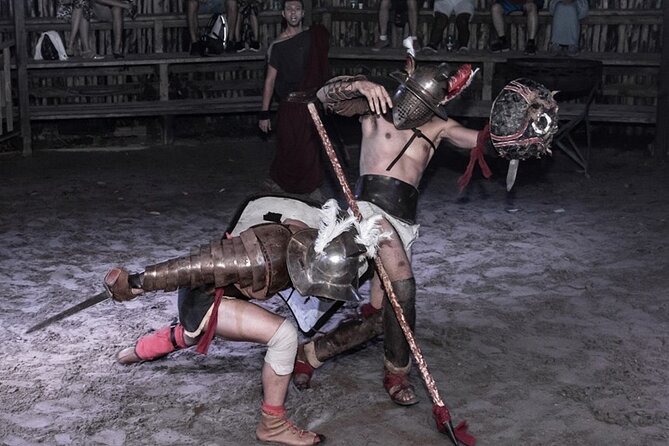
- The class ends in a mock battle: Practice offense and defense, then try your skills in friendly arena matches.
- A museum visit comes first: See gladiator weapons and other artifacts, with the chance to handle some equipment.
- The class is capped at 15 people: A smaller group can mean more direct attention from the instructor.
- Children age six and up can take part: Parents and other family members can join, while friends and family may watch from a viewing platform.
- The location needs a little planning: It is on Via Appia Antica, away from central Rome, and the entrance can be easy to miss.
History first, then hands-on training
The session takes place at the Gladiator School of Rome on Via Appia Antica, a historic road outside the old city walls. It is run by instructors from the Historic Group of Rome, whose work focuses on reenacting ancient Roman life and gladiator combat.
The two-hour format balances a short history lesson with active practice. You begin with the museum and its displays of gladiator weapons and other artifacts. Then you change into the supplied costume and head to training.
That order matters. The equipment makes more sense after you have heard about how gladiators and Roman soldiers fought. You are not expected to know the history in advance, and the class is designed to make the subject accessible to children and adults alike.
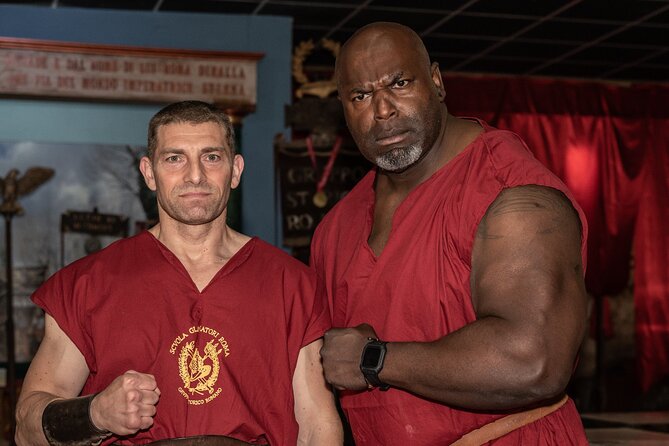
Instructors vary by session. Names associated with classes include Mirkos, Patricio, Ivan and Flama. The teaching style described across sessions is lively and welcoming, with humor alongside the history. Your own instructor may be someone else, but the experience is led by the school’s reenactment group.
More tours and experiences in Rome:
- Vatican: Museums & Sistine Chapel Entrance Ticket
★ 4.5 · 144,003 reviews - Vatican Museums & Sistine Chapel Tour with Optional Basilica
★ 4.3 · 67,413 reviews - Colosseum, Roman Forum & Palatine Guided Tour
★ 4.7 · 63,148 reviews
Inside the Gladiator School museum
The museum is part of the visit, not an add-on you need to arrange separately. You can see gladiator weapons and equipment, and some sessions include the chance to handle items or try on armor. Displays and dioramas help put the gear in context before you practice with training weapons.
This is a compact introduction, not a substitute for a long museum visit. If you are especially interested in Roman military history, you may wish the museum portion lasted longer. Still, it helps turn the class from a simple sword game into an activity with some historical grounding.
The museum can also give children something concrete to ask about. Helmets, shields and weapons are easier to remember than a list of dates, and the instructor can connect the objects to the techniques you will try outside.
Costume, warm-up and sword skills
After the museum, you put on a traditional belt and tunic, leather gloves and a training sword called a rudis. The costume is included for the lesson, so you do not need to bring equipment. It helps set the mood, but the point is not to dress up for photos alone: the group moves on to basic combat skills.
The class covers introductory sword fighting and includes warm-ups. You may also practice offense and defense, with a shield as well as a sword. Expect to be shown the moves first, then to try them yourself. The aim is participation, not polished technique, so beginners are very much at home.
The lesson is playful, but it is still physical. Comfortable clothes and shoes are sensible under or with the costume. Children can get excited and move quickly, so parents should stay attentive during the sparring portion. The activity is built around mock combat, but one family reported that some young children found the physical contact uncomfortable. If your child is sensitive to rough play, explain the format beforehand and ask the instructor how the matches are handled.
The arena battle is the big finish
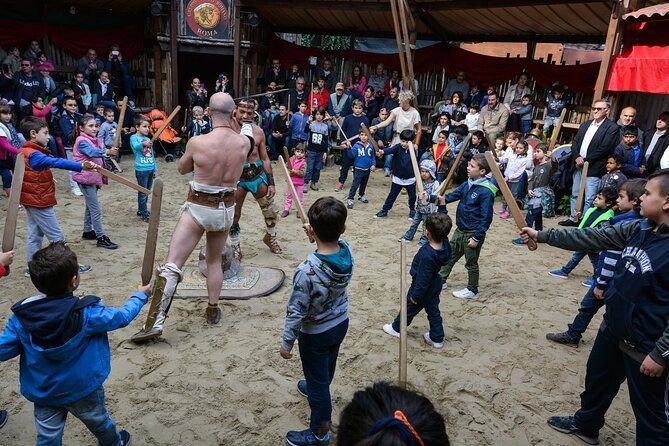
Once you have practiced the basics, the group gets to use them in mock fights. The battle is the part many families look forward to most: you can try out your sword-and-shield moves, cheer on others and, if you choose, join an optional tournament.
The tournament is not compulsory. If you would rather skip the competition, you can still take part in the training and enjoy the final battle in a less competitive way. The tone is meant to be fun, not a serious test of strength or skill.
All participants receive a certificate at the end. It is a small souvenir, but it gives children a keepsake tied to the activity rather than another generic Rome trinket. Friends and family who are not taking the class can watch from a viewing platform, so a parent does not have to book a place just to accompany a child.
Same city, a different way to spend the day:
- Vatican Museums, Sistine Chapel & St Peter’s Basilica Guided Tour
★ 4.5 · 39,149 reviews - Rome: Colosseum, Palatine Hill and Roman Forum Guided Tour
★ 4.8 · 32,814 reviews - Rome: Guided Tour of Colosseum, Roman Forum & Palatine Hill
★ 4.7 · 27,897 reviews - Rome: Colosseum & Forum with Audio Guide App -Optional Arena
★ 4.2 · 24,770 reviews
Who will get the most from it
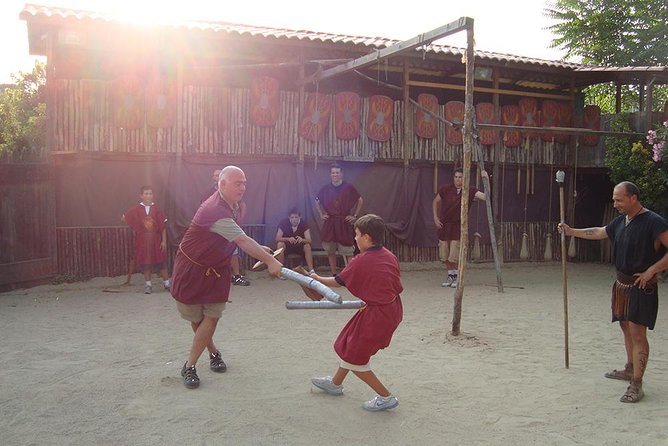
This is an especially good fit for families with active children who like costumes, role-play and mock battles. The minimum age is six, and classes have worked well for children and adults taking part together. Adults can enjoy the history and the silliness too, though those looking for a quiet, detailed history tour may find the physical activity is the main attraction.
It can also work well for a mixed-age group. Children can focus on the training and competition, while adults get the museum introduction and a chance to join the lesson. If you prefer to watch, the viewing platform provides that option.
The activity is not only for families. Adults traveling without children can take part, and the group size may be smaller during the low season. One early-morning class, for example, had only two participants. Group size can vary, but the stated maximum is 15.
Getting to Via Appia Antica

The meeting point is Via Appia Antica 18, and the activity ends back there. The school is outside the historic center, so do not assume that being near the Colosseum means it is a quick walk from central Rome. One family estimated the walk from the Colosseum at about 45 minutes, while other practical options mentioned include the 118 bus and a taxi.
Allow extra time. The driveway leading to the school can be long, and the entrance may not be obvious from the map location. A little preparation before setting out can save you from arriving flustered just as the lesson begins.
There are limited food options nearby, so eat beforehand if you expect to be hungry. A drink is listed as included, though one participant reported that none was provided. If that matters to you, check with the operator before the class rather than counting on it.
Mosquitoes are another practical consideration. Bring repellent, especially if you are visiting in warmer months. It is a small item that can make a two-hour outdoor activity much more comfortable.
Is the price worth it?
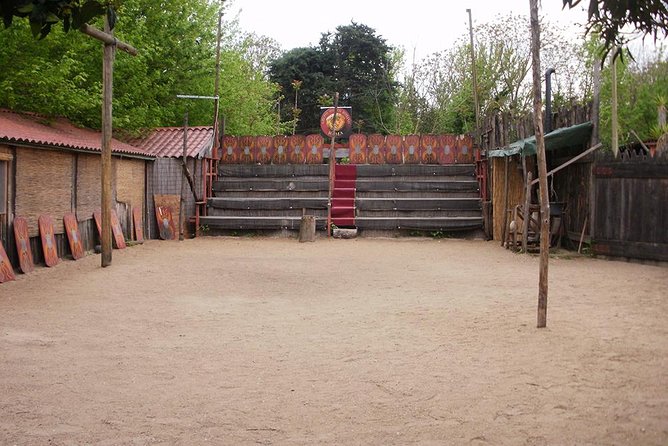
At $108.16 per person, this is more expensive than a simple museum visit, and the two-hour class is not a full-day history tour. The value comes from combining the museum entry, costume and weapon hire, instruction, and the chance to take part in a mock battle. You are paying for an activity that gets everyone involved, not just for access to a display.
For a family, the price can make sense if the children are likely to enjoy active play and the adults are happy to join in. The lesson creates a change of pace from Rome’s churches, ruins and long walks. If you are only mildly interested in gladiators or would rather spend your budget on a longer guided tour, this may not be the best fit.
Several lesson times are offered throughout the day, which helps you work it around other plans. The class is about two hours, but include travel time when building your schedule. This is not an activity to squeeze between two central Rome sights without allowing for the journey.
Practical details before you book
The experience is offered in English, uses mobile tickets and allows group discounts. Confirmation is received at booking, and the maximum group size is 15. Most people can participate, but children must be at least six.
Free cancellation is available if you cancel at least 24 hours before the start time. Cancellations made later than that are not refunded, and changes within 24 hours are not accepted. Cut-off times follow local Rome time.
The activity includes clothing and weapons for the lesson, museum admission, and a drink according to the included-items information. Food and other beverages are not included unless specified. Hotel pickup and drop-off are not provided.
Should you book the Gladiator School?
Book it if you want an active, memorable break from sightseeing and your group is keen to dress up, learn a few moves and take part in a mock fight. The combination of museum objects and practical training gives the activity more substance than a costume photo stop, and the small-group limit is a plus.
Think twice if your schedule is tight, your child dislikes physical play, or your idea of a Roman history outing is a long, quiet lecture. The location takes planning, and the combat games may not suit every young child. For families with energetic kids, though, this can be a standout Rome activity, especially when paired with a visit to the Colosseum.
FAQ
How long is the Gladiator School class?
The class lasts about two hours.
What is the minimum age?
Children must be at least six years old to participate.
What is included in the price?
The experience includes the two-hour class, instruction by members of the Historic Group of Rome, gladiator clothing and weapons for the lesson, museum admission, and a drink according to the included-items information.
Where does the activity start and end?
It starts at Via Appia Antica 18, 00179 Roma, Italy, and ends back at the meeting point.
Is the class offered in English?
Yes. The activity is offered in English.
How many people can join a class?
The maximum group size is 15 participants.
Can family members watch without taking part?
Yes. Friends and family may watch the class from a viewing platform.
Is the tournament required?
No. The tournament is optional. All participants receive a certificate at the end of the lesson.
Can I cancel for a refund?
Yes, if you cancel at least 24 hours before the experience start time. Cancellations made less than 24 hours before the start time are not refunded.
Newly reviewed in Rome
- Rome: Neapolitan Pizza Cooking Class in Front of the Vatican★ 4.8 · 137 reviews
- Rome: St. Paul’s Within the Walls New Year’s Concert Ticket★ 4.4 · 35 reviews
- Rome: Navona Underground & Domitian Stadium Guided Tour★ 4.6 · 36 reviews
- Rome: Navona Square and École Française Underground ticket★ 3.9 · 160 reviews
- Rome: Monuments and Belvederes Bike Tour★ 4.7 · 26 reviews
- Rome: Musical Biography of Frank Sinatra Concert★ 3.9 · 100 reviews
- Rome: Monti Neighborhood Lunch or Dinner Food Tour★ 4.9 · 8 reviews
- Rome: Mini hike to the ancient Parco degli Acquedotti★ 4.9 · 9 reviews
Rome Tours, compared.

Vatican: Museums & Sistine Chapel Entrance Ticket
Read our review →
Vatican Museums & Sistine Chapel Tour with Optional Basilica
Read our review →
Colosseum, Roman Forum & Palatine Guided Tour
Read our review →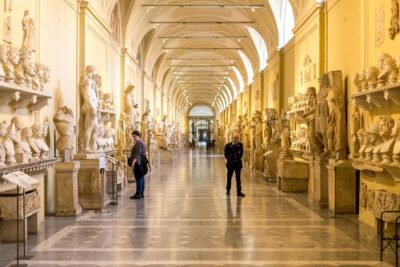
Vatican Museums, Sistine Chapel & St Peter’s Basilica Guided Tour
Read our review →
Colosseum & Forum with Audio Guide App -Optional Arena
Read our review →
Pantheon Fast-Track Ticket and Official Audio Guide
Read our review →
City Sightseeing Hop-on Hop-off Bus with Audioguide
Read our review →