
Review · ROME PRIVATE TOURS
Rome: Caracalla Baths Express Small-Group or Private Tour
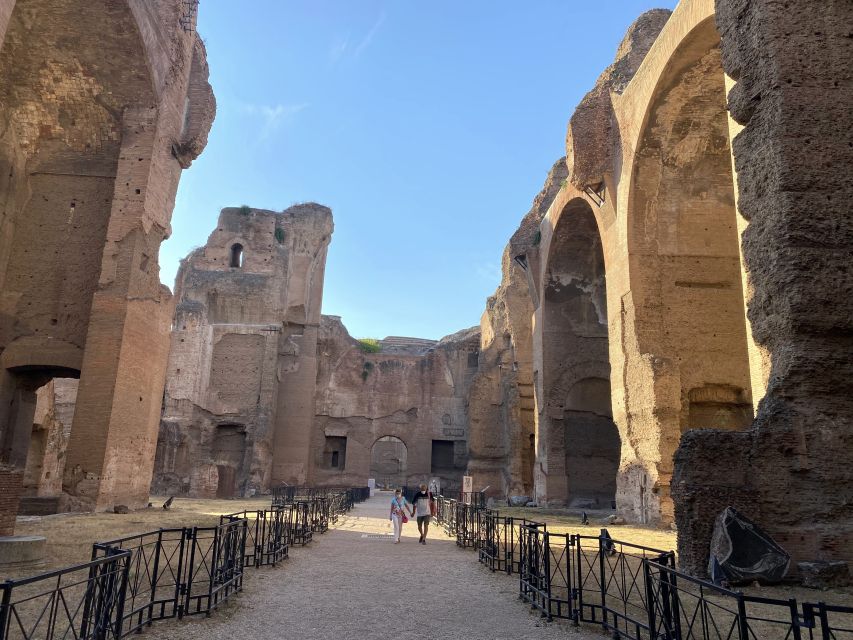
The Baths of Caracalla make ancient Rome’s public life feel wonderfully tangible. In an hour, an archaeologist guides you through enormous surviving walls and monumental rooms, explaining how Romans used this vast bathing complex and how its engineers heated it.
I like two things in particular: the tour links the building’s striking scale to the everyday routine it served, and the small-group format gives you a better chance to ask questions. Guides such as Francesca, Mario, Chiara, and Sara have been praised for bringing warmth, humor, and clear explanations to the visit.
One consideration: an hour is brisk for a complex this large. One visitor felt a walk from the Circus Maximus cut into time at the baths, so confirm the route and schedule if seeing the site at an unhurried pace matters to you.
Key points
- A Roman day, not just a set of ruins: Follow the stages of a typical visit to the baths in the 3rd century AD.
- Engineering you can see: Learn how underfloor heating helped maintain different temperatures across the complex.
- Mosaics reward a closer look: Your guide points out geometric details that can be easy to pass by on your own.
- Small group, capped at 10: Choose a private tour or a small-group visit.
- One hour with an archaeologist: Entry, headsets, and on-site assistance are included.
- A calm setting may be part of the appeal: Some visits have found the site peaceful, though crowd levels can change.
Why the Baths of Caracalla feel different
Rome has no shortage of famous ancient sites, but the Baths of Caracalla offer a different view of Roman life. This was not simply a place to wash. It was a large leisure complex, and the tour sets out to show how its rooms and services served both body and mind.
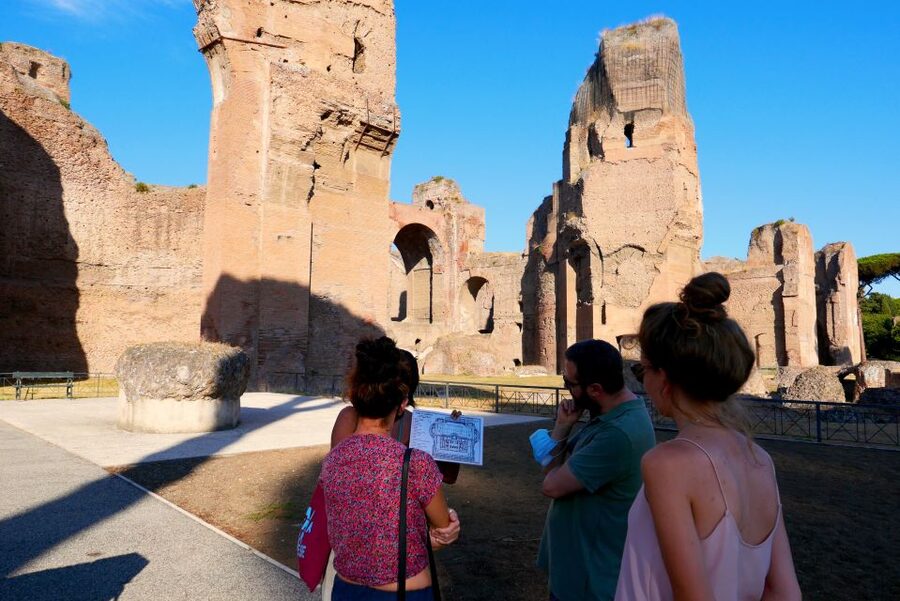
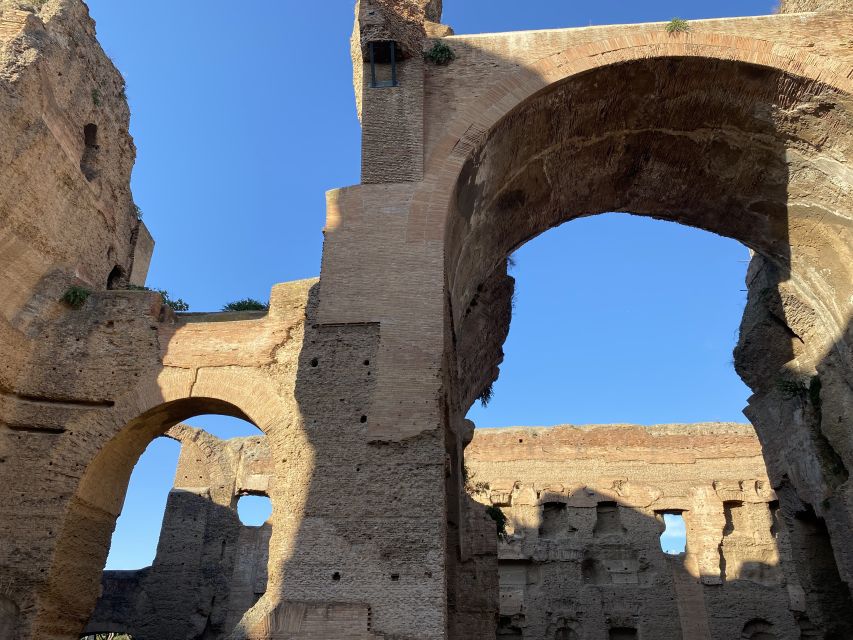
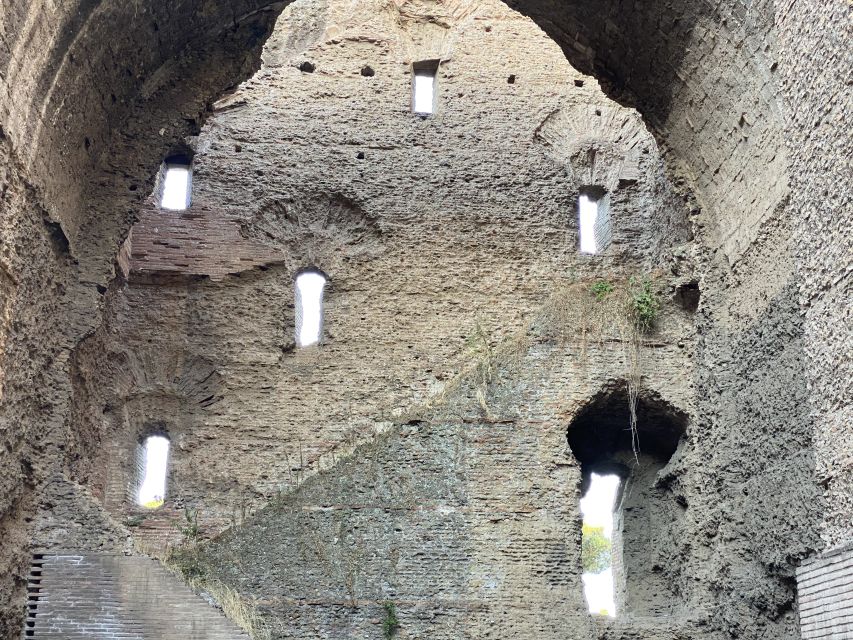
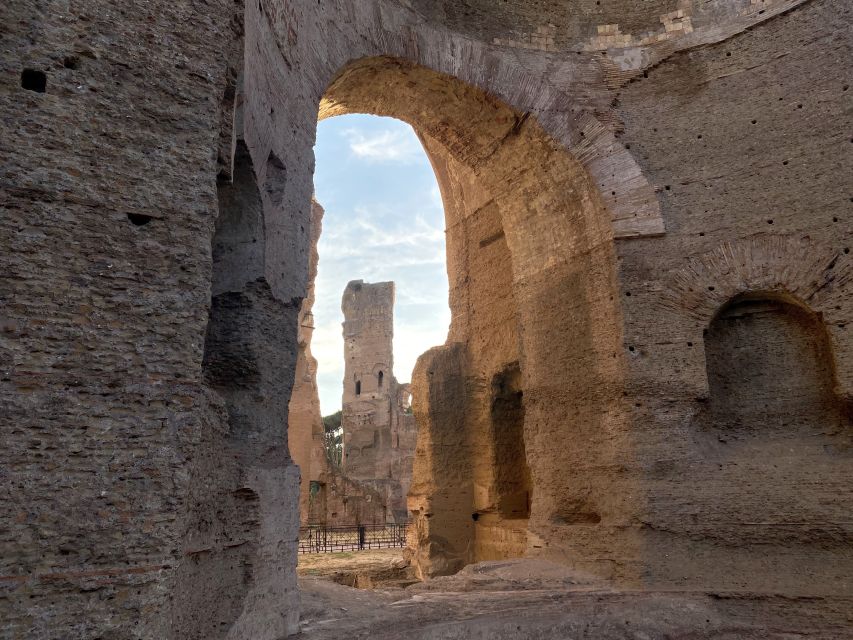
The scale is the first thing to take in. You walk among towering walls and through the remains of monumental rooms, with the building’s size giving you a sense of how ambitious the complex was. A guide helps connect that grand architecture to the ordinary act of spending part of your day at the baths.
That connection matters. Without context, ruins can feel like a collection of impressive fragments. Here, the guide places them in a daily routine, helping you imagine how a Roman might have moved through the complex and used its different spaces.
The baths are also a useful change of pace if your Rome plans are heavy on emperors, temples, and political history. This visit focuses on recreation and public life, while still giving you plenty to think about in the structure itself.
More private tours in Rome:
- Rome by Golf Cart Private Tour: Beyond the Landmarks
★ 5.0 · 4,361 reviews - Early Morning Vatican, Sistine, St. Peter’s Semi or Private Tour
★ 5.0 · 3,779 reviews - Rome on a Golf Cart Semi-Private Tour Max 6 with Private Option
★ 5.0 · 2,502 reviews
Following a 3rd-century bathing routine
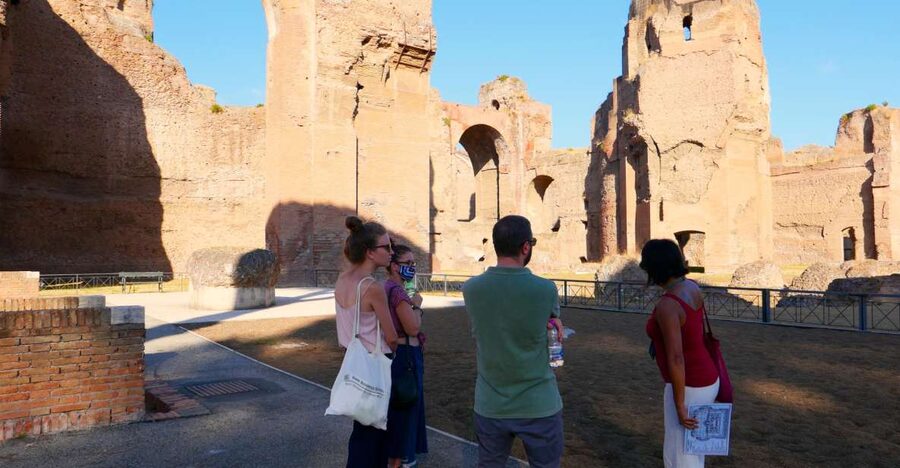
The tour’s central idea is simple and effective: imagine yourself as an ancient Roman for an hour. Your guide explains the steps of a typical day at the baths in the 3rd century AD, using the rooms around you to make that sequence easier to picture.
You’ll hear about the range of services associated with the baths and how the complex supported wellness of body and mind. The supplied details don’t specify every service or the exact order of each stop, so expect the guide to interpret the spaces rather than follow a fixed, detailed script of activities.
That approach suits visitors who want more than dates and names. The tour gives you a framework for understanding why a bath complex could be a major part of Roman life, not merely a place to get clean. If you enjoy social history, this is likely to be one of the most memorable parts.
It also gives you a reason to look closely. A room’s size, layout, or position can make more sense once you know how it fitted into a day at the baths. I’d keep questions in mind as you go, especially if you’re curious about how Romans used a particular space.
Reading the walls, mosaics, and heating system
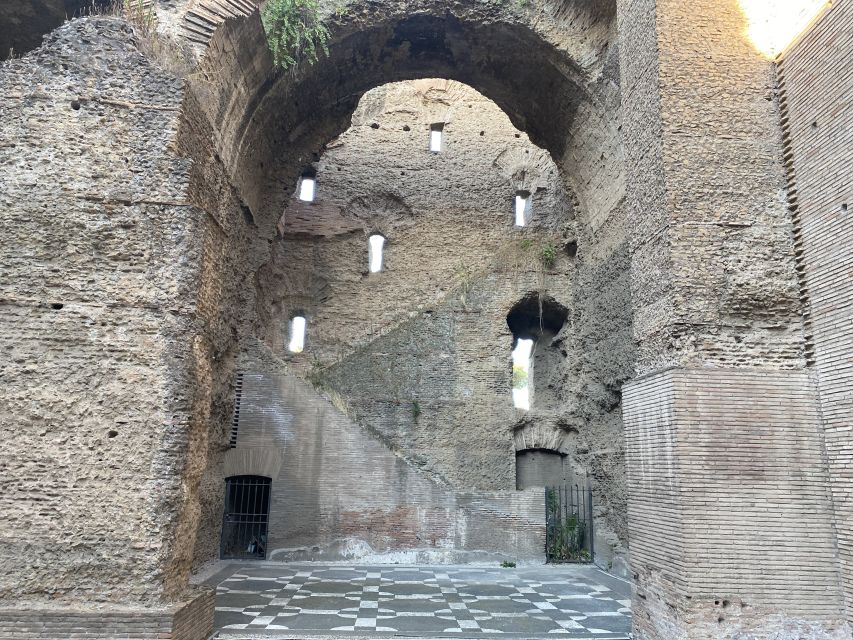
The surviving walls make the engineering story feel immediate. Your guide explains the labor-intensive underfloor heating system and how ancient builders maintained the desired temperature in different rooms. You won’t just hear that the Romans were technically capable; you’ll get a sense of the practical work needed to keep a complex like this functioning.
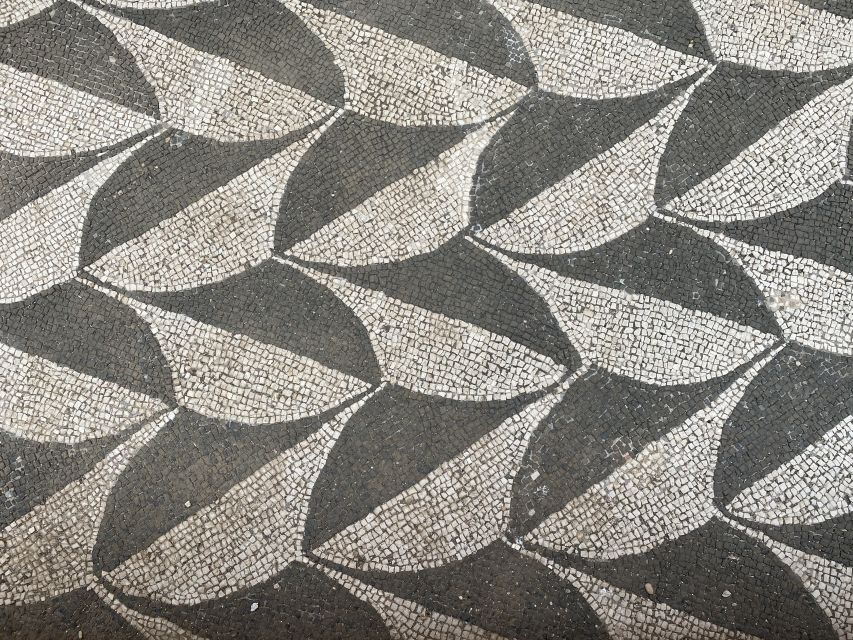
The tour also calls attention to the geometric motifs in the mosaics. These details are worth seeking out because they offer a contrast to the scale of the masonry: one moment you’re looking up at enormous walls, the next you’re studying patterns underfoot.
A guide is especially useful here. In a large ruin, it’s easy to focus on the biggest surviving structures and miss the smaller features that add texture to the visit. Headsets are included, so you can hear the guide clearly as you move through the site.
The engineering and decoration also make good companions. One explains the systems needed to run the baths; the other shows the care given to the finished spaces. Together, they help the complex feel less like an abandoned shell and more like a place designed for regular use.
What one hour at the site looks like
The tour begins at the exit of the Circo Massimo Metro station, in front of the FAO building. Look for a yellow label marked TOURIKS, and arrive five minutes before your scheduled start. The listed starting location is Viale Aventino, 3, so check your booking details and meeting instructions before setting off.
From there, the guided visit at the Baths of Caracalla lasts one hour. That’s a compact introduction, not a slow, open-ended wander. Your archaeologist leads you through the monumental rooms, explains the role of the complex, and points out the heating system and mosaics.
The short format is useful if you’re fitting the baths into a busy Rome itinerary. It also means you’ll need to keep moving and pay attention as the guide explains each section. If you like lingering for photographs or examining every surviving detail at length, you may want extra time at the site beyond the guided hour.
One visitor found that a walk from the Circus Maximus took about 15 minutes and left the baths portion feeling rushed. The stated itinerary focuses on the baths, but this is a good reason to clarify the route with the operator before booking if every minute on site counts for you.
More tours and experiences in Rome:
- Vatican: Museums & Sistine Chapel Entrance Ticket
★ 4.5 · 144,003 reviews - Vatican Museums & Sistine Chapel Tour with Optional Basilica
★ 4.3 · 67,413 reviews - Colosseum, Roman Forum & Palatine Guided Tour
★ 4.7 · 63,148 reviews - Vatican Museums, Sistine Chapel & St Peter’s Basilica Guided Tour
★ 4.5 · 39,149 reviews
Small group, private tour, and guide style
You can book a private tour or join a small group capped at 10 participants. A group this size is a practical middle ground: you get a guide’s interpretation without being part of a large crowd, and there is more room for questions than on a bus-style tour.
A private option may suit you if you want the visit shaped more closely around your interests. The small-group choice is a less costly way to have a guided experience while still keeping the group limited. The available information does not spell out the price difference between the two formats, so check the selected option when booking.
The guide can make or break a one-hour visit, and the feedback on named guides is a strong point here. Francesca was described as making the experience comfortable and fun; Mario was praised for bringing passion and humor; Chiara was credited with sharing useful facts; and Sara was remembered for an energetic delivery. Another guide was noted for walking at a pace that allowed someone with bad knees to keep up.
Those examples suggest a friendly, engaged style, though no single guide can be guaranteed. You can choose from English, German, Italian, Portuguese, French, or Spanish, subject to the available start times.
Is $70 a fair price for an hour?
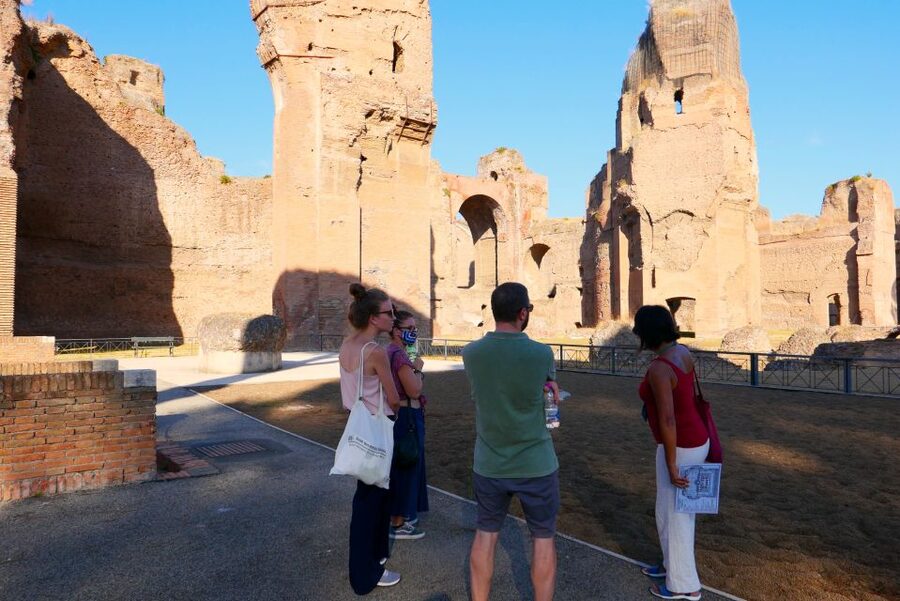
At $70 per person, this is not a bargain-priced entry ticket. The value comes from what is bundled with it: admission to the Baths of Caracalla, a professional archaeologist guide, sterilized headsets, and on-site assistance. You’re paying for interpretation as much as access.
That interpretation is most valuable if you want to understand how the baths worked, rather than simply walk through the ruins. The guide links architecture, heating, mosaics, and everyday use, giving you a clearer picture of the site than you may get from a brief self-guided visit.
For a history-minded visitor with limited time, the one-hour length can make the price easier to justify. You get a focused explanation without building half a day around the site. On the other hand, if you prefer to explore independently and read at your own pace, you may not need a guided format.
The private or small-group choice gives you some control over the kind of visit you want, but remember that the listed price is per person. Check the booking options carefully to see which group format and start time fit your plans.
Practical details before you go
Bring a passport or ID card. Large bags and luggage are not allowed, so leave bulky items elsewhere before you arrive. The site is listed as wheelchair accessible, and one guide has been praised for keeping a pace that accommodated a visitor with bad knees.
Admission is included, and the tour skips the ticket line. Headsets are provided so you can hear the guide clearly. Free cancellation is available up to 24 hours in advance for a full refund, and the reserve-now, pay-later option lets you hold a place without paying today.
The site has been described as peaceful, with few people around during some visits. Treat that as a possibility, not a guarantee: the atmosphere can vary with the time and day of your visit. Late afternoon light was appreciated by one visitor, so you might consider that when comparing available start times, while keeping in mind that availability changes.
Who should book the Baths of Caracalla tour?
I’d recommend this tour if you’re curious about how ancient Romans spent their leisure time, or if you like seeing the practical systems behind monumental architecture. The guided format is a good fit for anyone who wants the ruins explained in plain terms, particularly the heating system and the daily routine the complex supported.
It also works well for a short Rome visit. In one hour, you get a focused look at a major site without committing to a long excursion. The small group limit and several language choices make it easier to find a format that suits your plans.
You may want to skip it if you mainly want an unhurried visit with plenty of time to wander on your own. The tour is expressly brief, and the possible walk from the Circus Maximus is worth checking before you book. If you’re happy to keep moving and want the buildings to make sense, the archaeologist-led visit offers a useful, grounded way to see the baths.
FAQ
How long is the tour?
The guided tour lasts one hour.
Where do I meet the guide?
Meet at the exit of the Circo Massimo Metro station, in front of the FAO building. Look for a yellow label marked TOURIKS.
How early should I arrive?
Arrive five minutes before your scheduled start time.
What is included in the price?
Entrance to the Baths of Caracalla, a professional archaeologist guide, sterilized headsets, and full on-site assistance are included.
How many people can join a group?
The tour has a maximum of 10 participants. Private and small-group options are available.
What languages are offered?
Tours are available in German, Italian, English, Portuguese, French, and Spanish.
Is the tour wheelchair accessible?
Yes, the activity is listed as wheelchair accessible.
What should I bring?
Bring a passport or ID card.
Can I bring luggage or a large bag?
No. Luggage and large bags are not allowed.
Can I cancel for a refund?
Yes. You can cancel up to 24 hours in advance for a full refund.
Newly reviewed in Rome
- Rome: Neapolitan Pizza Cooking Class in Front of the Vatican★ 4.8 · 137 reviews
- Rome: St. Paul’s Within the Walls New Year’s Concert Ticket★ 4.4 · 35 reviews
- Rome: Navona Underground & Domitian Stadium Guided Tour★ 4.6 · 36 reviews
- Rome: Navona Square and École Française Underground ticket★ 3.9 · 160 reviews
- Rome: Monuments and Belvederes Bike Tour★ 4.7 · 26 reviews
- Rome: Musical Biography of Frank Sinatra Concert★ 3.9 · 100 reviews
- Rome: Monti Neighborhood Lunch or Dinner Food Tour★ 4.9 · 8 reviews
- Rome: Mini hike to the ancient Parco degli Acquedotti★ 4.9 · 9 reviews
Rome Private Tours, compared.

Rome by Golf Cart Private Tour: Beyond the Landmarks
Read our review →
Early Morning Vatican, Sistine, St. Peter’s Semi or Private Tour
Read our review →
Rome on a Golf Cart Semi-Private Tour Max 6 with Private Option
Read our review →

Private Vatican Highlights Guided Tour with Sistine Chapel
Read our review →
Private Vatican Museums and St. Peter’s Basilica Early Bird Tour
Read our review →
Colosseum, Roman Forum and Palatine Hill Private Tour
Read our review →Browse the lists this tour appears in