
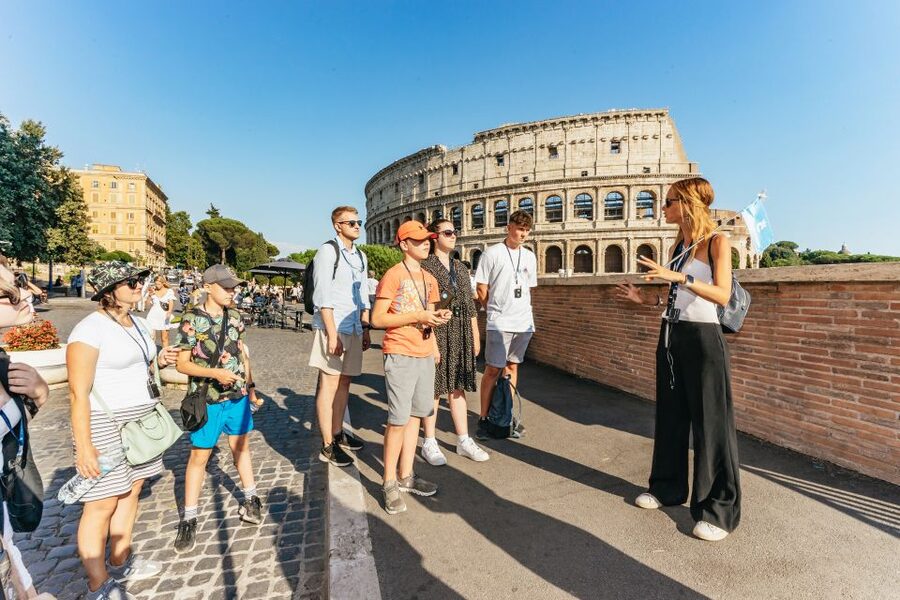
Review · ROME WALKING TOURS
Rome: City Highlights Walking Tour
Rome’s great pleasure is how quickly one age gives way to another: an ancient market, a grand monument, a narrow historic quarter, then a Baroque fountain. This 2.5-hour walk links those contrasts, beginning at Trajan’s Market and ending at the Trevi Fountain.
I like that the route pairs headline sights such as the Pantheon with the Jewish Ghetto, giving you more than a checklist of famous facades. I also like the emphasis on storytelling and questions. Guides named Brian, Fabio and Monica have led outings, with particular praise for their clear explanations, friendly manner and easy pace.
The main limitation is simple: this is a walking overview, not an inside visit. You’ll see the monuments from outside, and the route involves enough walking that it is not suitable for people with mobility impairments.
Key points to know
- A strong first-day route: The walk connects central Rome’s major sights and can help you get your bearings early in a visit.
- The itinerary moves across eras: You’ll see Trajan’s Market, the 16th-century Jewish Ghetto, Baroque piazzas and the Pantheon.
- The guide makes the difference: Brian, Fabio and Monica are among the guides named by past participants, with storytelling and a welcoming style often singled out.
- No monument entry is included: The guide explains the sites from the outside, so plan separate visits if you want to go indoors.
- Allow for steady walking: The tour lasts 2.5 hours, takes place in all weather and is not designed for people with mobility impairments.
- The price is $41 per person: That buys a guided city overview, not tickets or hotel transport.
From Trajan’s Market into Rome’s long story

The meeting point is Colonna Traiana n. 84, where your guide will hold a City Walkers sign or flag. The tour begins at Trajan’s Market, an ancient Roman complex built in the second century AD. It offers a fitting opening: before the fountains and piazzas, you get a glimpse of the engineering and practical life of imperial Rome.
I like starting here because the guide can give you a historical frame before the route moves through the city. The market is more than a name on a map; it is a chance to hear about Roman construction, including bricks and building methods. One participant specifically enjoyed learning about Roman construction and bricks, so this is a good place to ask the guide how the structures around you were made.
This is an outdoor explanation, not a ticketed visit into the site. That distinction matters if you’re hoping to spend time exploring the market’s interior or museum spaces. The tour’s value lies in seeing the landmarks in sequence and hearing a guide connect them, rather than lingering inside each one.
More city highlights tours in Rome:
- Rome: City Sightseeing Hop-on Hop-off Bus with Audioguide
★ 4.0 · 16,045 reviews - Rome:Hop-On Hop-Off Panoramic Open Bus Ticket 3 Circuits x 1
★ 4.0 · 15,405 reviews - City Sightseeing Rome Hop-On Hop-Off Bus Tour
★ 3.5 · 5,446 reviews
Piazza Venezia and the Victor Emmanuel monument
From Trajan’s Market, the walk continues to Piazza Venezia, one of Rome’s best-known squares. The large square brings several historic buildings into view, including the Monument to Victor Emmanuel II, also called the Vittorio Emanuele monument in the tour description.
The scale of this part of the city makes it a useful point for understanding how Rome’s public spaces can feel monumental. Your guide can explain the monument and its place among the surrounding buildings, helping you look past the sheer size of the scene and notice how the square fits into the route.
There’s no separate entry here, either. You’ll hear about the buildings from outside, then move on. If you want to explore the monument itself at greater length, treat the tour as an introduction and allow time for a return visit on your own.
The Jewish Ghetto brings a different perspective
The route then enters the Jewish Ghetto, an area dating to the 16th century. It adds a distinct chapter to the walk, shifting the focus from Rome’s ancient engineering and grand civic spaces to a neighborhood with its own long history.
I value this stop because a city tour can too easily become a parade of monuments. Here, the guide has room to discuss a part of Rome that may be less familiar to first-time visitors. The itinerary describes the area as a small part of the city, and the contrast with the broad squares earlier in the route is part of what makes the walk feel varied.
The amount of time spent on this subject may depend on the guide and the group’s questions. One participant felt the explanations of the Jewish section ran a little long, while still appreciating the historical details elsewhere. If you have a particular interest in the area, ask questions; if you’re more eager to reach the next landmark, remember that this is a guided overview, not a specialist tour of the neighborhood.
Campo de’ Fiori offers a change of pace
Next comes Campo de’ Fiori, a square in the heart of Rome known for its street market. The stalls give the route a more everyday feel after the formal scale of Piazza Venezia and the historical focus of the Ghetto.
The market is also a practical moment to look around and take in the life of the square. The tour description notes opportunities to browse stalls and pick up souvenirs, but the walk is only 2.5 hours, so don’t count on a long shopping stop. If something catches your eye, you can always return later.
For me, this kind of pause helps keep a city walk from feeling like one continuous lecture. You get a different setting and a chance to look about before the route moves on to Piazza Navona. Just bear in mind that this is still a guided walk, so the group continues together rather than stopping for an extended market visit.
More walking tours in Rome:
- Rome: Trastevere & Campo de Fiori Street Food Walking Tour
★ 4.9 · 2,768 reviews - Rome: Paranormal Night Walking Tour & Secret Backstreets
★ 4.9 · 1,921 reviews - Rome by Night Walking Tour – Legends & Criminal Stories
★ 4.5 · 1,003 reviews - Rome: Guided City Center Evening Sightseeing Walking Tour
★ 4.4 · 953 reviews
Piazza Navona and its Baroque fountains
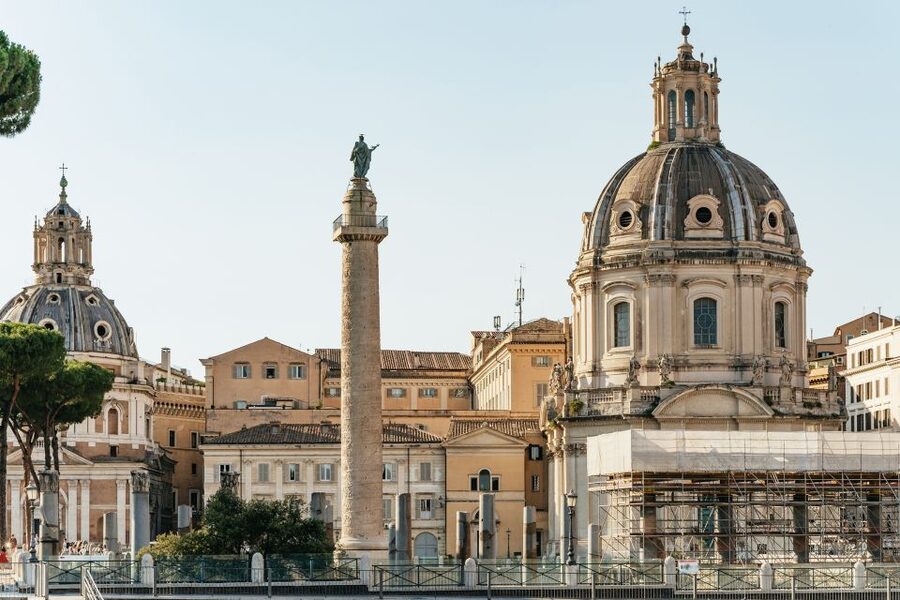
Piazza Navona is one of the route’s key Baroque settings, with fountains and sculptures framing the square. It offers a sharp visual contrast with the ancient remains at the start of the tour and gives the guide a natural place to explain Rome’s Baroque architecture.
A story about the Fountain of the Four Rivers was singled out as a highlight by one participant. That’s a useful clue to what makes this stop work: the sculptures and fountains are striking on their own, but a good explanation gives you details to look for and a story to take away. Ask your guide about the fountain if it isn’t already part of the talk.
The square can be busy, and the tour does not promise a quiet or private view. The guide’s job is to help you focus on the architecture and history amid the public setting. If you want time for photos or a longer look, you may prefer to return after the tour.
The Pantheon is the route’s ancient showpiece
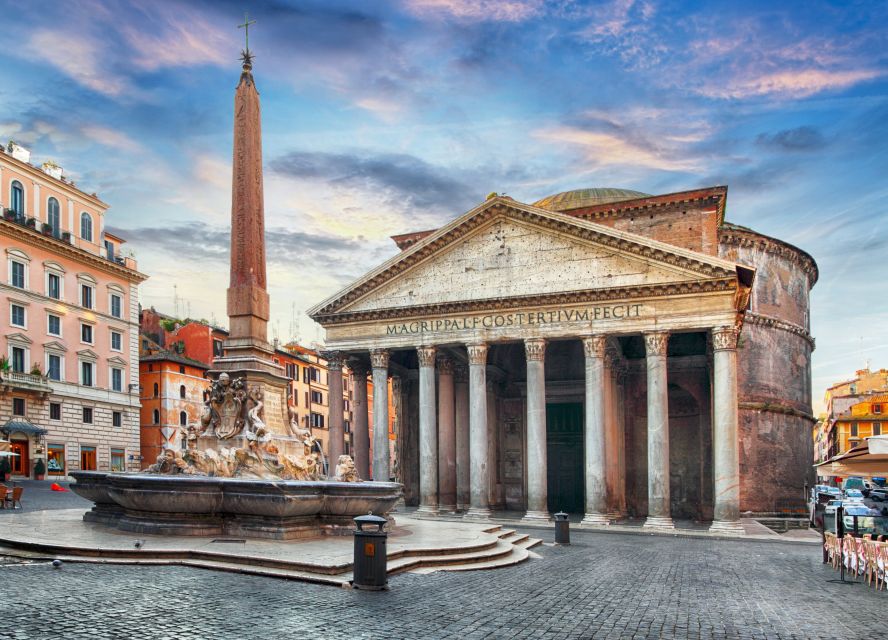
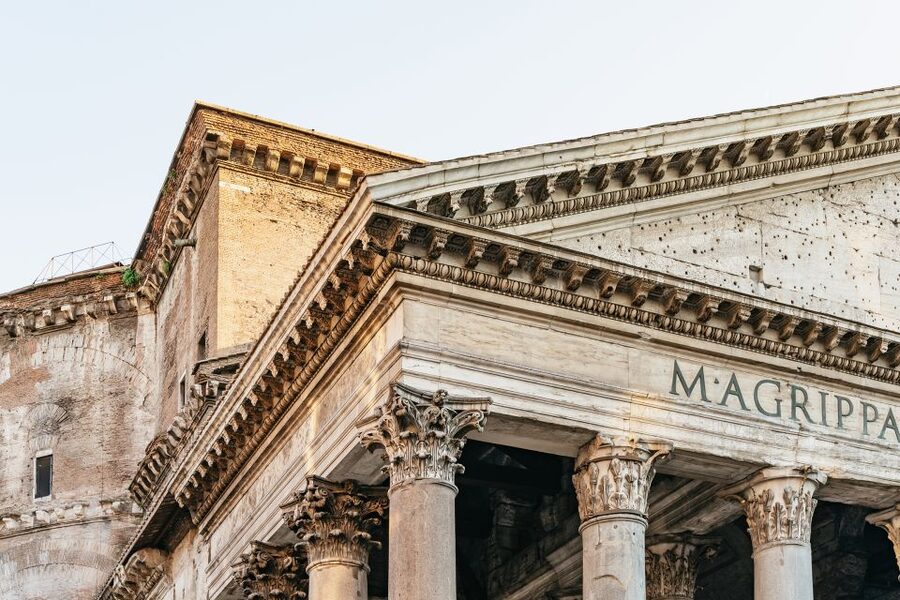
The Pantheon is described as one of the best-preserved ancient Roman monuments. Even from the outside, it is a major stop on this route, and the guide can explain what makes it such an important part of Rome’s architectural story.
The key thing to know is that the tour does not include entry. If seeing the interior is a priority, you’ll need to arrange a separate visit. The guided stop still has value: you can study the exterior with context, then decide whether to return for a closer look.
This is where the tour’s broad scope becomes a trade-off. In 2.5 hours, you see many central sights, but you won’t have the time or access to explore each one in depth. I’d treat the Pantheon stop as an introduction, especially if you’re planning a longer stay in Rome.
Hadrian’s Temple adds another ancient landmark
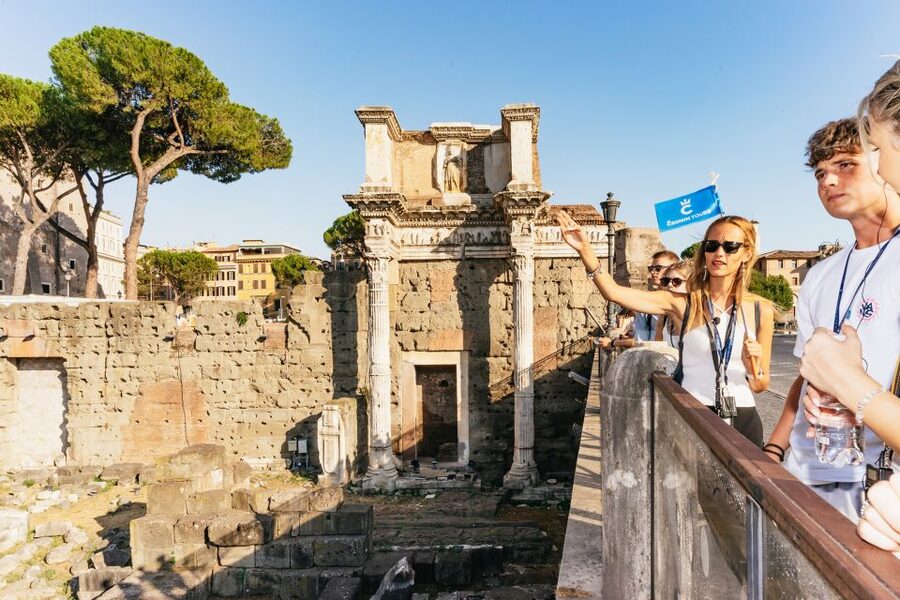
After the Pantheon, the walk continues to Hadrian’s Temple, described as the last of the great temples built in the city. It extends the ancient Roman thread of the tour, following the Pantheon with another historic structure rather than switching straight to a modern attraction.
The stop is explained from outside, like the others. That makes it a useful chance to compare the buildings and hear how the guide places them within Rome’s long history, though the tour information does not specify how long you’ll spend at each site.
If you enjoy architecture, keep your attention on the details your guide points out. Past guides have been praised for discussing Roman building and architecture as well as the headline history. That broader context can make even a short stop feel worthwhile.
Trevi Fountain is a memorable finish
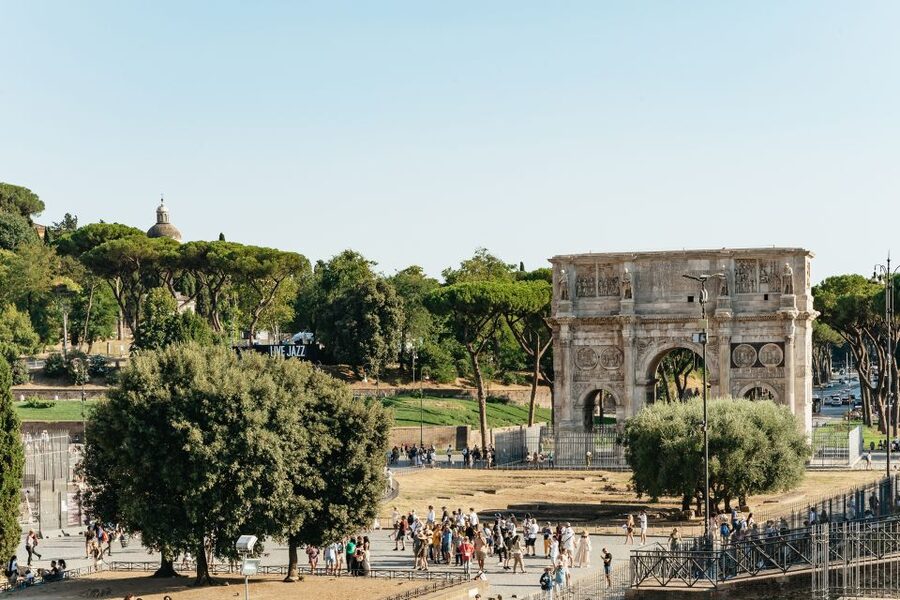
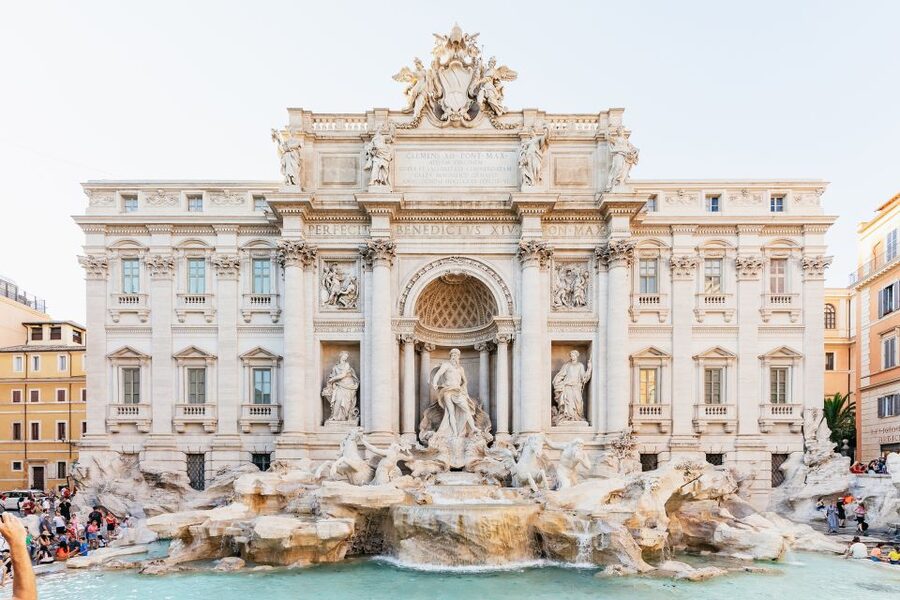
The tour ends at the Trevi Fountain, the famous Baroque masterpiece that gives the route a fitting finale. After ancient structures, historic quarters and grand squares, the fountain gathers the walk’s Baroque thread into one last stop.
It’s a natural place to pause and take in the scale and decoration. The itinerary presents it as the final site, not as an entry experience, and the tour does not promise a set amount of free time afterward. If you want to spend longer there, plan to stay once the guided portion ends.
Ending at a major landmark is practical, too. You finish with a clear reference point in the city and a sense of how the route has linked its different eras. The tour does not include hotel pickup or drop-off, so you’ll make your own way to the meeting point and onward from the fountain.
What the guide adds to a short city walk
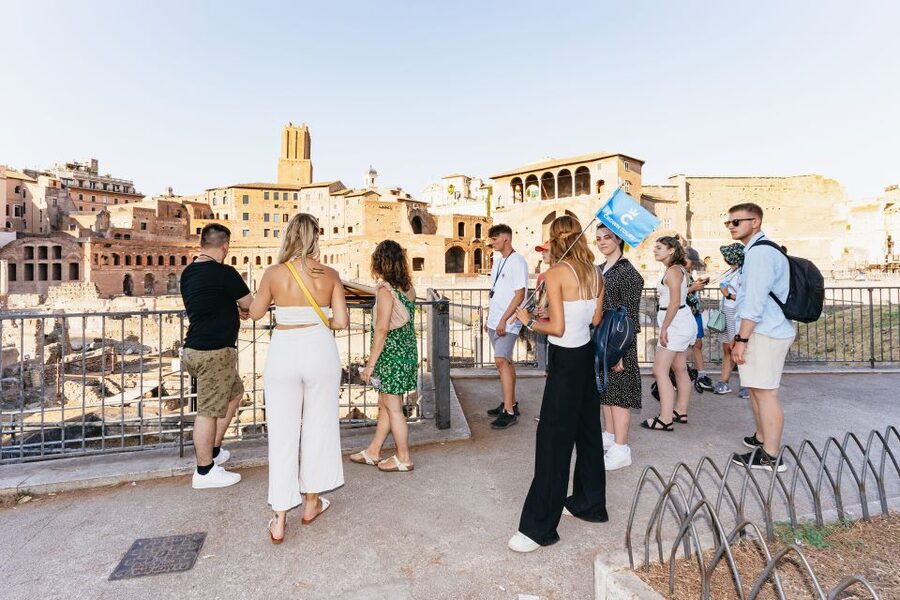
The strongest reason to book is the guide’s role in turning a sequence of landmarks into a story. Brian is named often among the guides who have led the tour; Fabio and Monica are also mentioned. Their described strengths include clear English, a friendly manner, a good sense of humor, and a willingness to answer questions.
That matters because the itinerary is ambitious for 2.5 hours. You move among ancient remains, civic monuments, a historic neighborhood, a market square, Baroque fountains and the Pantheon. A guide who explains what you’re looking at can make that fast-moving route more useful than simply following a map between photo stops.
The pace has been described as comfortable, with enough time to cover a good deal of ground. A few tours have also been very small, including groups of just a few people, but you should not count on a particular group size. The meeting point can be hard to spot, so look for the City Walkers sign or flag at Colonna Traiana n. 84 and arrive with the address ready.
Is $41 good value for 2.5 hours?
At $41 per person, this is a reasonable choice if you want an organized introduction to central Rome and value live explanation. The price covers a guide and headphones if needed. It does not cover hotel transport, entry to monuments, or a deep visit inside any building.
The value depends on how you like to explore. If you’re happy to see several sights from outside and hear their history as you walk, the route packs a lot into a half-day-sized outing. If your priority is going inside the Pantheon or spending a long time in one neighborhood, you may get more from arranging those visits separately.
Booking flexibility is useful for a first trip: you can reserve now and pay later, and cancellation is free up to 24 hours in advance. The walk runs rain or shine, so bring water, sunscreen, comfortable clothes and clothing suited to the forecast. Headphones are provided if needed, which can help you follow the guide while moving between stops.
Who should choose this Rome walking tour?
I’d consider this tour a good fit for a first visit, especially early in your stay. It covers major landmarks while adding the Jewish Ghetto and Campo de’ Fiori, and a live guide can help you sort out what you’re seeing before you explore more on your own.
It also suits people who like to ask questions and learn through conversation. Past outings have been praised for an engaging, personal approach, and guides have been described as happy to respond to questions. Families with children have taken the tour, though the walk’s length and steady movement may be tiring for some younger participants.
This is not the right choice if you need step-free access or have difficulty walking. The activity is specifically not suitable for people with mobility impairments, and it involves several hours on foot. Nor is it an indoor museum tour: every monument is explained from outside, with no building entry included.
Should you book it?
Book this walk if you want a lively, guided overview that connects Rome’s ancient and Baroque sights with a historic neighborhood in one manageable outing. The standout strengths are the route’s variety and the guides’ reported storytelling, particularly the ability to answer questions and keep the pace comfortable.
Skip it if you want interior access, a slow visit to each site, or a route designed around limited mobility. At $41, it makes the most sense as an orientation and a source of historical context, followed by independent time at the places you most want to explore.
FAQ
How long is the Rome City Highlights Walking Tour?
The tour lasts 2.5 hours.
What places does the route include?
The route includes Trajan’s Market, Piazza Venezia and the Victor Emmanuel monument, the Jewish Ghetto, Campo de’ Fiori, Piazza Navona, the Pantheon, Hadrian’s Temple and the Trevi Fountain.
Does the tour go inside the monuments?
No. The monuments are explained from the outside, and entry into buildings is not included.
Where is the meeting point?
Meet at Colonna Traiana n. 84. The guide will hold a sign or flag with the City Walkers logo.
What language is the tour in?
The live tour guide speaks English. Headphones are included if needed.
What should I bring, and what happens if it rains?
Bring water, sunscreen, comfortable clothes and weather-appropriate clothing. The tour runs rain or shine.
Newly reviewed in Rome
- Rome: Neapolitan Pizza Cooking Class in Front of the Vatican★ 4.8 · 137 reviews
- Rome: St. Paul’s Within the Walls New Year’s Concert Ticket★ 4.4 · 35 reviews
- Rome: Navona Underground & Domitian Stadium Guided Tour★ 4.6 · 36 reviews
- Rome: Navona Square and École Française Underground ticket★ 3.9 · 160 reviews
- Rome: Monuments and Belvederes Bike Tour★ 4.7 · 26 reviews
- Rome: Musical Biography of Frank Sinatra Concert★ 3.9 · 100 reviews
- Rome: Monti Street Food Tour★ 4.5 · 14 reviews
- Rome: Monti Neighborhood Lunch or Dinner Food Tour★ 4.9 · 8 reviews
Rome Walking Tours, compared.
Trastevere & Campo de Fiori Street Food Walking Tour
Read our review →
Paranormal Night Walking Tour & Secret Backstreets
Read our review →
Rome by Night Walking Tour – Legends & Criminal Stories
Read our review →
Guided City Center Evening Sightseeing Walking Tour
Read our review →
Best of Rome Walking Tour including Trevi Fountain
Read our review →

Forbidden History Walking Tour & Pub Crawl with Drinks
Read our review →
Guided Small Group Walking Tour of City Highlights
Read our review →Browse the lists this tour appears in