Review · ROME TOURS
Rome: Domus Aurea Tour with Virtual Reality Experience
Nero’s Golden House is not a palace you see whole. Much of it lies buried beneath later Roman construction, so the real rooms are dim, worn, and incomplete. This two-hour tour pairs the surviving halls and frescoes with a 3D virtual reconstruction, helping you picture the scale and color of a palace that once spread across the city.
I like two things in particular: the guide gives the site a human story, not just a list of ruins, and the virtual scene helps make the missing architecture easier to understand. One consideration: the meeting point can be tricky to find, and a large group may make it harder to hear the guide inside.
What makes this tour worth considering
- Thirty frescoed halls: See vaulted rooms, painted walls, and corridors within Rome’s largest active archaeological site.
- The reopened west wing: The route includes both the east and west wings, with areas that have not always been open to the public.
- Nero beyond the legend: Hear how the palace, the fire of 64 AD, and Nero’s fall fit into a more complicated story.
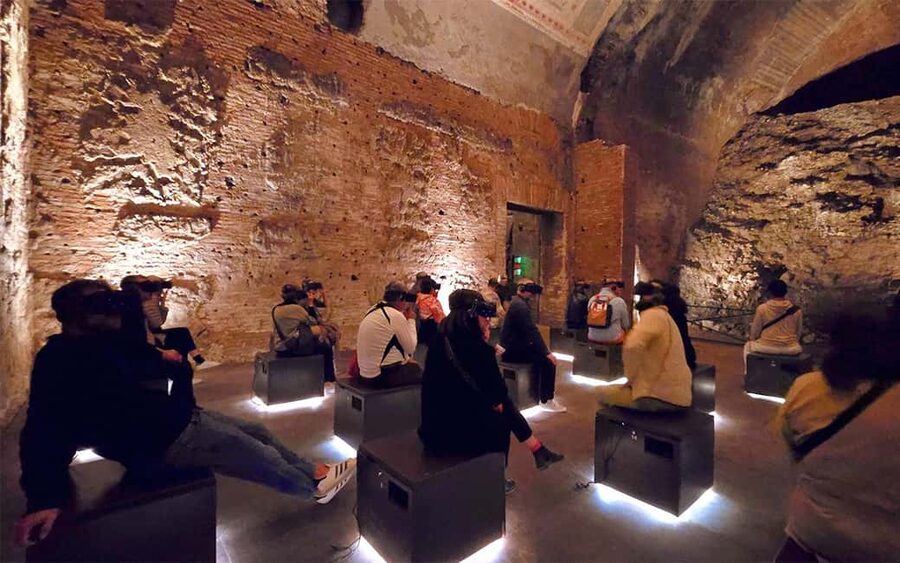
- A seated virtual reconstruction: Look around the recreated rooms and portico to picture the palace as it might have appeared before it was finished.
- A two-part guided visit: An introductory guide meets you outside, then a Domus Aurea guide leads the visit inside.
Why the Domus Aurea feels unlike other Roman ruins
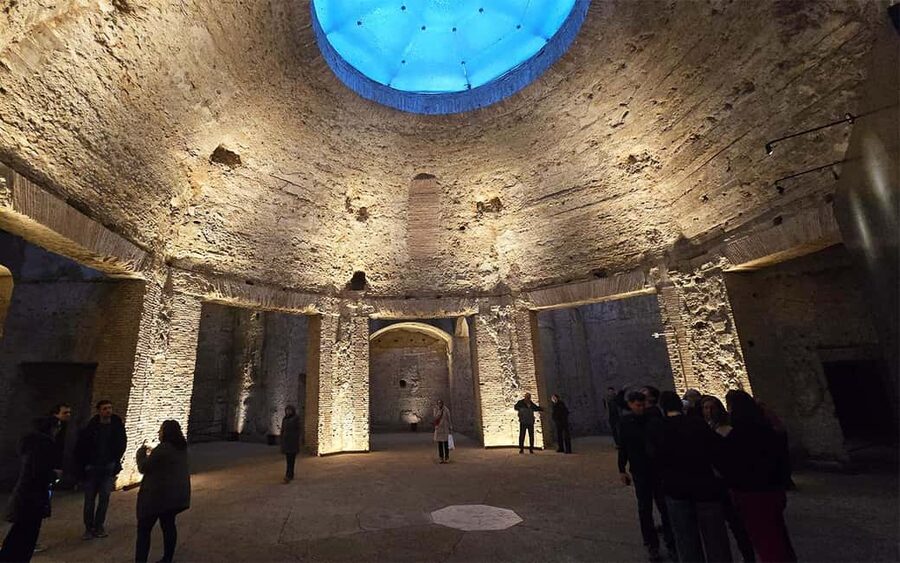
The Domus Aurea, or Golden House, is less a single grand building than a vast archaeological site with a complicated afterlife. After the fire of 64 AD, Nero expanded his imperial residence into the damaged areas of Rome. The complex included gardens, porticoes, fountains, and a private lake, as well as the halls and rooms now explored on this tour.
What you see today is only part of that world. About fifty years after Nero’s death, Emperor Trajan built a vast bath complex above the palace, and the Golden House was buried and forgotten for centuries. Renaissance artists rediscovered its rooms in the 1500s, helping renew European interest in ancient Roman art and architecture.
That layering is part of the appeal. You are not walking through an intact palace with all its decoration in place. You are seeing rooms shaped by construction, burial, rediscovery, and restoration. A guide helps connect those layers, while the virtual reconstruction gives you a clearer picture of what the surviving stonework alone cannot show.
More tours and experiences in Rome:
- Vatican: Museums & Sistine Chapel Entrance Ticket
★ 4.5 · 144,003 reviews - Vatican Museums & Sistine Chapel Tour with Optional Basilica
★ 4.3 · 67,413 reviews - Colosseum, Roman Forum & Palatine Guided Tour
★ 4.7 · 63,148 reviews
Meeting outside, then entering the east and west wings
The tour starts outside the Domus Aurea. An introductory guide sets the scene before the group enters, placing Nero and his palace within Roman history. Names from past tours include Alexei and Rosario, but guide assignments can change. Inside, a Domus staff guide leads the visit through the site.
The difference between those two parts can matter. The outside introduction may give you useful background, but one past visitor found it longer than necessary after a strong tour inside. If you prefer to get moving quickly, keep in mind that entry takes place at least 20 minutes after the scheduled guide presentation. That time is part of the experience, not time spent inside the palace.
Once inside, expect an archaeological site rather than a polished museum. The route covers the east wing and the recently reopened west wing, taking in vaulted halls, high corridors, and frescoes. The rooms are striking even in their present state, but they can be hard to read without context. The guide explains how the palace was built and how its spaces related to one another.
The tour lasts two hours overall, with about 105 minutes listed for the guided visit at the Domus. The route returns to its starting point. Because you are moving through an archaeological site, comfortable shoes are a sensible choice. Bring a jacket as well: the underground setting can feel cool, even when Rome is hot outside.
Frescoes, vaults, and Roman building skill
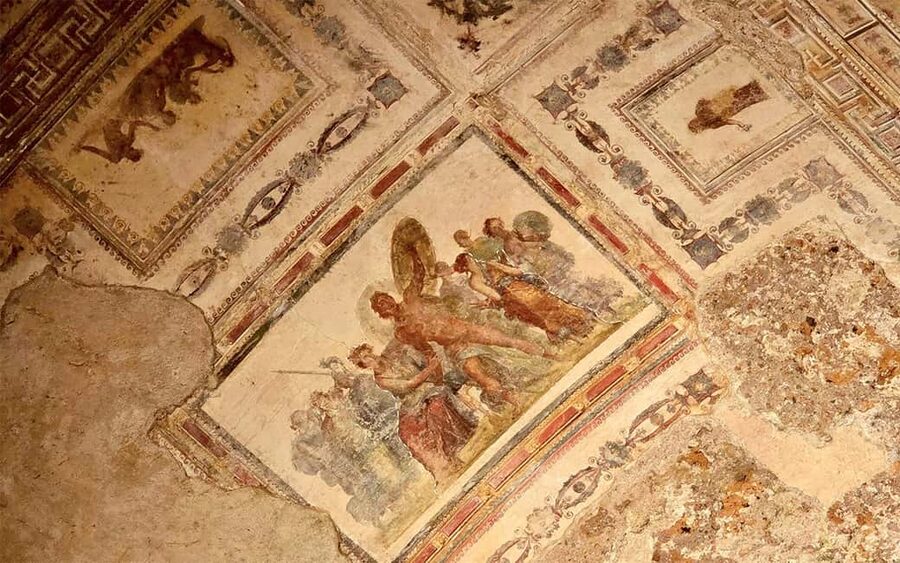
The palace’s painted rooms are a major reason to go. The frescoes show strange, delicate figures and decorative designs that can seem eccentric beside the massive masonry around them. The tour connects these images to Nero’s tastes and artistic interests, rather than treating them as evidence of a simple caricature of a mad emperor.
I find that contrast useful. The Domus Aurea is often introduced as a monument to imperial excess, but its art and engineering tell a broader story about ambition, craft, and taste. You will see the scale of the vaulted halls and the finesse of the surviving decoration in the same visit. For anyone interested in how Roman builders worked, the preserved construction and materials can be as absorbing as the painted surfaces.
The condition of the rooms also calls for a little patience. Frescoes are fragile, the site remains under active archaeological care, and the experience is not like viewing a fully restored palace. A few reviewers found the group hard to follow when people spread out or the guide began speaking before everyone had gathered. Stay near the guide, and do not hesitate to ask for a point to be repeated if you cannot hear.
Nero, the fire, and the story Rome remembered
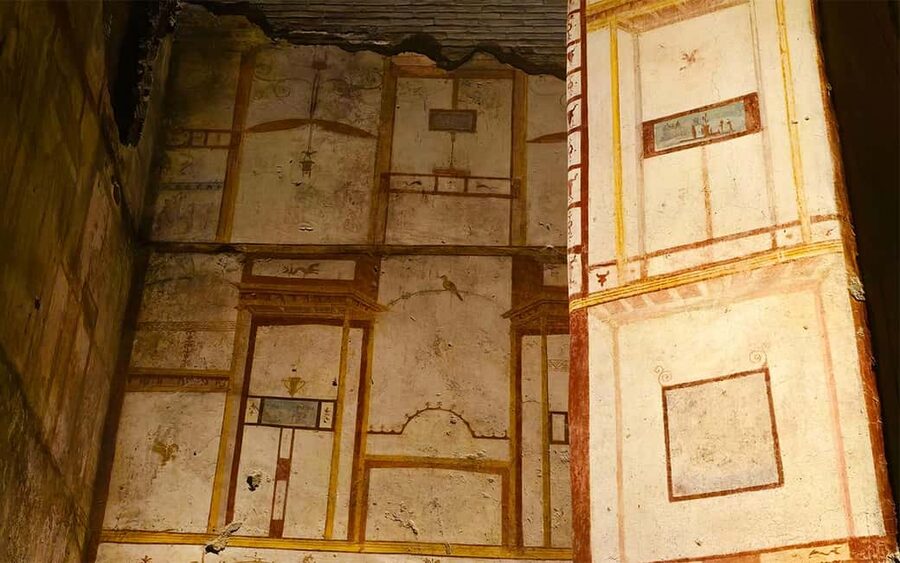
The guide’s account of Nero is one of the tour’s strongest features. The fire of July 64 AD destroyed much of Rome and caused many deaths. The familiar claim that Nero started it is part of the emperor’s enduring reputation, but the tour challenges that version and points out that he was at a seaside villa outside Rome when the fire began.
The explanation is more interesting than a simple verdict. Nero is described as opening his gardens to people made homeless by the disaster, distributing essentials, lowering grain prices, and introducing building rules intended to reduce the risk of another catastrophic fire. At the same time, he faced accusations that he responded too slowly and did not provide enough support for rebuilding. The tour uses these competing accounts to show why the story remains contested.
Nero’s palace expansion adds another tension. He used damaged areas to enlarge his residence, including a large lake within the grounds. That choice did little to ease public anger as his popularity fell. In 68 AD, Nero took his own life. The next emperor, Vespasian, built the Colosseum on the site of Nero’s lake, turning private imperial ground into a public venue and making a clear political break with his predecessor.
This context makes the Domus Aurea more than an architectural visit. You can see how a building project became part of a dispute over power, public welfare, and the way an emperor wanted to be remembered. The guide’s account can also make other Roman sites, especially the Colosseum, feel more connected to the same story.
Same city, a different way to spend the day:
- Vatican Museums, Sistine Chapel & St Peter’s Basilica Guided Tour
★ 4.5 · 39,149 reviews - Rome: Colosseum, Palatine Hill and Roman Forum Guided Tour
★ 4.8 · 32,814 reviews - Rome: Guided Tour of Colosseum, Roman Forum & Palatine Hill
★ 4.7 · 27,897 reviews - Rome: Colosseum & Forum with Audio Guide App -Optional Arena
★ 4.2 · 24,770 reviews
The virtual reconstruction puts the missing palace back in view
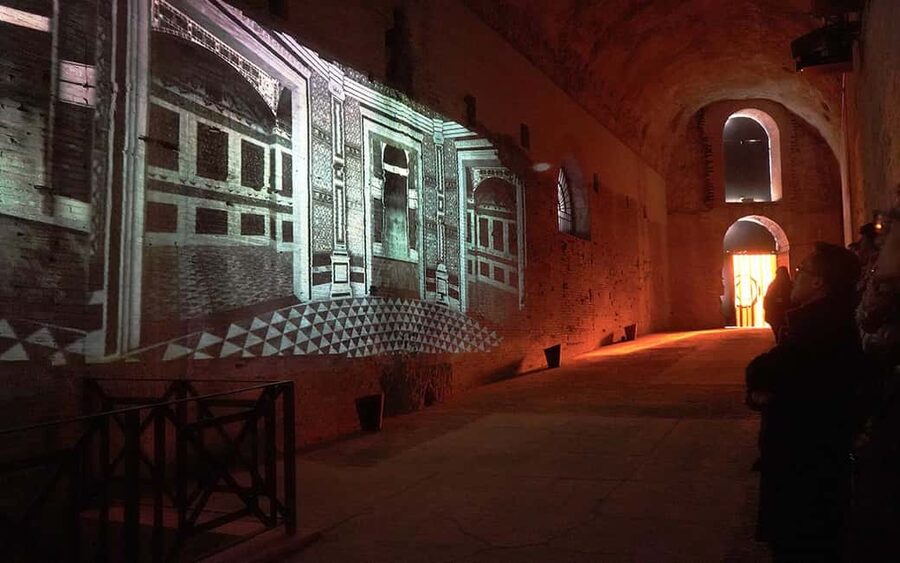
The seated virtual reality section is the tour’s central visual aid. It reconstructs rooms and an exterior portico, showing the palace at a point when it was still unfinished and Nero was still alive. The contrast with the bare, damaged spaces you have just walked through is the point: the screen helps you imagine the building’s former scale and appearance.
Look around in every direction during the virtual sequence. The view is designed to show more than what lies straight ahead, and turning your head helps make the reconstruction feel more complete. The section is seated, which gives you a pause after walking through the site.
The technology does not replace the ruins or the guide. Rather, it answers a question the physical rooms leave open: what did all this look like when the walls, colors, and surrounding architecture were intact? Several people have praised the VR section as the moment that made the site’s layout click. If you are not especially interested in digital effects, you may still value it as a practical tool for understanding what remains.
What you get from the guide, and where the format can falter
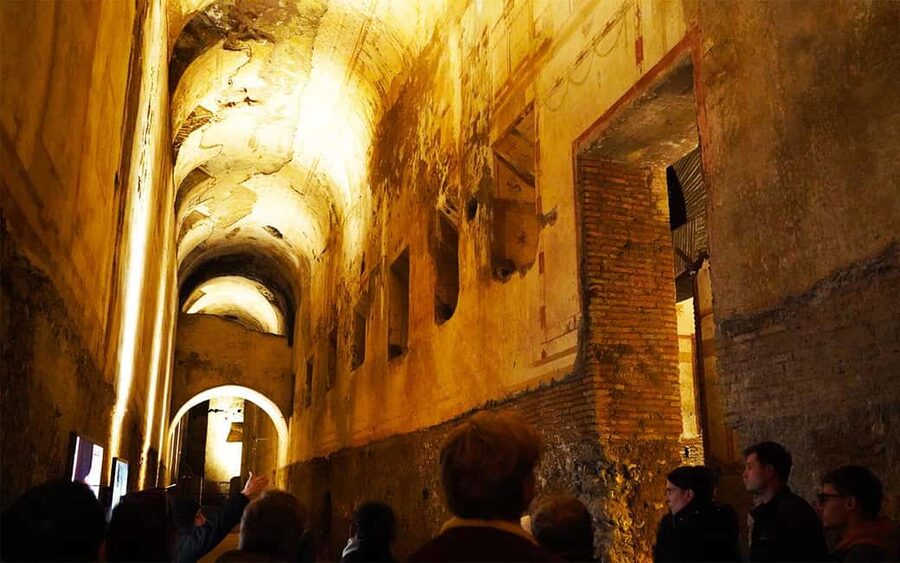
The guide is not an optional extra here. The Domus Aurea can be hard to interpret on your own, and the tour’s strongest moments depend on someone explaining the rooms, the excavation, and the palace’s place in Nero’s life. Guides including Linda, Yev, Alexei, and Rosario have been singled out for clear explanations, enthusiasm, and strong command of the subject. Those names are examples, not a promise of who will lead your date.
The format includes an outside introduction and a separate guide inside the Domus. That arrangement can give you a useful overview before you enter, but the quality of the opening talk may vary. One guest found the preliminary explanation less useful than the in-site tour, while another found the introductory history a helpful way to understand the building before seeing it. If you already know Roman history, you may prefer to focus on the rooms; if you are new to the subject, the background can help the details land.
Group size and audibility are worth considering. A large group can make it difficult to hear in enclosed spaces, especially if people are scattered around a room. Try to position yourself close to the guide, and be ready to move when the group gathers. The site itself is often less crowded than Rome’s best-known monuments, but that does not guarantee a small tour group.
Is the tour good value?
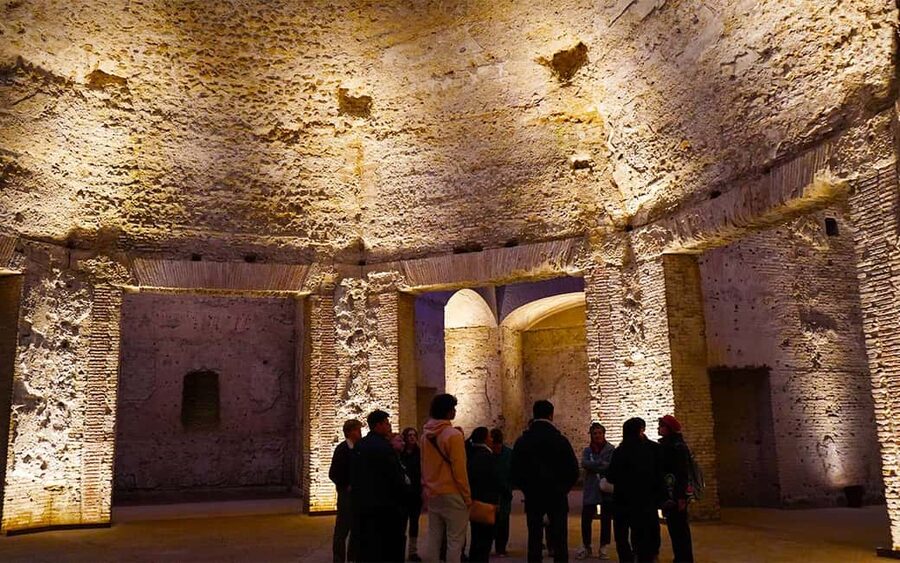
No price is provided here, so I cannot judge it against a specific ticket cost. The value comes from what is bundled into the two hours: access through a separate entrance, an English-speaking guide, an introduction to Nero and the site, the guided route through both wings, and the virtual reconstruction. You also avoid having to piece the history together from room labels alone.
If you are comparing options, consider how much guidance you want. A direct booking with the Domus may suit you if you mainly want to see the site and feel comfortable exploring with less outside context. This tour makes more sense if you want help following the story, seeing the newly reopened west wing, and using the VR sequence to imagine the original palace.
The site is not suited to everyone. It is not suitable for wheelchair users or people with mobility impairments, and large bags, luggage, selfie sticks, professional cameras, tripods, drones, glass objects, sprays, aerosols, weapons, and sharp objects are not allowed. Assistance dogs are permitted; other pets are not.
Who should book the Domus Aurea tour?
Book it if you enjoy archaeology, Roman art, or the political story behind the monuments. It is especially worthwhile if you have already seen the Colosseum and want to understand what stood on the site before it, or if you want a quieter, more focused stop than Rome’s biggest attractions. The guide and reconstruction give the visit its shape, so you do not need specialist knowledge to follow along.
You might skip it if you need step-free access, dislike guided group visits, or want a fully restored interior. The Domus Aurea is a delicate, partly ruined site, not a palace returned to its original finish. But if you can manage the walking and like seeing how historians and archaeologists make sense of fragments, this tour offers a rare look at a side of imperial Rome that is easy to miss.
My call: I would book this tour if the history interests you and the mobility limits work for your group. The west wing, frescoes, and VR reconstruction make a strong combination, and the guide helps turn a hard-to-read site into a story you can carry with you to the Colosseum.
FAQ
How long is the Domus Aurea tour?
The activity lasts two hours overall. The guided visit at the site is listed as 105 minutes.
What language is the tour in?
The live tour guide speaks English.
Does the tour include the west wing?
Yes. The route includes the east wing and the recently reopened west wing.
Is the virtual reality section seated?
Yes. The VR reconstruction takes place during a seated part of the tour.
Where do I meet the guide?
Wait outside the Domus Aurea for a guide holding an Open Mind Tours sign. The meeting coordinates are 41.89113235473633, 12.495589256286621. Your GetYourGuide voucher is not the entry ticket; the guide has the ticket.
Is the site accessible to wheelchair users?
No. The activity is not suitable for wheelchair users or people with mobility impairments.
Can I bring a large bag or professional camera?
No. Luggage and large bags, professional cameras, tripods, selfie sticks, drones, glass objects, sprays, aerosols, weapons, and sharp objects are not allowed.
Newly reviewed in Rome
- Rome: Neapolitan Pizza Cooking Class in Front of the Vatican★ 4.8 · 137 reviews
- Rome: St. Paul’s Within the Walls New Year’s Concert Ticket★ 4.4 · 35 reviews
- Rome: Navona Underground & Domitian Stadium Guided Tour★ 4.6 · 36 reviews
- Rome: Navona Square and École Française Underground ticket★ 3.9 · 160 reviews
- Rome: Monuments and Belvederes Bike Tour★ 4.7 · 26 reviews
- Rome: Musical Biography of Frank Sinatra Concert★ 3.9 · 100 reviews
- Rome: Monti Street Food Tour★ 4.5 · 14 reviews
- Rome: Monti Neighborhood Lunch or Dinner Food Tour★ 4.9 · 8 reviews
Rome Tours, compared.
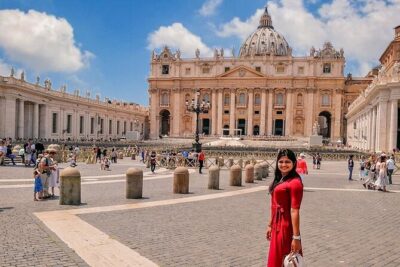
Vatican: Museums & Sistine Chapel Entrance Ticket
Read our review →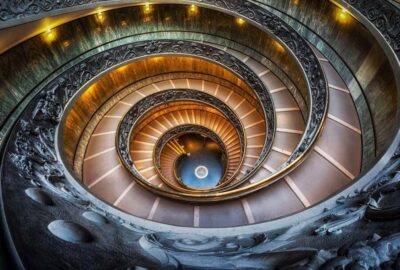
Vatican Museums & Sistine Chapel Tour with Optional Basilica
Read our review →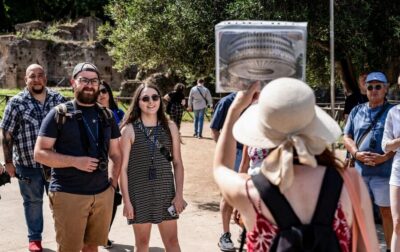
Colosseum, Roman Forum & Palatine Guided Tour
Read our review →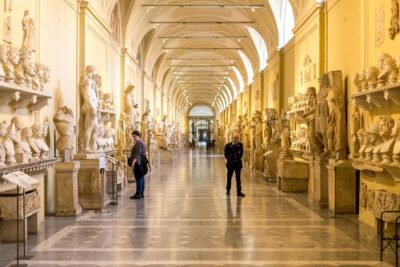
Vatican Museums, Sistine Chapel & St Peter’s Basilica Guided Tour
Read our review →
Colosseum & Forum with Audio Guide App -Optional Arena
Read our review →
Pantheon Fast-Track Ticket and Official Audio Guide
Read our review →
City Sightseeing Hop-on Hop-off Bus with Audioguide
Read our review →