Review · ROME TOURS
Welcome To Rome Experience
Rome’s ancient remains can be hard to picture as anything but broken stone. Welcome To Rome uses projections, models, audio, and film to show how the city and its monuments changed over time, giving you a useful frame of reference before you set out to explore them.
I like two things in particular: the before-and-after views of Roman buildings make ruins easier to read, and the short format gives you a broad introduction without taking half a day. It’s also centrally located, with multiple showings daily.
The main consideration is that this is a presentation, not a guided walk through the city. You’ll spend much of the visit standing at exhibit stations, and the amount of historical detail may feel either brisk or a little too much, depending on your interests and the ages of your children.
At a glance
- A one-hour introduction: The experience brings together several displays and a film, making it a compact first-day activity.
- Reconstructed Rome: 3D visuals and models help you imagine monuments and buildings before they became ruins.
- A broad timeline: The narrative covers Rome’s early geology and development through different architectural periods.
- Useful context for sightseeing: The background can help you make sense of places such as the Colosseum, Roman Forum, and Palatine Hill.
- A family option with age limits: Children may enjoy the visuals, but the historical presentation can be hard for some younger children or teens to follow.
- A central address: Find it at Corso Vittorio Emanuele II, 203, with public transportation nearby.
Why a short history lesson can help in Rome
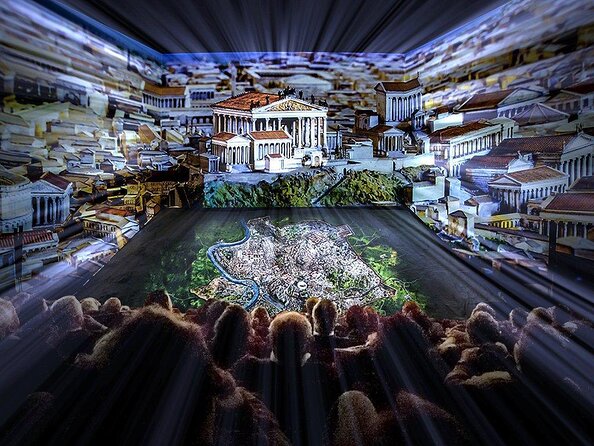
Rome offers a lot to look at, but without context, it can be difficult to connect a ruin to the city it once belonged to. This show aims to bridge that gap. It moves from the area’s early geological formation to the growth of Rome, then uses visuals to show how buildings and styles changed across different periods.
That background can pay off when you visit archaeological sites later. A column or fragment of wall becomes easier to imagine as part of a larger building, and the city’s layers of Classical, Medieval, Renaissance, and Baroque architecture make more sense when you have a rough timeline in mind.
I’d treat this as an orientation, not a substitute for a specialist tour or a detailed history book. The presentation is designed to give you the broad picture in about an hour. If you want a thorough account of ancient Rome, you’ll need more time elsewhere.
More tours and experiences in Rome:
- Vatican: Museums & Sistine Chapel Entrance Ticket
★ 4.5 · 144,003 reviews - Vatican Museums & Sistine Chapel Tour with Optional Basilica
★ 4.3 · 67,413 reviews - Colosseum, Roman Forum & Palatine Guided Tour
★ 4.7 · 63,148 reviews
Four display stations, then a film
The experience combines a walk through audiovisual displays with a film in an auditorium. One detailed account describes four small exhibit rooms or stations, followed by a film of roughly 30 minutes. The complete visit is about an hour, though the time spent at each display may vary.
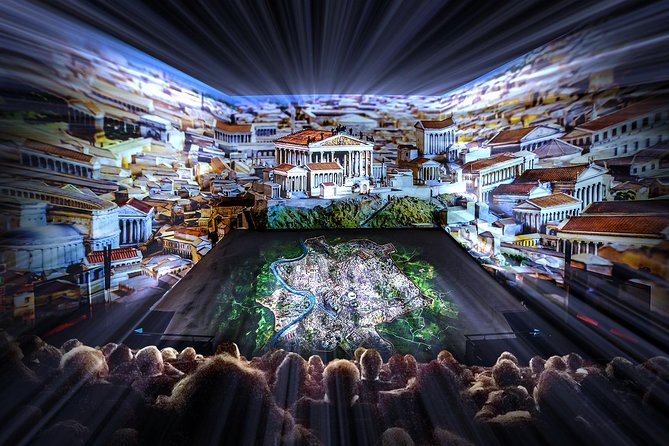
At the stations, you encounter models and graphics alongside audio explanations. The 3D effects and projections show structures in forms that help you picture how they may have looked when new. Some displays compare the present-day remains with reconstructed versions, a useful trick when you’re trying to picture a complete monument from a few surviving pieces.
The details can be a strength if you enjoy history. The program begins with a brief explanation of Rome’s early geology, then moves through periods of architecture and urban development. If you’re mainly interested in ancient Rome, note that the show covers more than antiquity. Some people find that wider view helpful; others may wish it spent more time on the ancient period.
The film brings the material together in a seated setting. It covers the city’s past and shows images of buildings before they became ruins. Several parts of the experience use visuals to explain how structures and places changed, rather than relying on a long spoken lecture. That can make a complicated timeline easier to follow.
A practical note: the exhibit stations are described as places where you stand and watch. Seating is available in the auditorium, but you may not have a place to sit during the display portion. If you’ve already spent the day walking, that’s worth factoring in.
How it can sharpen a visit to Rome’s ruins
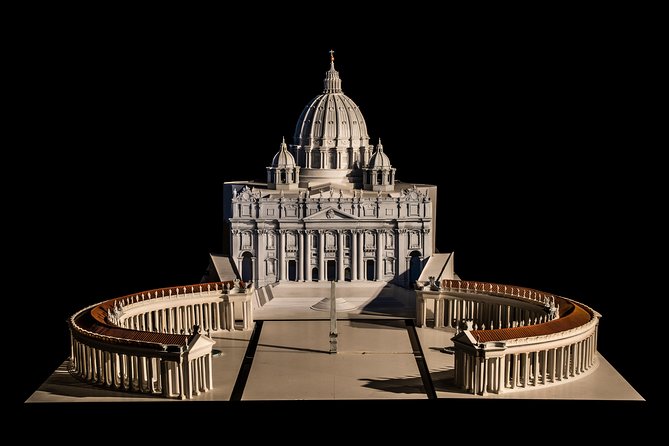
The strongest reason to go is the context it gives you for later sightseeing. The Colosseum, Roman Forum, and Palatine Hill are much easier to imagine as active parts of an ancient city when you’ve first seen visual reconstructions and heard a broad account of how Rome developed.
The value is less about memorizing dates than about recognizing differences. You get a quick introduction to architectural periods and a sense of how Rome accumulated buildings and styles over time. That can help you notice why a church, palace, or ruin looks different from the structure beside it.
I’d schedule the show early in your stay, ideally before your first major archaeological visit. Several visitors found it useful to refer back to the visuals while exploring the Forum and other sites. You don’t need to treat it as homework, but the presentation may make the real places feel less like a jumble of old stones.
It can also work well on a day when you want an indoor activity. The show offers a change of pace from walking outdoors, though it is not fully seated. If you’re tired, the standing displays may be less appealing than the auditorium film.
A family activity, with a few age-related caveats
The mix of projections, models, and film gives children something to look at beyond a spoken history lesson. Families have found it a useful way to start a Rome trip, and children around eleven have been noted as enjoying the visual presentation. The relatively short duration also helps if you’re trying to fit an educational activity into a busy sightseeing day.
Age and interest matter. Children under eight may have trouble staying engaged, and some teens have found the detailed presentation slow. If your children enjoy models, visual effects, and stories about how cities change, this could be a good fit. If they need frequent movement or hands-on activity, the sequence of standing displays may test their patience.
Adults who enjoy history are likely to get more from the timeline and architectural detail. If you’re traveling with a mixed-age group, I’d explain beforehand that this is a show and exhibit, not a play area or a live performance. That small bit of expectation-setting can help everyone settle in.
Same city, a different way to spend the day:
- Vatican Museums, Sistine Chapel & St Peter’s Basilica Guided Tour
★ 4.5 · 39,149 reviews - Rome: Colosseum, Palatine Hill and Roman Forum Guided Tour
★ 4.8 · 32,814 reviews - Rome: Guided Tour of Colosseum, Roman Forum & Palatine Hill
★ 4.7 · 27,897 reviews - Rome: Colosseum & Forum with Audio Guide App -Optional Arena
★ 4.2 · 24,770 reviews
Is $21.77 a fair price?
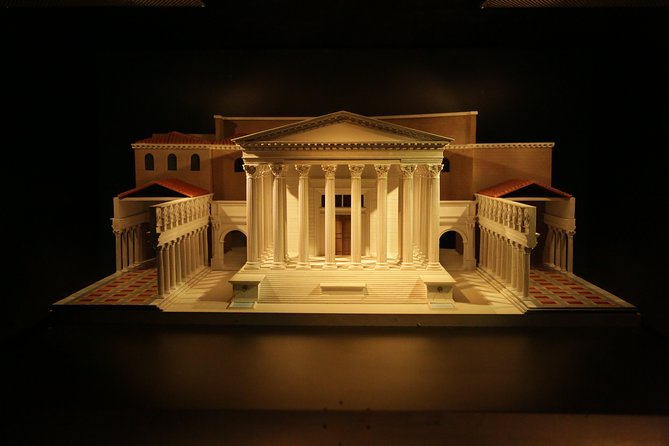
At $21.77 per person, this is a modestly priced cultural activity by Rome standards, but value depends on what you want from it. You’re paying for a roughly one-hour audiovisual presentation and a set of displays that put the city’s history into visual form. The best return comes if you use that context during the rest of your trip.
Pre-purchasing the ticket is convenient and is intended to save time. One person found the counter price slightly lower, so if saving every euro is your priority, you may want to compare options when you arrive. The tradeoff is convenience: booking ahead secures a ticket and makes it easier to plan around a chosen showing.
The experience is not a guided tour of Rome’s outdoor sites, and it doesn’t include a long visit to a museum collection. If you expect detailed access to monuments or a deep lesson on ancient history, the price may feel high for the format. If you want a compact visual primer before exploring the city, the hour can be well spent.
Location, language, and other practical details
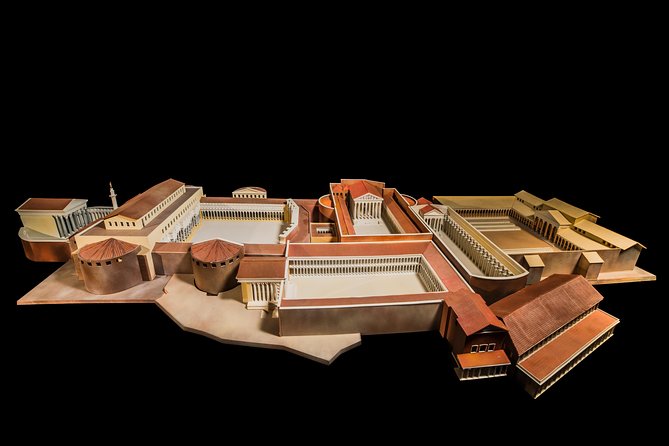
The address is Corso Vittorio Emanuele II, 203, in central Rome, and the venue is near public transportation. Multiple showings take place daily, which gives you some flexibility when planning around meals, walks, or other visits.
The experience is offered in English, and the ticket is mobile. Confirmation is provided at booking. The last entry is one hour before closing, so don’t assume you can arrive just before closing and still take part. Check the day’s hours and allow enough time to enter.
Service animals are allowed, and most people can participate. The display portion may involve standing, while the film takes place in an auditorium with seats. A few people have reported problems with audio devices, though staff were available to replace malfunctioning equipment. As with any audiovisual show, it’s sensible to tell a staff member promptly if you can’t hear the narration.
The venue’s condition may not be perfect. Some people have encountered dirty facilities or damaged auditorium seats, while others found the setup well arranged. These issues don’t describe every visit, but they are worth keeping in mind if you expect a polished museum environment.
Who should book Welcome To Rome?
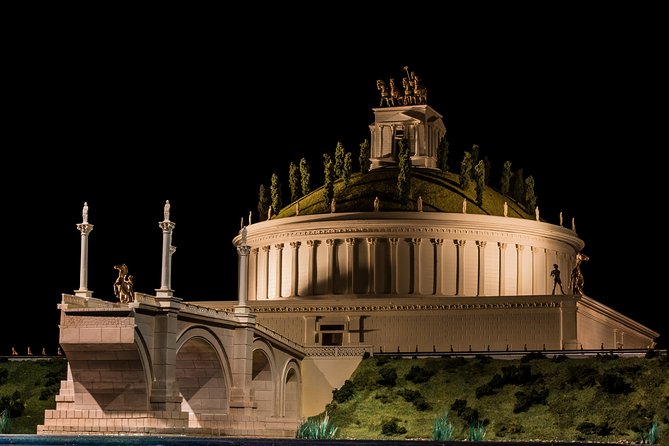
I’d recommend it most to first-time visitors who want a clear, visual overview before visiting Rome’s major archaeological sites. It is especially useful if you like seeing reconstructed buildings and want an introduction to the city’s changing architectural periods.
It can also suit families with school-age children who enjoy visual learning. For very young children, or teens who are not interested in history, the displays may feel slow. And if you already know Rome’s history well, the broad outline may not offer enough new material to justify the ticket.
Book it if a one-hour primer sounds useful and you’re prepared for a presentation rather than a live tour. Consider skipping it if you want a deeper account of ancient Rome, more time to sit, or an activity built around extensive hands-on participation. For many first visits, its best role is simple: give you a mental map before Rome’s real streets and ruins take over.
FAQ
How long does Welcome To Rome take?
The experience lasts about one hour. It includes audiovisual displays and a film.
What language is the experience offered in?
The experience is offered in English.
Where is Welcome To Rome?
The address is Corso Vittorio Emanuele II, 203, 00186 Rome. The venue is near public transportation.
Is the experience suitable for children?
Most people can participate, and families may find the visuals appealing. Children under eight may have a harder time staying engaged, so consider your child’s interest in history and film.
Are service animals allowed?
Yes, service animals are allowed.
What is the cancellation policy?
You can cancel for a full refund up to 24 hours before the experience start time. Cancellations or changes made less than 24 hours before the start time are not accepted for a refund.
Newly reviewed in Rome
- Rome: St. Paul’s Within the Walls New Year’s Concert Ticket★ 4.4 · 35 reviews
- Rome: Neapolitan Pizza Cooking Class in Front of the Vatican★ 4.8 · 137 reviews
- Rome: Navona Underground & Domitian Stadium Guided Tour★ 4.6 · 36 reviews
- Rome: Navona Square and École Française Underground ticket★ 3.9 · 160 reviews
- Rome: Monuments and Belvederes Bike Tour★ 4.7 · 26 reviews
- Rome: Musical Biography of Frank Sinatra Concert★ 3.9 · 100 reviews
- Rome: Monti Neighborhood Lunch or Dinner Food Tour★ 4.9 · 8 reviews
- Rome: Mini hike to the ancient Parco degli Acquedotti★ 4.9 · 9 reviews
Rome Tours, compared.
Vatican: Museums & Sistine Chapel Entrance Ticket
Read our review →
Vatican Museums & Sistine Chapel Tour with Optional Basilica
Read our review →
Colosseum, Roman Forum & Palatine Guided Tour
Read our review →
Vatican Museums, Sistine Chapel & St Peter’s Basilica Guided Tour
Read our review →
Colosseum & Forum with Audio Guide App -Optional Arena
Read our review →
Pantheon Fast-Track Ticket and Official Audio Guide
Read our review →
City Sightseeing Hop-on Hop-off Bus with Audioguide
Read our review →