
Review · ROME CATACOMBS TOURS
Rome: Catacombs of Priscilla Entry Ticket & Guided Tour
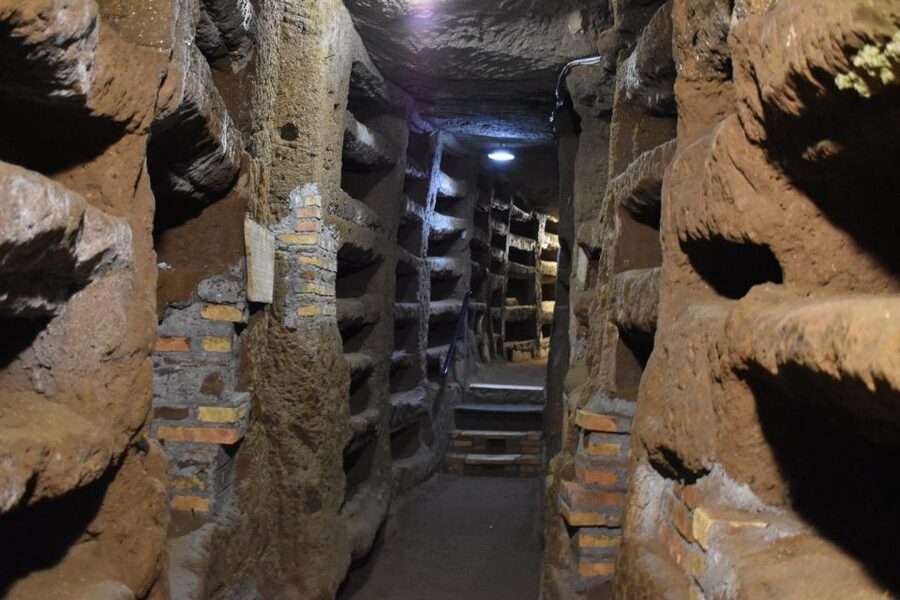
Beneath Via Salaria, Priscilla’s catacombs preserve a quieter side of Rome: narrow burial galleries, early Christian paintings, and spaces once used to remember the dead. Some of the art dates to the 3rd century, including an image often identified as one of the earliest known depictions of the Virgin Mary and Child.
I like two things here: the small group, capped at 10, gives you a better chance to hear the guide in tight passages; and the 45-minute visit delivers a focused look at early Christian burial and art without turning into an all-day commitment. Guides have included Sister Lydia and Clara, though your guide may differ.
The trade-off is the setting itself. The passages are underground, narrow in places, and not suitable for visitors with mobility impairments. You also cannot take photographs, and the site sits away from Rome’s main ancient-center sights, so allow time to reach Via Salaria.
What Makes Priscilla Worth the Trip
- An old quarry became a burial place: Christians began using the galleries in the early 3rd century, after the original arenarium, or sand quarry, was abandoned.
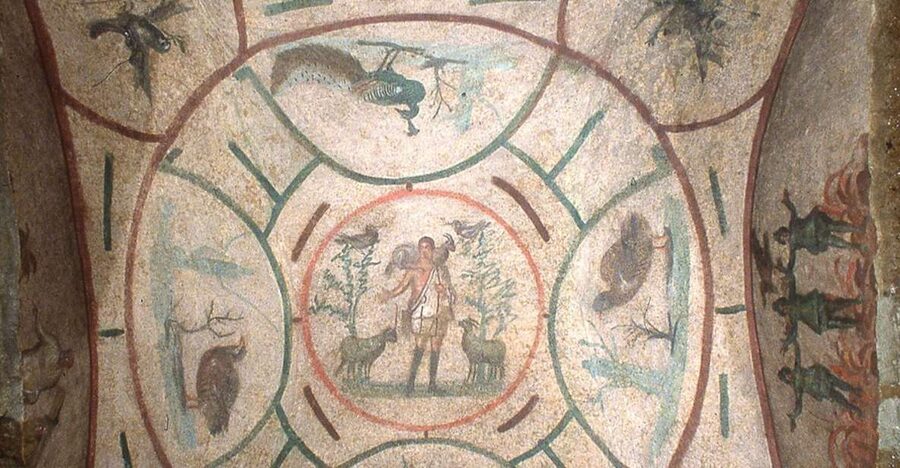
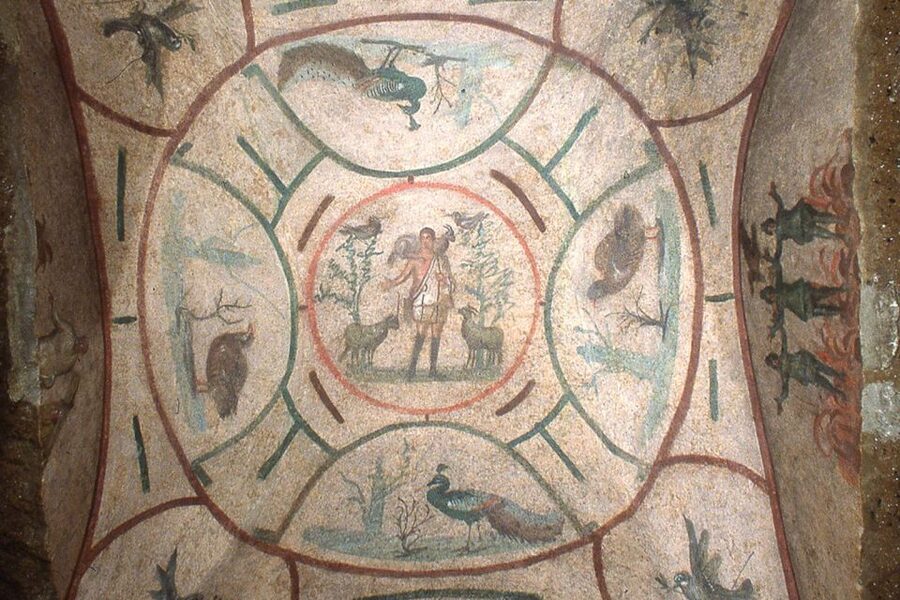
- Art survives in the underground rooms: The catacombs preserve early Christian paintings, including a celebrated image of Mary and the child Jesus.
- A small group suits the tight corridors: Tours are limited to 10 participants, although the passages can still feel close when everyone gathers around a feature.
- The site connects art, faith, and Roman life: The guide explains burial customs alongside the stories of Christians, martyrs, and popes associated with Priscilla.
- It is a short visit with a clear focus: Plan on 45 minutes underground, plus the time it takes to reach the catacomb and arrive before your tour.
- You will need to put your camera away: Photography is not allowed inside, so take in the paintings while you are there.
From Abandoned Quarry to Christian Cemetery
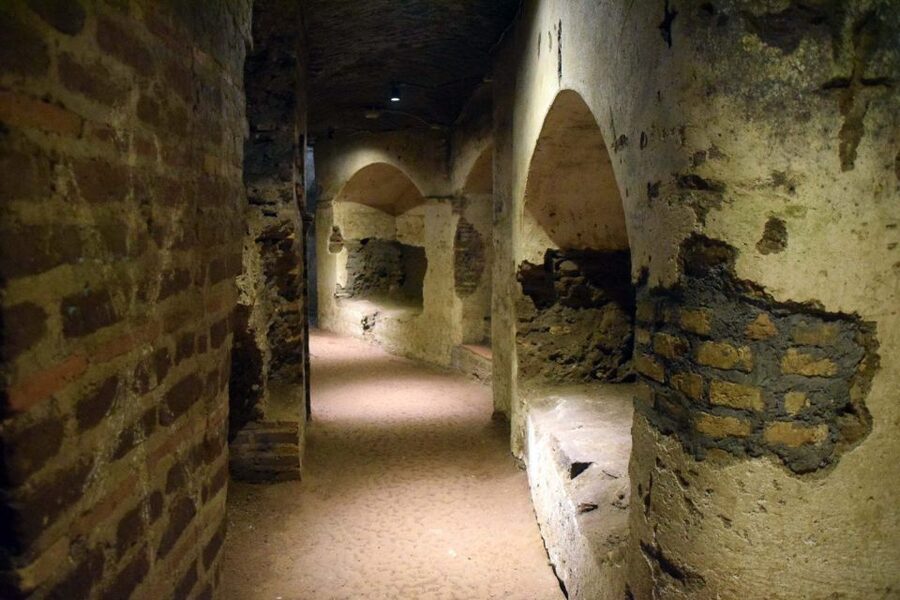
Priscilla’s story begins before it became a Christian burial ground. The site was first an arenarium, a place where sand was extracted, then left unused. Early Christians began adapting its large, irregular galleries for burial around the start of the 3rd century.
That change shaped the catacomb you visit. Rather than a single, carefully planned underground monument, it is a network of passages and burial niches made over time. The first floor contains broad galleries, around 20 niche tombs, and hundreds of smaller niches cut into the walls.
The guide helps make sense of what can otherwise look like a maze of stone. These were not simply hidden tunnels. They were places where members of a community buried their dead and returned to commemorate them. Understanding that purpose changes the mood of the visit: the catacombs feel less like a spooky attraction and more like a record of how ordinary people cared for family and community.
The catacomb extends across two floors, but the tour is a compact introduction rather than a full-scale underground expedition. The 45-minute duration suits the environment. You have time to see key spaces and hear their context, but not to wander at your own pace or study every passage.
More catacomb tours in Rome:
- Rome: Crypts and Catacombs Underground Tour with Transfers
★ 4.6 · 5,341 reviews - The Original Roman Crypts and Catacombs Tour with Transfers
★ 4.5 · 4,896 reviews - Rome: Catacombs of St. Callixtus Entry Ticket & Guided Tour
★ 4.6 · 3,037 reviews
Burial Niches, Frescoes, and the Greek Chapel
The galleries are the heart of the visit. You will see how burial spaces were shaped into the walls, and how the site grew from an abandoned quarry into a cemetery. Some reviews describe the scale of the galleries as a surprise, while others find the tour brief. Both reactions make sense: the catacombs cover a large area, but the guided route is selective.
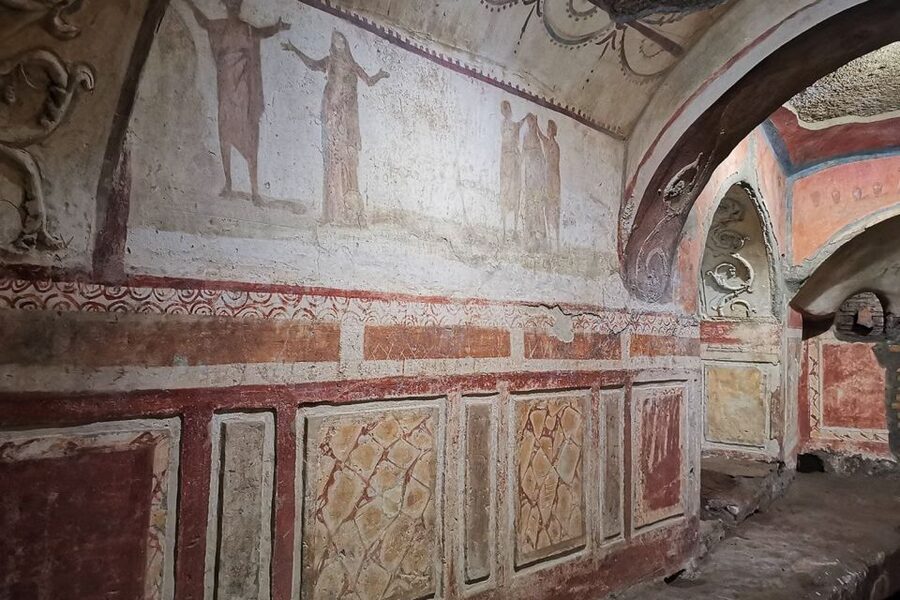
The art gives the visit its strongest visual focus. Early Christian paintings survive in parts of the complex, and the guide can explain the figures and symbols in their historical and religious setting. The image of Mary with the child Jesus is a particular draw. It is often described as one of the earliest known depictions of the Virgin Mary, an important distinction for anyone interested in the history of Christian art.
Photography is prohibited, which can frustrate anyone who likes to keep a visual record. But it also means you are not trying to frame a picture in a dark passage while a group waits behind you. Look closely when the guide stops, and listen for the explanation of what you are seeing. Postcard prints of the art have been available for purchase, though availability and price may change.
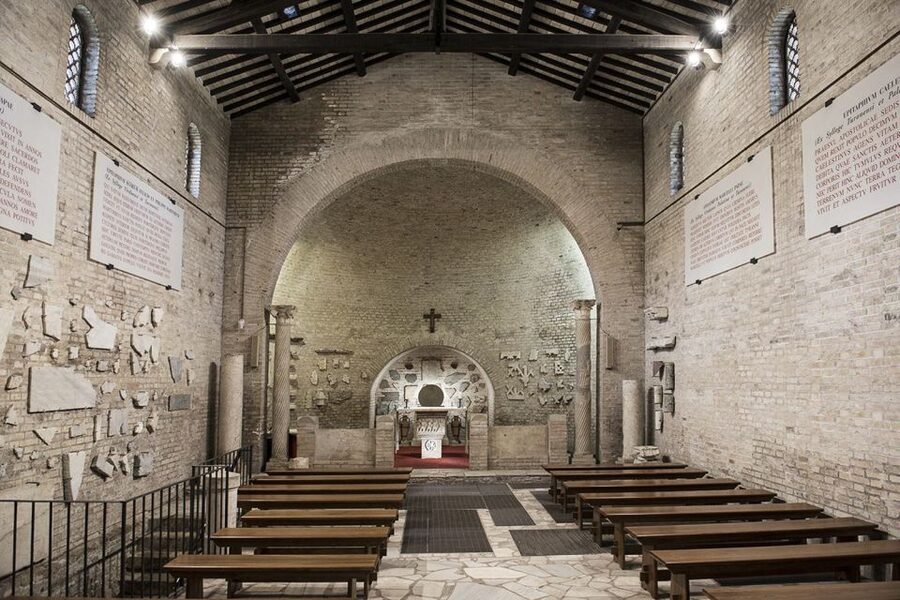
A section connected to the catacomb includes a cryptoporticus, an underground architectural passage, and the Greek Chapel. This area was originally part of a noble family burial ground before it became linked to the wider cemetery. The name Greek Chapel points to the site’s early Christian associations, but the main value of the stop is the guide’s explanation of how separate burial spaces became connected.
The Acili Hypogeum and the People Remembered Here
Another important area is the hypogeum of the Acili, which began as a water cistern. Inscriptions connected with the Acili senatorial family were found there and are now displayed. The catacomb may take its name from Priscilla, whose name appears in one of those inscriptions.
This is a useful reminder that the site’s history is layered. A Roman family burial space, a former quarry, and Christian burial galleries occupy connected parts of the same underground complex. The visit is not only about one faith or one period. It shows how the spaces beneath Rome were adapted and reused.
The Catacombs of Priscilla are also associated with martyrs and several popes. The martyrs remembered here include Felice and Filippo, their mother Felicita, and their brothers Alessandro, Marziale, Vitale, Silano, and Gennaro. Popes buried at Priscilla include Marcellino, Marcello, Silvestro, Liberius, Siricius, Celestino, and Vigilius.
You are not visiting a tomb where those people’s remains are still laid out. The burial chambers are empty, and the bodies were moved. That may matter if you expect to see human remains, so it is better to come for the history, architecture, and art rather than for a display of bones.
A Guide Makes the Underground Legible
A good guide is central to this experience. The passages and niches do not explain themselves, and the 45-minute format leaves little room to piece together the story alone. Your guide provides the links between Roman burial practice, early Christian belief, the paintings, and the people associated with the cemetery.
Tours are offered in English, Italian, and Spanish. Past guides have included Sister Lydia, also referred to as Sister Lidia, as well as Clara and guides named Alexandra or Alexandria. You cannot assume a particular person will lead your tour, but the guiding style is a major part of the experience. Visitors have particularly valued guides who explain both the archaeology and the faith behind the catacombs, answer questions, and keep the group together through the twists and turns.
The official group limit is 10 people, a sensible cap for small underground spaces. Even so, a narrow passage can feel crowded when everyone gathers around a painting or burial feature. If you prefer to take your time looking at each detail, stand where you can see the guide clearly and avoid getting stuck at the back of the group.
More tickets in Rome:
- Vatican: Museums & Sistine Chapel Entrance Ticket
★ 4.5 · 144,003 reviews - Rome: Pantheon Fast-Track Ticket and Official Audio Guide
★ 4.3 · 21,008 reviews - Rome:Hop-On Hop-Off Panoramic Open Bus Ticket 3 Circuits x 1
★ 4.0 · 15,405 reviews - Vatican Museums & Sistine Chapel Skip-the-Line Entry Ticket
★ 4.4 · 13,838 reviews
Getting There, Dressing for the Site, and Planning Your Visit
The meeting point is the catacomb ticket office on Via Salaria. Go there directly and show your reservation at least 10 minutes before the scheduled start. Hotel pickup and transportation are not included, so plan your route separately. The catacomb is outside the main cluster of ancient Rome’s best-known sights; visitors have found that a bus can be a practical, inexpensive way to reach it, but check current routes and timing before you set out.
Once inside, expect an underground environment with narrow passages and uneven-feeling spaces. The tour is not suitable for people with mobility impairments, and baby strollers are not allowed. If you are traveling with children, the short length may help, but the setting is a better fit for those comfortable with confined spaces and history-focused visits.
Bring a light layer. The underground rooms can feel cool, even during Rome’s warm months. Wear comfortable shoes and keep your hands free where possible, since you will want to follow the guide through the galleries and look around without managing extra gear.
The no-photography rule is firm. If you like to document every stop, this may disappoint you, but it is part of the visit’s practical limits. The focus is on seeing the art in place and hearing the guide’s explanation rather than taking pictures.
Is $16 Good Value for 45 Minutes?
At about $16 per person, the price includes entry and a guided tour. For a small-group visit to an underground archaeological site with early Christian paintings, that is a fair price, especially if you value context more than a long list of stops. The guide is not an optional extra here: the explanations turn burial niches and painted walls into a coherent story.
The short duration is both an advantage and a limit. Forty-five minutes keeps the visit manageable and avoids leaving you underground for longer than you might want. But if you are hoping for a sprawling tour with time to explore many chambers, this is not that. Some tours may run longer when questions and explanations stretch the schedule, but you should plan around the stated 45 minutes.
The price also does not cover transport or hotel pickup. Add the cost and time of getting to Via Salaria when comparing it with visits in the historic center. Free cancellation is available up to 24 hours before the tour for a full refund, which offers some flexibility if your plans change.
Who Should Book the Catacombs of Priscilla?
I would choose this tour if you want to step beyond Rome’s headline monuments and see a place where burial practice, archaeology, and early Christian art meet. It is especially well suited to visitors who enjoy history, religious art, or a compact guided visit with a clear subject. Teenagers who are curious about Roman life and ancient burial customs may find it engaging too.
It is less suited to anyone who needs step-free access, wants to take photographs, or expects intact bodies and a dramatic spectacle. The rooms are meaningful, but the impact comes from understanding their use and seeing the surviving art, not from theatrical effects. If the Colosseum is your idea of a must-see, Priscilla offers a quieter and more intimate counterpoint.
Book it if you are interested in early Christian Rome and want a focused, guided look at a real burial site. Skip it if confined underground spaces, limited mobility, or the no-camera rule would make the visit uncomfortable.
FAQ
How long is the Catacombs of Priscilla tour?
The scheduled tour lasts 45 minutes. Check availability for the starting times offered on your chosen date.
What is included in the ticket?
The ticket includes entry to the Catacombs of Priscilla and a guided tour. Hotel pickup and transportation are not included.
Which languages are available?
Tours are offered in Italian, English, and Spanish.
How large is the tour group?
The group is limited to 10 participants. The passages are narrow in places, so the group may still feel close together at certain stops.
Where is the meeting point?
Go directly to the catacomb ticket office on Via Salaria and show your reservation at least 10 minutes before the scheduled tour.
Can I take photos inside?
No. Photography inside the catacombs is not allowed.
Is the tour suitable for people with mobility impairments?
No. The tour is listed as unsuitable for people with mobility impairments. Baby strollers are also not allowed.
Can I cancel the tour for a refund?
Yes. You can cancel up to 24 hours in advance for a full refund.
Newly reviewed in Rome
- Rome: Neapolitan Pizza Cooking Class in Front of the Vatican★ 4.8 · 137 reviews
- Rome: St. Paul’s Within the Walls New Year’s Concert Ticket★ 4.4 · 35 reviews
- Rome: Navona Underground & Domitian Stadium Guided Tour★ 4.6 · 36 reviews
- Rome: Navona Square and École Française Underground ticket★ 3.9 · 160 reviews
- Rome: Monuments and Belvederes Bike Tour★ 4.7 · 26 reviews
- Rome: Musical Biography of Frank Sinatra Concert★ 3.9 · 100 reviews
- Rome: Monti Neighborhood Lunch or Dinner Food Tour★ 4.9 · 8 reviews
- Rome: Mini hike to the ancient Parco degli Acquedotti★ 4.9 · 9 reviews
Rome Catacombs Tours, compared.

Crypts and Catacombs Underground Tour with Transfers
Read our review →
The Original Roman Crypts and Catacombs Tour with Transfers
Read our review →
Catacombs of St. Callixtus Entry Ticket & Guided Tour
Read our review →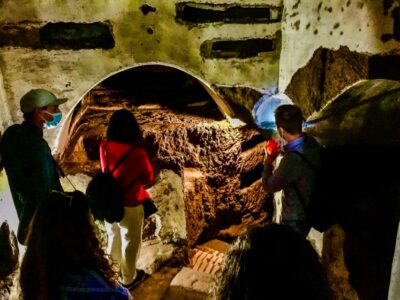


Rome EBike Tour: Appian Way, Catacombs & Roman Aqueducts
Read our review →
Catacombs and Capuchin Crypt Guided Tour with Transfer
Read our review →
St. Peter’s Basilica Priority Access Tour with Dome & Crypt
Read our review →Browse the lists this tour appears in