

Review · ROME CATACOMBS TOURS
Rome: Crypts and Catacombs Underground Tour with Transfers
The Capuchin Crypt turns human bones into floor-to-ceiling decoration, while Rome’s catacombs reveal the burial places and worship spaces of early Christians. Together, these stops offer a striking look at faith and death beneath the city. I especially like the contrast between the self-guided crypt and the live catacomb tour, and the coach transfers that save you from navigating between sites on your own.
The third stop, the Basilica of San Martino ai Monti, adds a quieter look at Rome’s layered religious past, with ancient foundations below Baroque art. One thing to weigh: the Capuchin visit can feel rushed if you want to take in every audio-guide detail, and the tour involves walking on uneven underground routes.
What makes this tour worth considering
- Bone art in the Capuchin Crypt: See intricate designs made from the bones of nearly 4,000 Capuchin monks.
- Caravaggio and St. Francis: The Capuchin Museum includes a painting by Caravaggio and relics connected with St. Francis.
- An expert-led catacomb visit: Walk through ancient burial tunnels with a live guide who explains their early Christian history.
- A less-visited church: San Martino ai Monti combines fourth-century origins, ancient Roman foundations, Baroque frescoes, and underground remains.
- Transfers between distant sites: An air-conditioned coach links the stops, making this a practical way to cover more ground than you might manage on foot.
- Two versions to compare: The daytime tour includes the basilica; the 2.5-hour After Hours option does not.
A different Rome, below street level
Rome is often best known for its grand ruins and busy piazzas. This tour shifts your attention to what lies beneath them: burial chambers, early Christian places of worship, and a church built over older layers of the city. The subject is solemn, but the experience is not simply a parade of tombs. It brings together art, religion, archaeology, and the practical story of how communities used underground spaces.
The day tour lasts about 2.5 to 3.5 hours, depending on the schedule, and costs about $74.02 per person. That price covers coach transport, entry to the Capuchin Crypt and Museum, an audio guide there, entry to the catacombs, and the basilica. You are paying for three distinct sites and the transfers between them, not just a single entrance ticket.
I see the main value in the way the tour connects the sites. You do not have to work out how to get from the Capuchin area to the catacombs and then back toward the church. The coach keeps the visit moving, while the live guide gives the catacombs a historical frame that is hard to get from a quick walk through alone.
More catacomb tours in Rome:
- The Original Roman Crypts and Catacombs Tour with Transfers
★ 4.5 · 4,896 reviews - Rome: Catacombs of St. Callixtus Entry Ticket & Guided Tour
★ 4.6 · 3,037 reviews - Rome: Guided Roman Catacombs Tour with Transfers
★ 4.6 · 1,830 reviews
Start at Piazza Barberini
The meeting point is in the center of Piazza Barberini, by the large Triton Fountain. The square is also at the Barberini stop on Metro Line A, which makes it fairly simple to reach if you are using public transport. Arrive ready to find your guide there, since hotel pickup is not included.
The first leg starts with the Capuchin Crypt and Museum. This part is self-guided with an audio guide, rather than a live talk from the tour leader. That gives you some independence, though it also means you will want to keep an eye on the time. Some people find the visit too brief to listen to every audio segment, especially if they want to pause and study the details.
The Capuchin Crypt: unsettling, but carefully made
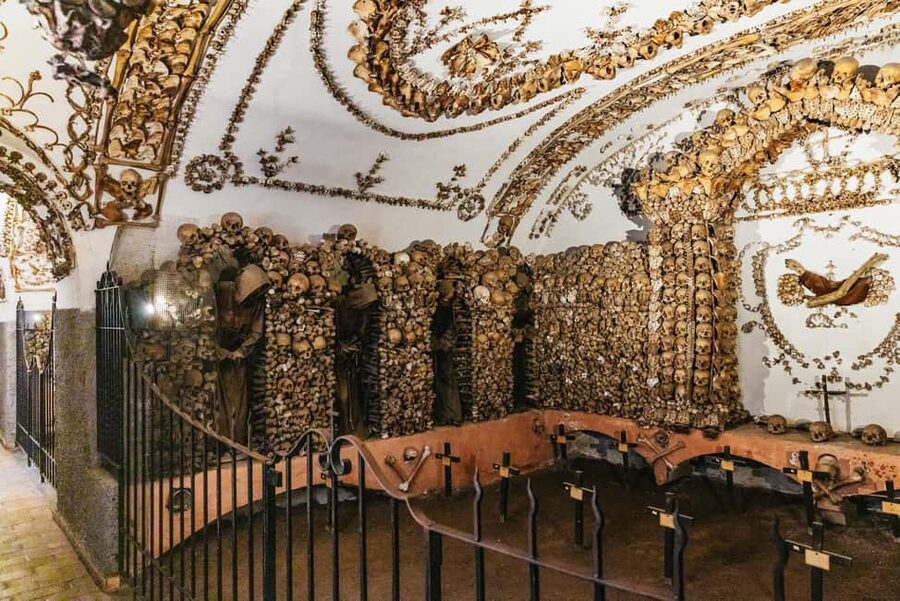
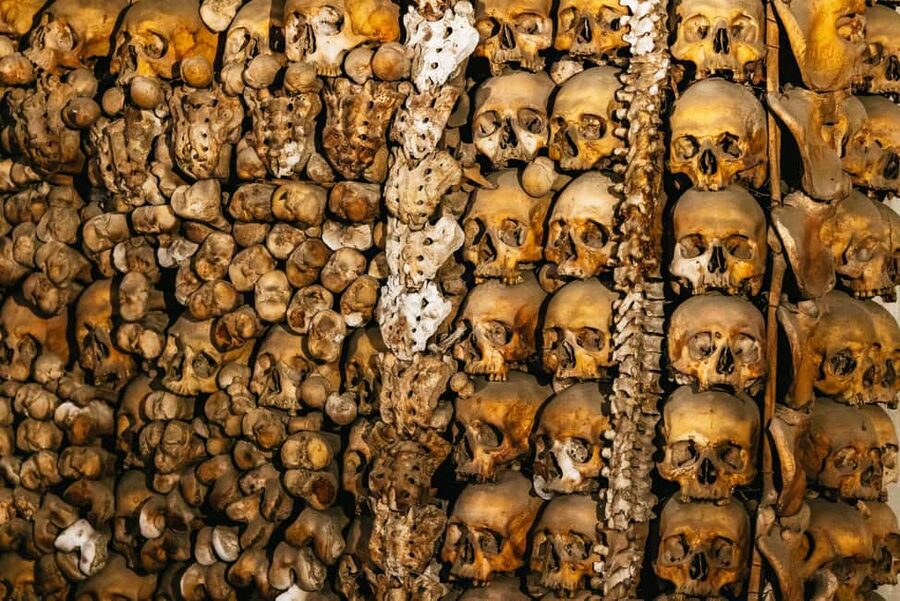
The crypt is the tour’s most startling stop. Capuchin monks used the bones of nearly 4,000 of their fellow monks to create elaborate patterns across the rooms. It is often nicknamed the Bone Chapel, a label that captures the first impression but not the whole story. The arrangements are also a reminder of how religious communities have considered mortality and the body.
Go in expecting something unusual, not a conventional museum display. The experience can feel macabre, and that reaction is understandable. The audio guide helps give the decoration context, but you may need to choose which sections to hear if the visit feels short. I would focus on looking closely and listening to the parts that interest you most, rather than trying to absorb every word.
The adjoining museum adds a different kind of interest. You can see a painting by Caravaggio and relics associated with the life of St. Francis. These details help broaden the stop beyond the bone displays, connecting the crypt to the Capuchin order and to Italian religious art.
Coach ride to the catacombs
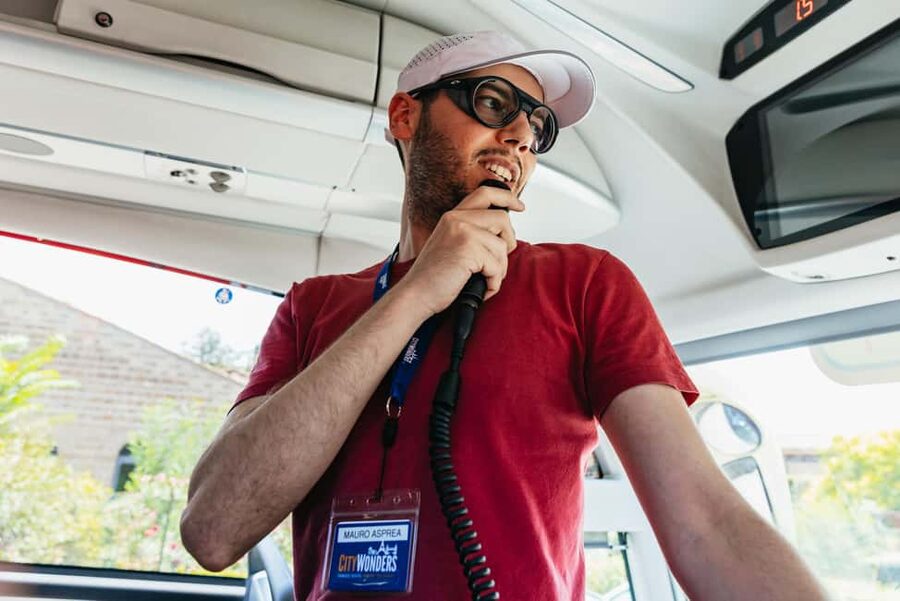
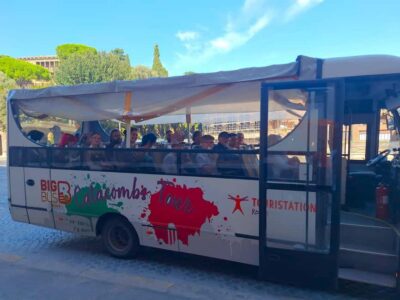
After the crypt, the group boards an air-conditioned coach for a transfer of about 30 minutes. That ride is more than a convenience. The catacombs are outside the central sightseeing circuit, and the coach makes it easier to combine them with the other stops in one outing.
The drive also gives the guide a chance to share background about Rome along the way. Several guides have been praised for adding stories and context during transfers, so the ride can feel like part of the tour rather than dead time. Still, the coach schedule means you should expect a group visit with a set pace, not an open-ended archaeological wander.
More transfers in Rome:
- Rome Private Arrival Transfer: Fiumicino Airport to Hotel in Rome
★ 4.5 · 2,492 reviews - Rome: Catacombs Guided Tour with Transfer
★ 4.2 · 1,808 reviews - Rome: Catacombs and Capuchin Crypt Guided Tour with Transfer
★ 4.6 · 1,606 reviews - Transfer Fiumicino Airport – Rome City Centre
★ 4.5 · 1,070 reviews
Inside Rome’s early Christian catacombs
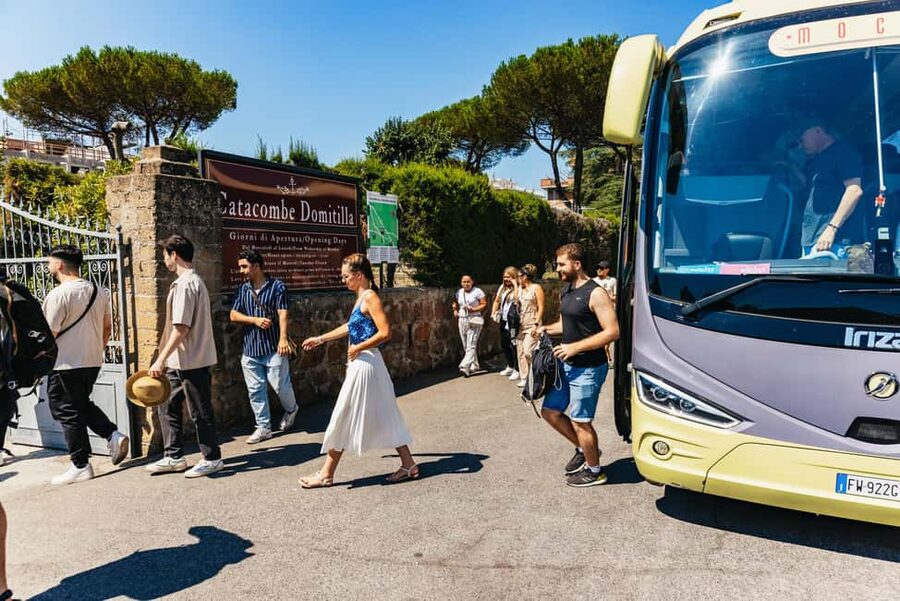
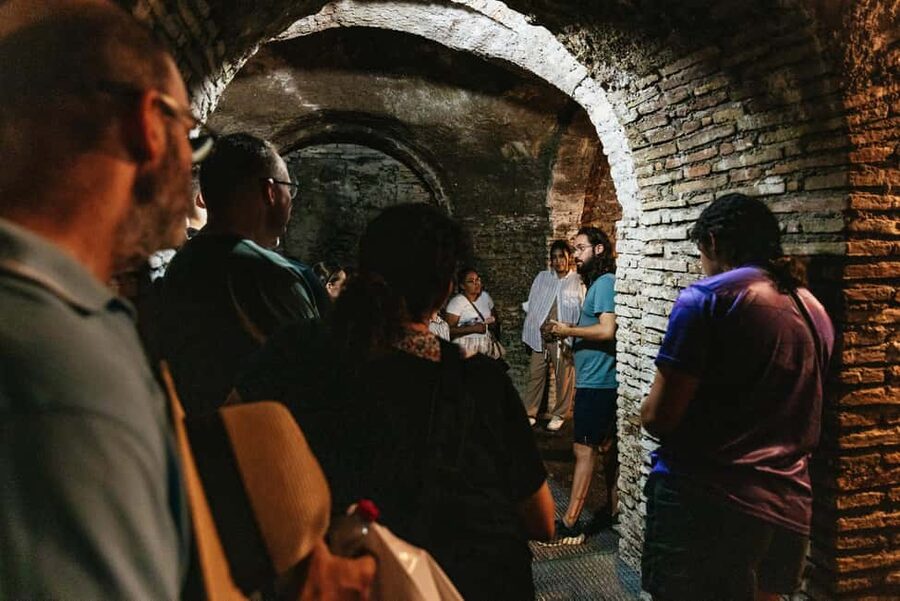
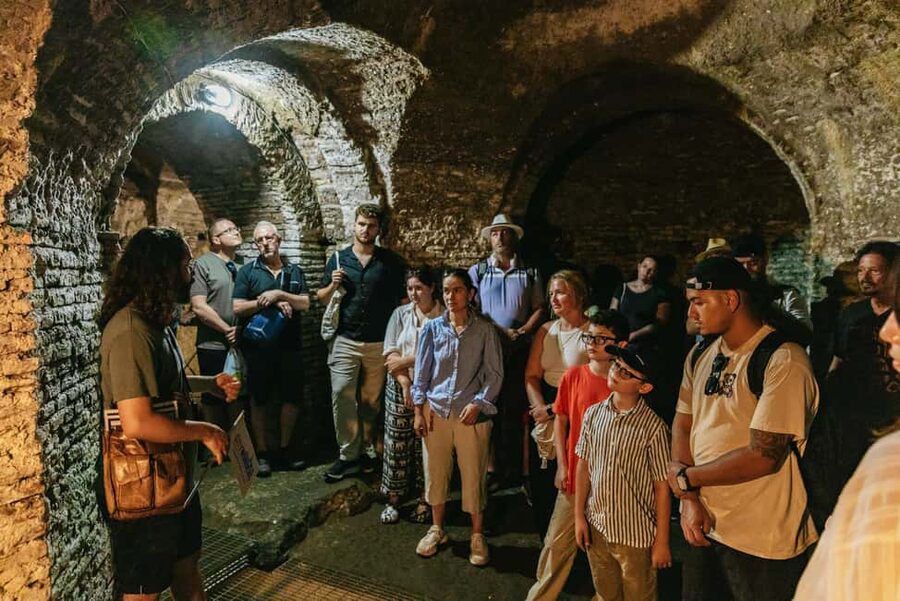
The catacombs are the tour’s most compelling stop for many people. These underground tunnels served as burial places and, in the early Christian period, as places of worship. The live guided visit lasts about 45 minutes, with the guide explaining the history as you pass tombs cut into solid rock.
The setting is cool, dark, and enclosed. If you are uneasy in underground spaces, consider that before booking. The experience is also physical: expect walking and changes in level. Comfortable shoes matter more here than they do on a typical city-center church visit.
Guides are a major part of the visit. Cat, Inti, Andrea, Chris, Francesca, and other named guides have been praised for keeping the history clear and lively, answering questions, and balancing serious material with a light touch. One visitor described a catacomb visit led by a nun who lives there, an especially direct connection to the religious community. That does not mean every departure will have the same guide or format, but it shows how the site can feel more personal than a standard museum stop.
The stories can be sad, and the subject deserves respect. You are walking through a burial site, not a theatrical attraction. Photography is not allowed on this tour, so plan to leave the camera away and pay attention to the explanations and surroundings.
San Martino ai Monti: the quieter final chapter
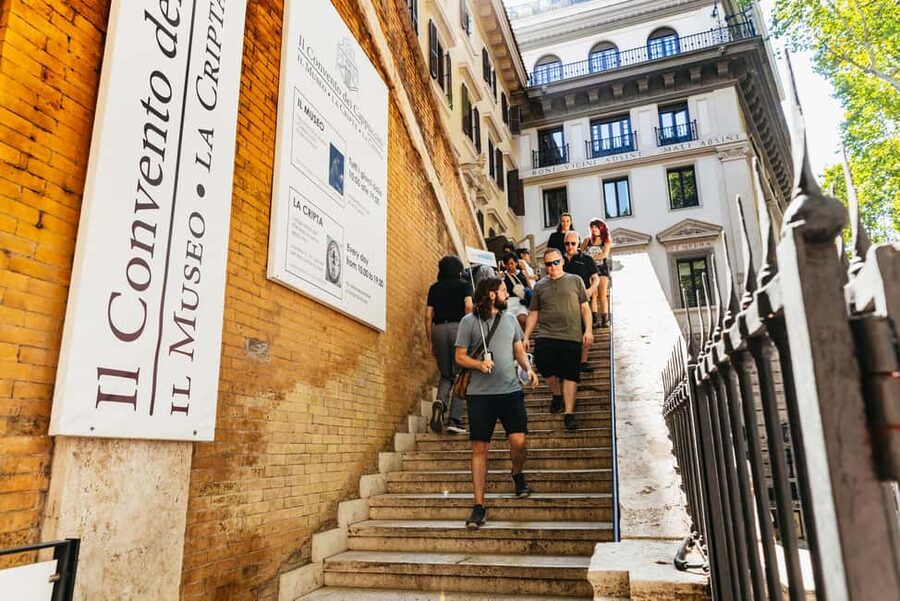
The second coach transfer, also about 30 minutes, takes you back toward the Basilica of San Martino ai Monti. This church is one of the less obvious stops in a city full of famous churches, and its appeal lies in the layers beneath and within it. Dating to the fourth century, it was built over ancient Roman foundations and contains remnants of an early Christian titulus, an early place of worship.
Inside, look for Baroque frescoes and ancient mosaics. The visit also includes underground chambers, where you can see more of the church’s long history in physical form. This stop changes the mood after the catacombs: the focus shifts from burial tunnels to a living religious building shaped by successive eras.
There is one scheduling caveat. Sunday church visits are not guaranteed because liturgical activities can affect access. If seeing the basilica is important to you, a weekday departure may be the safer choice, though access can still depend on conditions.
Day tour or After Hours?
The daytime tour includes the Capuchin Crypt and Museum, the catacombs, and San Martino ai Monti. It lasts about 2.5 to 3.5 hours, with timing depending on the departure. Choose it if you want the fullest version of the experience and the church’s architectural layers appeal to you.
The After Hours option lasts 2.5 hours and covers the Capuchin Crypts and Rome catacombs, but it does not include the basilica. It is a more focused underground outing, not simply the full tour at a later time. Compare the stops as well as the schedule before choosing; otherwise, you may book the shorter option and miss the church you expected to see.
Who will get the most from it?
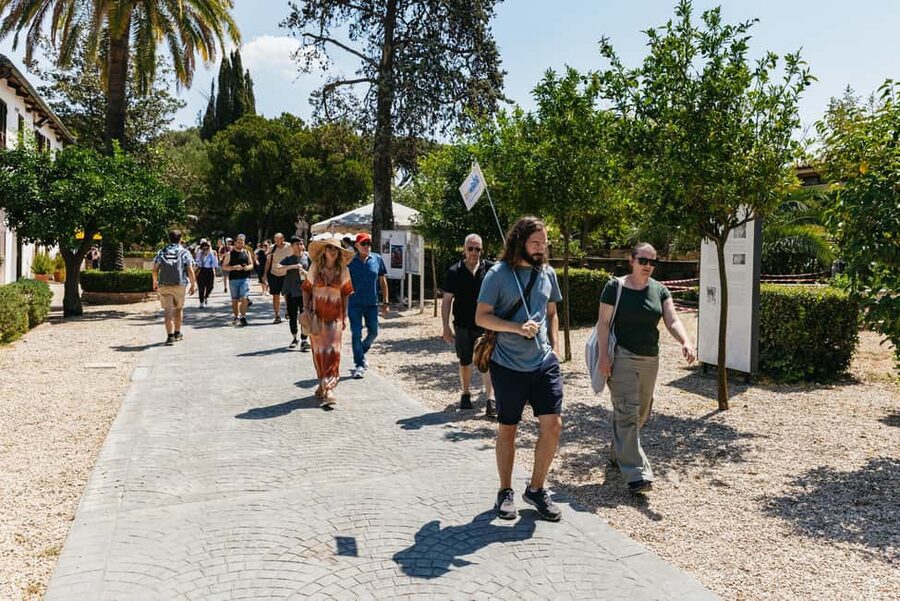
I would recommend this tour if you are curious about early Christianity, burial customs, or the less familiar side of Rome’s history. It is also a good choice if you want to visit sites beyond the historic center without arranging separate transport. The guides’ mix of historical detail, anecdotes, and room for questions can make the subject accessible even if you are not visiting for religious reasons.
It may be less suitable if you have limited mobility or need assistance navigating underground spaces. The tour cannot accommodate wheelchair users, strollers, baby carriages, or people who require special assistance. You should also be comfortable with enclosed, cool spaces and a fair amount of walking.
Dress modestly. Shorts, short skirts, and sleeveless shirts are not allowed, and comfortable shoes are strongly advised. These rules matter at religious sites, and the footwear is practical for underground routes.
Is $74.02 a fair price?
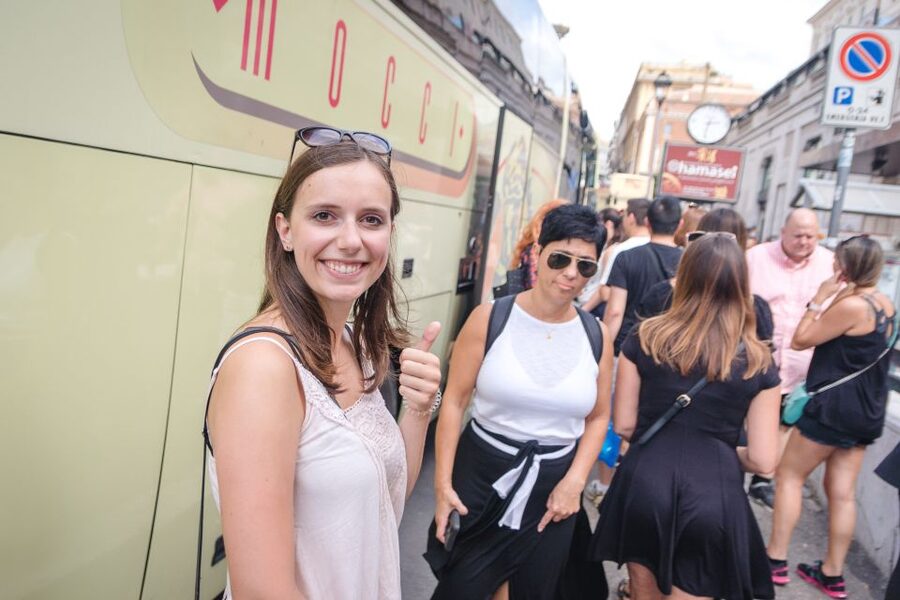
At roughly $74 per person, this is not the cheapest way to see one Roman attraction. Its value comes from combining three sites, entry tickets, an audio guide at the Capuchin Museum, a live guide at the catacombs, and coach transfers. If you tried to arrange each visit separately, you would also need to manage the travel between them and the different entry arrangements.
The main trade-off is time. The Capuchin stop may feel compressed if you listen to the entire audio guide, and the group schedule sets the pace at each site. The coach saves effort, but you do not get unlimited time to linger. For an efficient overview of Rome’s underground history, I think the balance is reasonable. If you prefer to move slowly and spend as long as you like in each place, separate visits may suit you better.
Should you book this tour?
Book it if you want a guided, well-connected introduction to Rome’s underground history, and you are comfortable with solemn subject matter and walking below ground. The strongest combination is the bone-decorated crypt, the catacombs with a live guide, and the basilica’s older foundations. The transfers make that variety practical in a single outing.
Choose the daytime version if San Martino ai Monti matters to you, and keep the Sunday access caveat in mind. Choose After Hours only if you are happy to skip the basilica. If you want complete control of timing, need step-free access, or dislike enclosed spaces, this is probably not the right fit.
FAQ
Where does the tour start?
Meet in the center of Piazza Barberini, by the large Triton Fountain. The piazza is at the Barberini stop on Metro Line A.
Does the tour include hotel pickup?
No. You need to make your own way to Piazza Barberini.
How long does the tour take?
The daytime tour lasts about 2.5 to 3.5 hours. The After Hours option lasts 2.5 hours.
Which sites are included in the daytime tour?
The daytime tour visits the Capuchin Crypt and Museum, the Roman Catacombs, and the Basilica of San Martino ai Monti.
Does the After Hours option visit the basilica?
No. The After Hours tour includes the Capuchin Crypts and catacombs, but not San Martino ai Monti.
Is transport included?
Yes. The tour uses an air-conditioned coach for transfers between the sites.
What languages are available?
Live guides are available in English or Spanish, depending on the option selected.
What should I wear?
Wear comfortable shoes. Shorts, short skirts, and sleeveless shirts are not allowed.
Can wheelchair users or people with strollers join?
No. The tour cannot accommodate wheelchair users, strollers, baby carriages, or people with mobility impairments or other needs requiring special assistance.
Newly reviewed in Rome
- Rome: Neapolitan Pizza Cooking Class in Front of the Vatican★ 4.8 · 137 reviews
- Rome: St. Paul’s Within the Walls New Year’s Concert Ticket★ 4.4 · 35 reviews
- Rome: Navona Underground & Domitian Stadium Guided Tour★ 4.6 · 36 reviews
- Rome: Navona Square and École Française Underground ticket★ 3.9 · 160 reviews
- Rome: Monuments and Belvederes Bike Tour★ 4.7 · 26 reviews
- Rome: Musical Biography of Frank Sinatra Concert★ 3.9 · 100 reviews
- Rome: Monti Neighborhood Lunch or Dinner Food Tour★ 4.9 · 8 reviews
- Rome: Mini hike to the ancient Parco degli Acquedotti★ 4.9 · 9 reviews
Rome Catacombs Tours, compared.
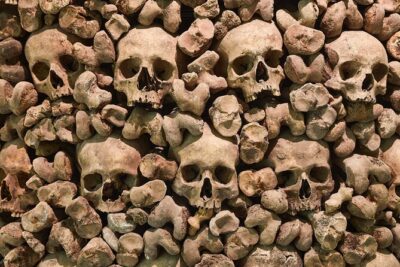
The Original Roman Crypts and Catacombs Tour with Transfers
Read our review →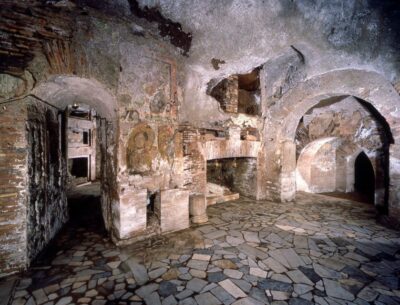
Catacombs of St. Callixtus Entry Ticket & Guided Tour
Read our review →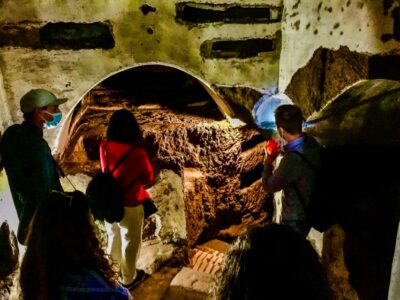
Rome EBike Tour: Appian Way, Catacombs & Roman Aqueducts
Read our review →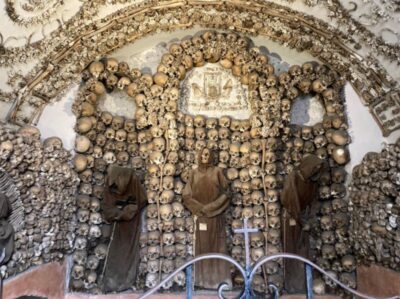
Catacombs and Capuchin Crypt Guided Tour with Transfer
Read our review →
St. Peter’s Basilica Priority Access Tour with Dome & Crypt
Read our review →
Appian Way, Catacombs, & Roman Aqueducts E-bike Tour
Read our review →Browse the lists this tour appears in